IDF Contractor Killed in Bint Jbeil Bulldozer Incident, Hezbollah Releases Footage
Hezbollah released footage on 4 May 2026 of an incident in Bint Jbeil that killed an IDF contractor engaged in demolition work near the Blue Line. The incident underscores the fragile tactical status of the Israel-Lebanon frontier seven months into the brokered ceasefire framework.
Hezbollah released video footage on 4 May 2026 depicting the moment its fighters targeted an Israeli engineering bulldozer crew operating in Bint Jbeil, a town in southern Lebanon's Nabatiyeh Governorate. An IDF contractor was killed in the incident, according to a post by the witness monitoring channel that first reported the footage. Hezbollah separately announced it would imminently publish a separate recording of the bulldozer driver's final moments, framing the images as an operational record of an enemy combatant's death.
The incident complicates an already fragile ceasefire architecture along the Blue Line, the demarcation that separates Israeli-held territory from Lebanon. For seven months, the ceasefire brokered between the two sides in late 2025 has held in its most basic form — major exchanges of fire have ceased — but the daily friction of demolition work, patrol repositioning, and infrastructure construction continues to generate low-level contact that both sides have managed without escalation. This death introduces a sharper friction point at a moment when diplomatic efforts to formalise the arrangement have stalled.
The Incident and What the Footage Shows
The Telegram post from the witness channel, timestamped at 11:30 UTC on 4 May, described Hezbollah releasing footage showing its fighters targeting the Israeli engineering crew as it carried out demolition work. The post stated that an IDF contractor was killed and that the footage had been verified as genuine by the channel. The engineering bulldozer — a heavy vehicle typically used to clear terrain, demolish structures, or maintain access routes — was operating inside Lebanese territory at the time, according to the framing of the Hezbollah release.
The separate announcement from Fars News International, which serves as an Iranian state-adjacent wire service, confirmed that Hezbollah would publish an additional recording depicting the driver's death. That additional footage had not been published as of the time of this report's filing.
The identities of the IDF contractor killed have not been independently confirmed by Western wire services or the IDF Spokesperson's office based on the available source material. The sources available to this publication do not include a statement from the Israel Defense Forces confirming the casualty or providing details of the contractor's affiliation.
Framing and Counter-Narrative
Hezbollah's decision to release footage of a tactical engagement is not unusual for the group. Since November 2025, the resistance media apparatus has published recorded strikes, patrol interceptions, and tunnel findings on a near-weekly basis, each time presenting the footage as evidence of Israeli violations of the ceasefire terms. The release on 4 May follows that pattern: the group frames the contractor's death as a legitimate military action against an adversary operating illegally on Lebanese soil, rather than a gratuitous killing of a non-combatant.
Israeli framing, to the extent it can be inferred from the incident's positioning within the ceasefire framework, would likely characterise demolition work near the Blue Line as routine infrastructure maintenance conducted within the agreement's known parameters. The IDF has historically resisted characterizing contractor deaths as anything other than regrettable but lawful incidental outcomes of operations conducted in disputed terrain. Neither the IDF Spokesperson's official channels nor the Israeli Prime Minister's office had published statements on the incident as of filing.
What remains unclear from the available sources is whether the contractor was operating under direct IDF supervision, whether the work was pre-coordinated with the ceasefire monitoring mechanism — typically referred to as the Umslag framework or the maritime-border-aligned de-escalation architecture — and what response, if any, Israel intends to take.
The Broader Ceasefire Architecture
The ceasefire between Israel and Hezbollah, brokered in October and November 2025, was always understood by analysts as an interim arrangement rather than a formal peace. It froze the front line, ended the direct rocket and drone exchange that had run from October 2023 through late 2025, and established a monitoring structure, but it did not resolve the underlying sovereignty dispute over the Shebaa Farms area, the status of Lebanese air defence assets, or the question of what constitutes a ceasefire violation requiring response.
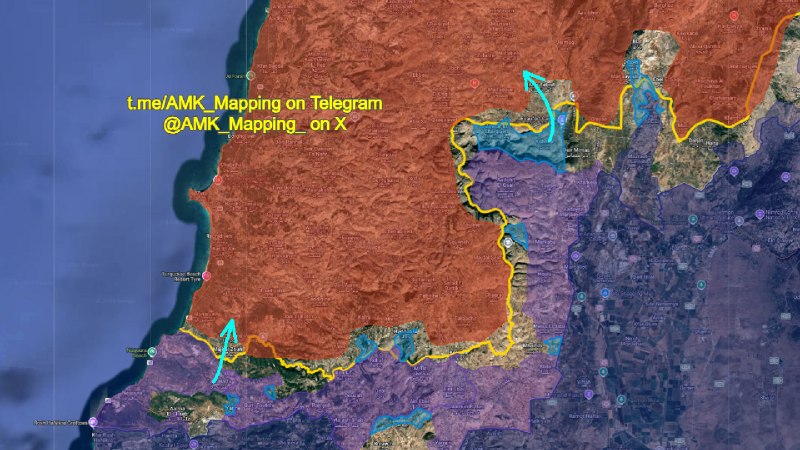
Since the ceasefire took effect, Israel has continued demolition and construction work along the northern border, both to clear what it describes as Hezbollah military infrastructure and to establish new defensive positions. Lebanese media and Hezbollah's own communications have repeatedly characterised this work as a violation of Lebanese sovereignty and the ceasefire terms. The Bint Jbeil district — located several kilometres north of the Blue Line — has been a frequent site of these competing claims.
The publication of footage depicting a killed contractor fits into a wider pattern of information operations that both sides conduct to shape the narrative around ceasefire compliance. Israeli military communications regularly publish drone footage and satellite imagery of what it describes as Hezbollah rearmament and tunnel reconstruction inside Lebanese villages. Hezbollah, for its part, publishes footage of Israeli positions and demolition work to demonstrate that Israel is using the ceasefire to entrench its presence in contested territory.
This episode now becomes part of that ongoing documentation war. The footage itself is not disputed by the channels that received it. What is disputed is its legal and political meaning — whether the contractor was a legitimate military target, whether the demolition work was authorised under the ceasefire terms, and what the incident means for the durability of the arrangement going forward.
Stakes
If Israel responds with a direct strike or a formal complaint to the monitoring mechanism that escalates into renewed contact fire, the ceasefire that has held for seven months faces its most serious test since November. The political consequences of a soldier or contractor killed in a ceasefire zone — rather than in active combat — create domestic pressure on the Israeli government to respond visibly, even if the operational calculus argues against escalation.
For Hezbollah, the footage serves an internal audience as much as an international one. Demonstrating continued operational capability along the border, and willingness to engage Israeli forces even under the ceasefire framework, reinforces the group's position within Lebanon's political landscape at a moment when the country is navigating a presidential vacuum and severe economic crisis.
The unanswered question — whether the ceasefire monitoring mechanism addresses this incident formally, and whether Israel accepts the characterisation — will determine whether the Bint Jbeil death remains a tactical episode or becomes a structural crack in the agreement. The sources available to this publication do not yet indicate how either side intends to proceed.
This publication filed from Beirut. The available source material for this article consists of Telegram posts from the witness monitoring channel and Fars News International, timestamped 4 May 2026, and does not include statements from the IDF Spokesperson, the Israeli Prime Minister's office, or the UN Interim Force in Lebanon at time of filing.
Wire provenance
This editorial synthesis draws on the following public wire/social posts:
- https://t.me/witness_updates/12438
- https://t.me/FarsNewsInt/9182
- https://t.me/FarsNewsInt/9181