Iran's Araghchi Draws Nuclear Line in US Talks — Escalation Risk Mounts
Iran's Foreign Minister Abbas Araghchi confirmed on 4 May 2026 that current negotiations with Washington do not encompass the nuclear programme, while warning Tehran is prepared for all scenarios — a signal that analysts say raises the prospect of renewed escalation.
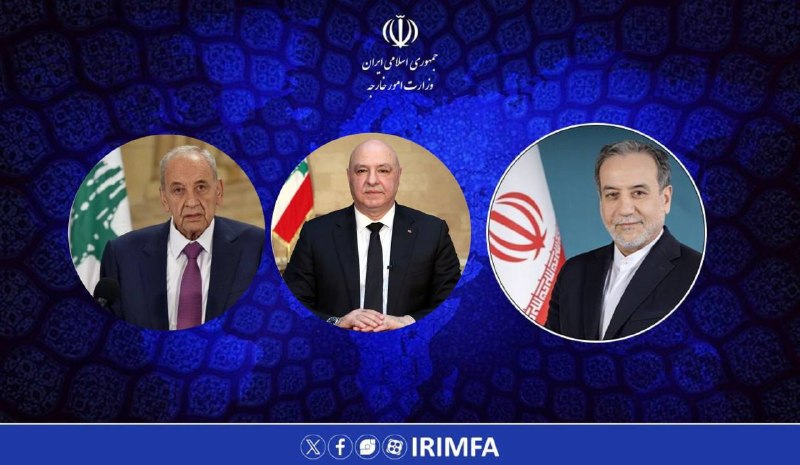
Iranian Foreign Minister Abbas Araghchi told the Iranian Students News Agency (ISNA) on 4 May 2026 that the ongoing negotiations with the United States do not include discussions on Tehran's nuclear programme, and that Iran is prepared for "all scenarios." The statement, reported by multiple wire services including the Foreign Workers Witness channel, constitutes the most explicit public articulation of the boundaries Iran is drawing around the current diplomatic process — and appears designed to manage expectations on both sides of the Atlantic.
The distinction matters: while Washington and Tehran have engaged in indirect talks through intermediaries — discussions that have produced some limited agreements on sanctions relief and prisoner exchanges — the nuclear question remains structurally separate. Araghchi's declaration signals that no nuclear framework is on the table in this current channel, even as pressure from European capitals and the International Atomic Energy Agency continues to build.
A Diplomatic Channel With Explicit Red Lines
The Foreign Minister's remarks to ISNA on 4 May make clear that Iran is drawing a firm line. "We are currently not negotiating about the nuclear programme," Araghchi stated, per wire reports. That phrasing is deliberate. It does not foreclose future talks; it defines the scope of the present engagement. The practical implication is that any US administration hoping to use the current diplomatic window to extract a new Joint Comprehensive Plan of Action (JCPOA) commitment — or a successor arrangement — will find that door closed for now.
The timing is not neutral. Talks have resumed after a period of heightened tension following the discovery of uranium enrichment traces at undeclared Iranian sites. The IAEA has issued a series of quarterly reports documenting progress but also persistent gaps. European parties to the original nuclear deal have pressed for renewed dialogue. And the United States, while maintaining its "maximum pressure" framework under the current administration, has engaged in the back-channel talks that produced the limited agreements cited above. Araghchi's statement effectively tells the European mediators that the nuclear track cannot be bundled into the current package.
The "All Scenarios" Signal and Its Audience
The second significant element of Araghchi's remarks is the preparedness statement. "Prepared for all scenarios" is diplomatic shorthand with a specific regional register: it typically communicates a readiness to absorb economic pressure, to continue enrichment activities, and to back regional allies in contested theatres — from Yemen to Iraq to Syria. It is also, analysts note, a signal aimed partly inward, at domestic hardliners who have questioned the value of continued diplomatic engagement.
Separately, German Foreign Minister Annalena Baerbock spoke with her Iranian counterpart on 4 May, according to Al Alam Arabic reporting, urging Tehran to remain engaged and "ready to negotiate." The German call reflects the European concern that the current window — however narrow — should not be allowed to close. Berlin's interest is rooted in both the nuclear proliferation risk and the broader energy-security calculus: any new disruption to Gulf shipping lanes or any decision by Iran to exceed enrichment caps would have direct consequences for European markets already navigating post-Ukraine gas uncertainty.
The Structural Context: Sanctions, Oil, and the Diplomatic Architecture
Iran's oil exports have operated under a layered sanctions regime since 2018, when the United States withdrew from the JCPOA and reimposed secondary sanctions. The current US position has been to offer limited sanctions relief in exchange for verifiable constraints on enrichment — but without returning to the full JCPOA framework. Tehran's position has been to demand the complete removal of sanctions as a precondition for any new nuclear commitment, a stance that has consistently placed the two sides out of alignment.
The energy dimension is not incidental. Iran holds the fourth-largest proven crude reserves in the world. Even partial sanctions relief — enough to permit expanded Asian exports through existing intermediary channels — would meaningfully affect global supply balances. Saudi Arabia and other Gulf producers watch these negotiations with acute interest; the question of how much Iranian oil could re-enter the market is a core variable in OPEC+ planning calculations. A new nuclear crisis that prompted even informal pressure on Asian buyers to reduce Iranian purchases would tighten supplies further, reinforcing the floor on prices that importing nations — Europe, India, China — have been trying to manage.
Stakes and What Comes Next
The immediate stakes are diplomatic and kinetic. If the current back-channel talks collapse — or are perceived to have been deflated by Araghchi's comments — the pressure on the IAEA board increases ahead of its next quarterly meeting. A referral back to the UN Security Council, which could reimpose multilateral sanctions lifted under the original JCPOA, remains a live if distant option. That outcome would represent the formal end of the diplomatic framework that has kept Iran's programme in formal compliance for the past decade — and would mark a significant escalation with consequences well beyond the Gulf.
European officials are likely to interpret Araghchi's statement as a negotiating position rather than a final offer. The German call, in that reading, is precisely the kind of pressure that keeps the window alive. But the structural gap — Washington unwilling to lift sanctions without nuclear constraints, Tehran unwilling to constrain enrichment without sanctions removal — has not narrowed. The current talks appear to have found a narrow comfort zone on peripheral issues. The nuclear core remains untouched. And the "all scenarios" framing suggests Tehran is not bluffing when it says it can absorb the consequences of stalemate.
This article was filed from the energy desk. The dominant wire framing treated Araghchi's statement as a diplomatic setback; Monexus noted that the substance — defining the scope of existing talks — may be less a reversal than a clarification of terms Iran always held.
Wire provenance
This editorial synthesis draws on the following public wire/social posts:
- https://t.me/wfwitness/2847
- https://t.me/Middle_East_Spectator/1193
- https://t.me/alalamarabic/9821