Iran Presents Itself as a Regional Power Broker as Araghchi Briefs Parliament on Diplomatic Track
Iranian Foreign Minister Abbas Araghchi told lawmakers on 4 May 2026 that the Islamic Republic has emerged as a formidable regional actor, as he submitted a comprehensive diplomatic report covering the full arc of talks since the outbreak of the current Middle East conflict.
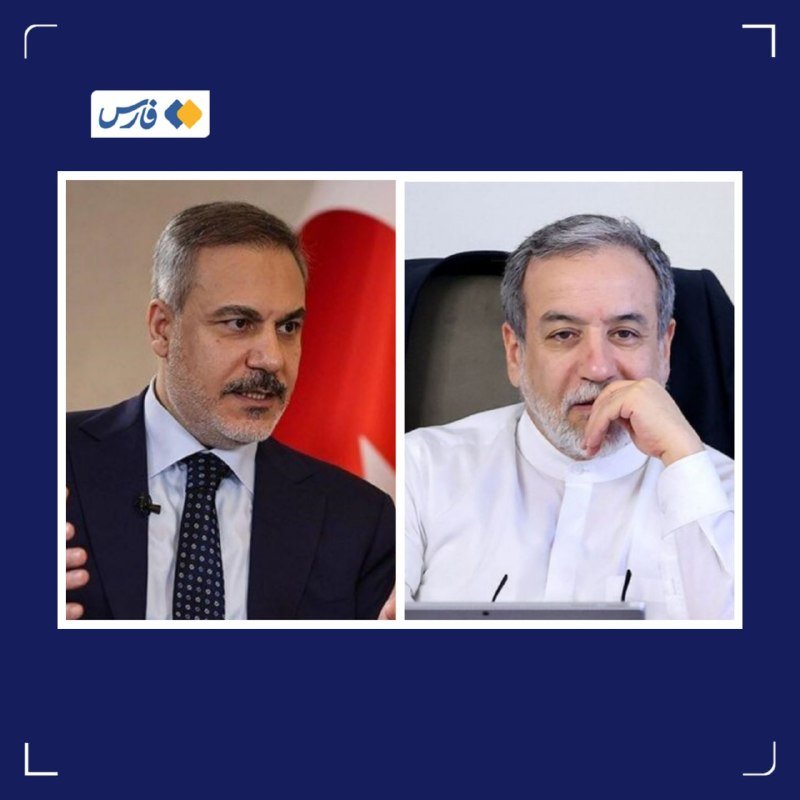
On the evening of 4 May 2026, Iranian Foreign Minister Seyed Abbas Araghchi appeared before the National Security and Foreign Policy Committee of the Islamic Council — Iran's Parliament — to deliver what his ministry described as a detailed report on the diplomatic track since the outbreak of the current Middle East conflict. The session, held at short notice and carried in full by state-affiliated outlets, placed Tehran's conduct of regional diplomacy under a rare parliamentary spotlight.
The substance of Araghchi's briefing, as characterized by the Iranian Foreign Ministry in Arabic-language coverage, centred on plans and proposals that Iran had tabled in multilateral negotiations. The minister, according to the Fars News International service, told committee members that Iran had assumed the posture of a "very powerful actor" — language that signals Tehran sees the grinding calculus of the past eighteen months not as a diplomatic setback but as a vindication of its strategic patience. The framing matters: it is an assertion directed as much at a domestic audience in Tehran as at the international system watching.
What the Briefing Covered — and What Remains Undisclosed
The Foreign Ministry account indicates that Araghchi walked representatives through proposals Iran had submitted to counterpart delegations. The precise contents of those proposals were not made public in the sourced material available to this publication. Iranian officials have historically preferred to let diplomatic feelers develop away from the record, and Tuesday's committee session was no exception in that regard.
What is known from the sourced Telegram dispatches is that Araghchi addressed representatives of what the Foreign Ministry termed "Iran and other countries" — a formulation that stops short of naming interlocutors but implies a multilateral rather than bilateral format. That language will be parsed carefully in Washington, European capitals, and among Gulf Arab governments, each of which has its own read on where Tehran's red lines actually sit.
The session's timing is not incidental. It comes as indirect negotiations between the United States and Iran — mediated by Oman and, according to some accounts, by other Gulf interlocutors — appear to have entered a sensitive phase. US President Donald Trump publicly reversed his administration's maximum-pressure posture in early April, extending a conditional invitation to talks. Tehran responded coolly, insisting on the right to peaceful nuclear enrichment and rejecting any framework that resembles the 2015 Joint Comprehensive Plan of Action on its terms. The gap between the two positions has not closed, but neither side has walked away.
The Power-Actor Claim: Domestic Politics or Strategic Signal?
The assertion that Iran has emerged as a "very powerful actor" arrives at a sensitive domestic juncture. Araghchi, one of the architects of the 2015 nuclear deal and a figure associated with the reformist-reformist diplomatic tradition, has spent months navigating between a Parliament that has grown morehawkish on sanctions relief and a Raisi-era hardline Foreign Ministry bureaucracy still finding its footing under a different political configuration. Tuesday's committee appearance gave him an opportunity to reframe that tension: the Islamic Republic's diplomatic course is not one of concession but of strength.
It is a claim that can be read two ways. On the first reading, Tehran has successfully used the conflict's extended duration to expand its leverage network — deepening ties with Russia and China, sustaining the Hezbollah front in Lebanon despite intensive Israeli operations, and maintaining a nuclear programme whose advancement has accelerated since the US withdrawal from the JCPOA in 2018. In that reading, Araghchi is simply stating a fact. On the second reading, the framing is directed at an Iranian domestic audience weary of sanctions and economic pressure, offering a narrative of national strength to offset the real costs of regional confrontation. Both readings are compatible; neither is mutually exclusive.
Regional Context: The Gulf, Israel, and the Nuclear File
The parliamentary briefing sits within a broader landscape of concurrent pressure points. Israel has maintained its military campaign in Gaza and conducted strike operations across the region, including against Iranian-adjacent targets in Syria and Iraq. Saudi Arabia and the UAE, while maintaining diplomatic distance from Tehran's regional posture, have simultaneously pursued their own engagement tracks — a phenomenon observers of Gulf politics describe as hedging, the practice of keeping multiple channels open without committing to any single arrangement.
The nuclear question remains the sharpest edge of the US-Iran standoff. The International Atomic Energy Agency's most recent quarterly report, referenced across multiple wire services, documented accelerating uranium enrichment activity at Fordow and Natanz. Iran has consistently framed this activity as peaceful and legal under the Nuclear Non-Proliferation Treaty. The United States and its European partners contend that enrichment levels above 60 percent have no civilian justification. The negotiating distance between those two positions has proved, so far, unbridgeable — but it has not foreclosed the talks entirely.
Stakes and Forward View
If Araghchi's assessment is accurate — that Iran has indeed emerged from the conflict's first phase as a more consequential actor — the implications extend well beyond the nuclear file. It means the incoming US administration, regardless of its preferences, will have to conduct its West Asia policy with Iran as a relevant counterparty rather than an isolated outlier. It means European states seeking to preserve the remnants of the nuclear framework will have to deal with a Tehran that feels it negotiated from strength, not weakness. And it means Gulf Arab governments who have been quietly normalising ties with Tehran will find that calculus either validated or complicated, depending on how the next phase of talks develops.
The parliamentary briefing offered no timeline for a breakthrough. It did, however, signal that Iran intends to keep its hand on the table — and that its representatives are watching the same signals from Washington as everyone else. Whether that posture produces a diplomatic landing or simply extends the standoff is the central question the next several weeks will answer.
This article draws on reporting from Mehr News, Tasnim News English, Fars News International, and Jahan Tasnim, all sourced via Telegram wire dispatch on 4 May 2026. Monexus is monitoring for corroborating coverage from international wire services.
Wire provenance
This editorial synthesis draws on the following public wire/social posts:
- https://t.me/alalamarabic/78945
- https://t.me/alalamarabic/78944
- https://t.me/FarsNewsInt/45612
- https://t.me/JahanTasnim/33441
- https://t.me/mehrnews/22891
- https://t.me/tasnimnews_en/11206