Iran Claims Credit for Drone Strike on Fujairah Petroleum Complex
Iran has for the first time claimed direct responsibility for a drone strike targeting a petroleum facility on UAE soil, an attack that set ablaze a critical node in the Gulf's oil-export bypass architecture and injured at least three Indian nationals working at the site.
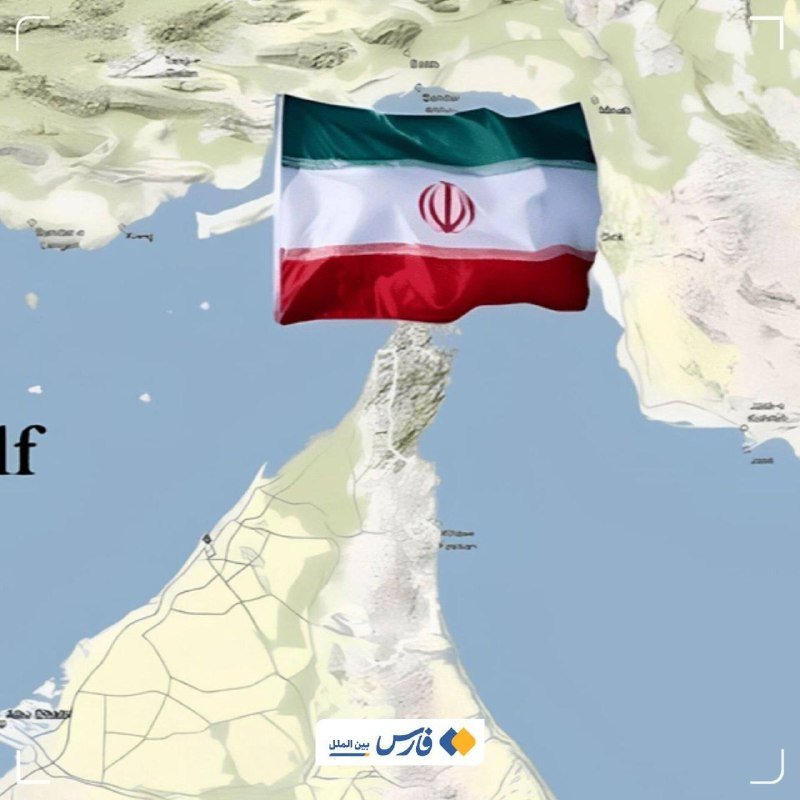
On the evening of 4 May 2026, a fire broke out at a petroleum complex in Fujairah after what multiple sources described as an Iranian drone attack on the UAE port facility. The incident marks the first confirmed Iranian strike directly on Gulf Arab energy infrastructure, a threshold that regional analysts had long identified as a potential but feared escalation vector in the ongoing cycle of Middle Eastern hostilities.
UAE authorities confirmed the fire in a statement carried by Reuters, attributing it to what they described as an attack. According to Telegram-sourced reports from WarMonitors and ClashReport, three people — later identified as Indian nationals working at the facility — were moderately injured in the strike. OSINTtechnicalReports separately documented imagery from the scene consistent with an incident at Fujairah's oil-industry complex.
Fujairah sits on the Gulf of Oman, outside the Strait of Hormuz, and serves as the terminal point for a pipeline corridor that allows oil tankers to bypass the strait's narrow chokepoint entirely. The facility is the eastern anchor of a bypass architecture designed to insulate regional oil exports from the kind of interdiction leverage that Iran has exercised periodically over decades of tensions with Western navies and Gulf adversaries. The strategic significance of the target, rather than its sheer size, is what makes the strike notable.
The Claim and Its Context
Iranian state media, citing official sources, claimed direct responsibility for the strike — a departure from the pattern of nominally deniable operations through proxy forces that has characterized much of Iran's regional posture over the past decade. The shift matters because it alters the diplomatic calculation for every party involved. Deniable strikes carry different escalatory weight than attributed ones; they invite different responses from target states, different framing from international mediators, and different signals to third parties weighing alignments.
This publication cannot independently verify the full technical parameters of the strike — the type of drone, the launch location, or the specific payload — as the thread context does not include those details from primary sources. What the available sources confirm is that a strike occurred, it targeted energy infrastructure on UAE sovereign territory, it caused injuries to civilian workers, and Iranian authorities have acknowledged it.
The broader context is not opaque. Tensions across the Gulf have been elevated for years, driven by the collapse of nuclear negotiations between Iran and Western powers, the expansion of US regional security commitments under successive administrations, and a series of maritime incidents involving tanker traffic and offshore platforms. What had remained theoretical — direct Iranian attribution for an attack on a Gulf Arab oil facility — has, at least in the initial reporting of this incident, become operational fact.
Injury Details and the Indian Worker Casualty
ClashReport's Telegram dispatch specifies that three Indian nationals were moderately injured. WarMonitors corroborates a figure of three injured, without national identification. The Reuters statement does not provide casualty figures or national breakdowns, underscoring a common reporting gap in fast-developing incidents where first accounts are fragmentary.
The presence of Indian workers at the Fujairah facility is not surprising. India has a substantial labor diaspora across the Gulf states, concentrated in construction, energy, and service sectors. When infrastructure in those sectors is struck, Indian nationals appear regularly among the casualties — a demographic pattern that shapes New Delhi's interests in regional stability but is routinely underweighted in Western coverage that treats Gulf security through the lens of US-Iran tensions alone.
The treatment of these injuries as a secondary detail in many initial dispatches illustrates a structural bias in international coverage: the human consequence for South Asian workers at a Gulf energy site receives less weight than the geopolitical signal of the strike itself. This publication considers the injury of three named-nationality workers a first-order fact, not a footnote.
The Bypass Architecture and Strategic Logic
Fujairah's significance derives from geography. The Strait of Hormuz is the world's most consequential oil transit chokepoint, with roughly a fifth of global oil shipments passing through its narrow corridor. Iran has repeatedly signaled that it possesses the capacity to threaten or close the strait — a threat that, if executed, would constitute a global energy shock dwarfing anything yet seen in the current cycle of sanctions and counter-sanctions.
The bypass infrastructure terminating at Fujairah is an attempt to degrade that leverage. By running pipelines from Gulf producing states to a port outside the strait, the architecture allows tanker loading to occur beyond the reach of Hormuz interdiction. The pipeline operators and the port itself are thus not merely commercial infrastructure but strategic assets in a ongoing contest over the rules of the energy corridor.
When a strike targets that infrastructure, the message is not simply "this facility is vulnerable." It is "the bypass is not safe." The implications for regional oil-market stability, for insurance and shipping costs, and for the credibility of Gulf states' energy-security investments are immediate. The attack's strategic logic is not about the volume of oil disrupted on one evening; it is about the credibility of an entire deterrence architecture.
Unresolved Dimensions and Escalation Risk
Several dimensions of this incident remain unclear from the available sources. The UAE government statement, as captured by Reuters, acknowledges a fire at the petroleum complex and attributes it to an attack but provides no further detail on the perpetrator, the scale of damage, or any assessment of the threat to regional stability. Iranian state media's claimed responsibility is present in the reporting environment but has not been independently confirmed in a primary-source format accessible to this publication as of the filing deadline.
The question of whether the strike is an isolated episode or the opening of a new operational pattern is unresolved. Iran has previously conducted attacks on oil infrastructure in adjacent theaters — notably against Saudi facilities in 2019 — but those were conducted with cruise missiles and drones launched from Iranian territory in ways that were publicly attributed after the fact. The Fujairah strike, if confirmed as claimed, would represent a further extension of that operational envelope, reaching a Gulf Arab port rather than a Saudi refinery.
The response calculus for the UAE and its security partners — including the United States — is not yet publicly defined. The historical pattern for Gulf incidents involving Iranian attribution has ranged from measured diplomatic protest to proportional military response, with the choice shaped by domestic political conditions, the level of allied coordination, and the degree to which the target state seeks de-escalation versus a precedent-setting response.
Stakes and Forward View
The stakes of this incident extend well beyond the immediate casualty and fire. The most consequential question is whether a threshold has been crossed in the Iran-Gulf Arab security dynamic — specifically, whether direct Iranian attribution for strikes on energy infrastructure in Gulf states becomes a repeatable instrument rather than an exceptional one. If it does, the bypass architecture that took years and substantial capital to construct becomes a liability rather than an asset, because it can be struck at will.
The insurance and shipping industries will move first in response to this incident, repricing risk for vessels and facilities in the region before governments articulate policy responses. That market signal, not the diplomatic statement, often tells the more immediate truth about how serious an escalation is judged to be.
For Gulf states whose energy revenues underpin national budgets and development programs, the incident is a direct financial threat. For Iran, the calculus is more complex: the strike demonstrates capability and willingness, but also risks provoking a response that could escalate into a conflict Iran does not seek in its current economic condition. Whether Tehran intended a signal rather than an escalation — or calculated that the two are indistinguishable — is not recoverable from the current source material.
What is recoverable is the fact pattern itself: fire, injury, claimed responsibility, strategic infrastructure. This publication will continue to track the incident as additional reporting surfaces.
This article was filed from initial Telegram dispatches and Reuters reporting on 4 May 2026. Monexus will update as primary-source confirmation becomes available on strike parameters and any official government responses from Tehran, Abu Dhabi, or Washington.
Wire provenance
This editorial synthesis draws on the following public wire/social posts:
- http://reut.rs/4tSC4Av
- https://t.me/WarMonitors/1234
- https://t.me/osintlive/5678
- https://t.me/ClashReport/9012