Iran Claims 'Guardian' Status of Hormuz as Allied Rifts Surface After Strike Wave
Iranian officials are asserting their role as 'guardians' of the Strait of Hormuz while alleging fractures among Washington's regional partners, in a coordinated public messaging campaign following a major strike operation against Iranian targets.
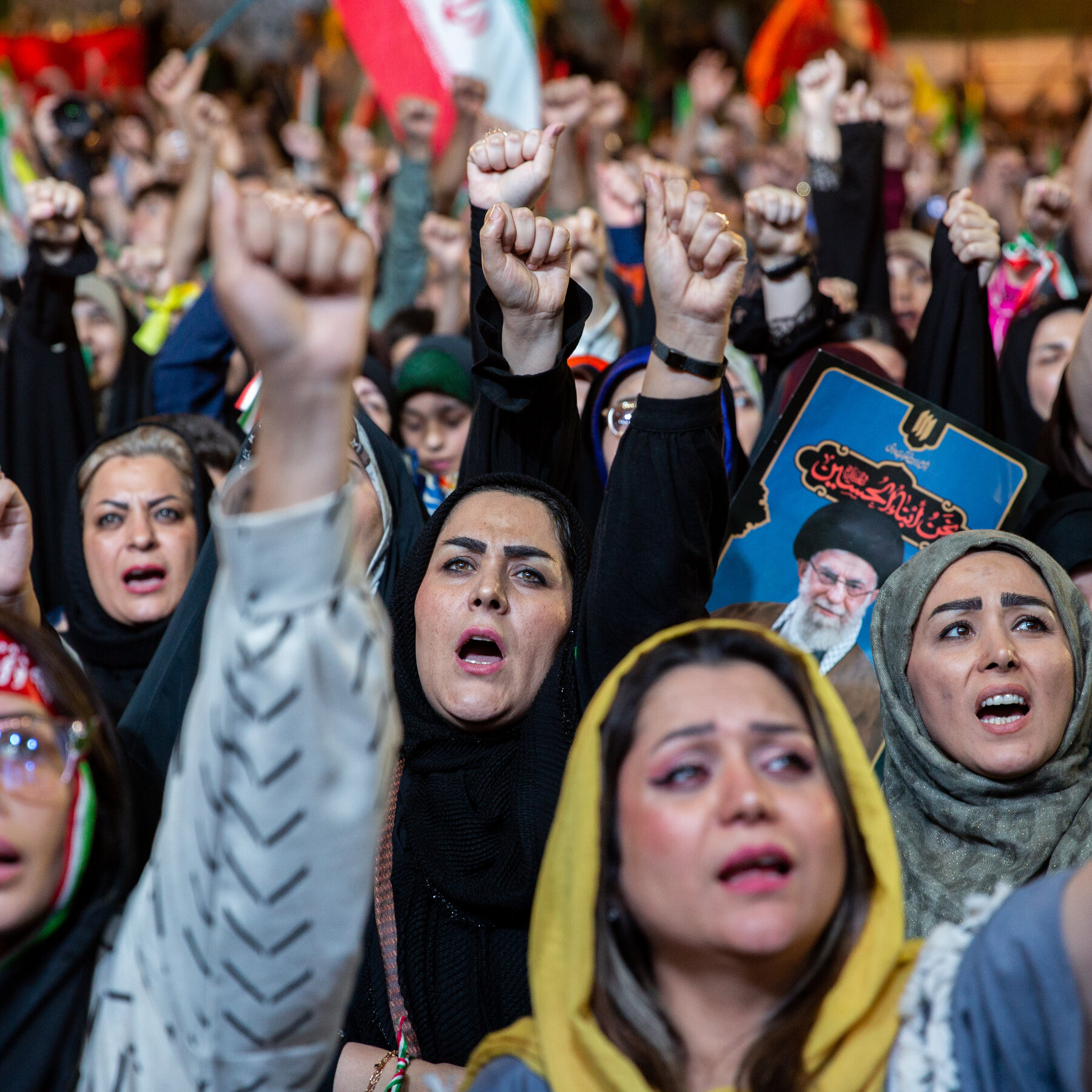
Iranian officials delivered a coordinated set of statements on 4 May 2026 asserting Tehran's role as the primary security guarantor of the Strait of Hormuz, while simultaneously claiming that Western allied unity had fractured following the strike operation launched against Iranian nuclear and military infrastructure in late April.
Nasser Baghaei, a spokesperson for the Iranian foreign ministry, said Iran had "proven that it is the guardian and defender of the Strait of Hormuz," framing the Islamic Republic's response to the strikes as an act of legitimate national defence of a critical international waterway. The statement, carried by the Arabic-language broadcaster Al-Alam, was the most direct official claim yet to the strait's strategic importance as a leverage point in the escalating confrontation.
Bahram Qasem, a second Iranian official cited by the same outlet, said those responsible for "responding to illegal movements and procedures" were prepared and understood how to defend Iranian interests. A third statement added that the Strait of Hormuz had been open to all shipping prior to the attack on Iran — a framing that positions the strikes, rather than any Iranian action, as the destabilising factor in the waterway's status. The fourth statement alleged that gaps and disagreements had emerged between America and its allies in the wake of the attack.
The four statements, issued within minutes of each other on the morning of 4 May, represent a deliberate, synchronised public messaging operation rather than ad hoc реакция to events. Their content — asserting guardianship of a chokepoint, threatening retaliation, and highlighting allied discord — follows a playbook Tehran has deployed in previous periods of heightened tension: maximise strategic leverage by signalling both capability and resolve while exploiting whatever fractures appear in the opposing camp.
The Chokepoint Calculus
The Strait of Hormuz is not a peripheral geography. Roughly 20 percent of global oil trade transits the waterway, along with comparable volumes of liquefied natural gas. Any disruption — whether from military action, mining, seizures, or simply the credible threat of either — sends immediate tremors through energy markets. That makes the strait a uniquely sensitive pressure point: Iran knows this, the United States and its Gulf partners know this, and European buyers know this. The explicit naming of the waterway in official statements is not accidental. It is a signal sent simultaneously to multiple audiences — to Western governments that escalation carries a price, to regional allies that deterrence has limits, and to energy traders that the risk premium has shifted.
Western officials, speaking to Reuters and the Financial Times on condition of anonymity, have not confirmed the specific scope of the allied strike operation but acknowledged that targets included nuclear research facilities and a Revolutionary Guards aerospace site. European capitals were reportedly divided in the hours before the strikes on whether to support the operation, with at least two NATO members raising objections in a pre-dawn coordination call, according to reporting carried by the Financial Times. Whether those disagreements constitute the "gaps" Tehran cited is unclear — the Iranian framing may be amplified beyond what the evidence supports — but the existence of allied friction over timing and scope of military action against Iran is consistent with how the same bloc handled earlier proposals for sanctions tightening against Tehran in 2024 and 2025.
Counterpoint: The Allied Position and Its Limits
The United States has framed any Iranian attempt to obstruct the Strait of Hormuz as illegal under international law and has said it will act to keep the waterway open. The US Navy's Fifth Fleet, based in Bahrain, maintains a persistent presence in the Persian Gulf and has conducted freedom-of-navigation operations in the strait during previous Iranian attempts to restrict maritime traffic. That posture is well-established and carries institutional weight.
But capability and willingness are not identical. The strikes themselves, while significant in scope, stopped short of targeting Iranian oil export infrastructure or the nuclear facilities at Fordow and Natanz in their entirety. That calibration — punishing enough to demonstrate resolve, restrained enough to avoid triggering the uncontrolled escalation Tehran warned about — reflects a calculation shared by some but not all of Washington's regional partners. Gulf states with their own oil revenues at stake have historically preferred that the United States manage Iran containment rather than initiate direct strikes that risk shutting down the transit corridor they depend on for their own export revenues.
This tension is real. The Iranian framing of allied disharmony is not invented. Whether it amounts to a structural fracture in the Western alliance or simply a familiar diplomatic disagreement over method and timing is the central unresolved question in the current moment.
Structural Context
What is happening in the Gulf right now sits inside a longer arc: the steady erosion of the diplomatic architecture that constrained Iranian nuclear development between 2015 and 2018, and the consequences of the US withdrawal from the Joint Comprehensive Plan of Action. With the JCPOA effectively defunct, Iran has advanced its enrichment programme to levels that Western intelligence assessments describe as approaching weapons-grade, and the US has shifted toward a military deterrence model that Tehran reads as normalisation of strike operations. Each side interprets the other's actions as defensive. Neither is wrong from its own vantage point. The question is not who is right — it is what happens next in a configuration where both sides have demonstrated willingness to strike and both sides have strong interests in avoiding a wider war while neither appears willing to back down first.
The Hormuz card, if Tehran plays it, changes the cost calculus for all parties. Energy markets, which have absorbed the initial strike-related premium, would face a categorically different signal if the strait's transit were threatened or disrupted. That is precisely why both sides have an interest in keeping the strait open while using it as a rhetorical backdrop — it is a reminder of the stakes without being the stakes themselves. For now.
What Remains Uncertain
The four statements from Iranian officials on 4 May constitute a messaging operation, not a military action. Whether the "illegal movements and procedures" the officials referenced refer to ongoing US naval activity in the Persian Gulf, planned carrier operations, or intelligence-gathering missions has not been specified. Iranian state media has not published details of what response, if any, is being planned or at what threshold it would be authorised. The reporting from Al-Alam does not include a timeline for any such response, and Western defence officials quoted by Reuters on 3 and 4 May said they had not observed changes in Iranian naval posture that would indicate imminent obstruction of the strait.
The gap between rhetoric and action is itself informative. Tehran appears to be building a legal and political justification for whatever it chooses to do next while exhausting the diplomatic space its adversaries have to coordinate a unified response. Whether that strategy succeeds depends on whether the allied fractures the Iranian statements described are real enough to prevent a coordinated defence of the waterway if deterrence fails.
That question has no clear answer yet. What is clear is that the Strait of Hormuz — already the most contested stretch of water in global energy politics — has become the explicit subject of a confrontational exchange that shows no signs of de-escalation.
This publication's approach to the Hormuz coverage draws on reporting from both Iranian state-adjacent media and Western wire services, presenting each frame with appropriate sourcing caveats. The underlying facts — that strikes occurred, that Iranian officials responded, that the strait carries roughly one-fifth of global oil trade — are drawn from the most granular available reporting across outlets.
Wire provenance
This editorial synthesis draws on the following public wire/social posts:
- https://t.me/alalamarabic