Iran Claims Missile Launch at US Vessel as Strait of Hormuz Tensions Escalate
Iranian state media reported a missile launch at a US Navy vessel transiting the Strait of Hormuz on 4 May 2026, as a separate US naval blockade strands 1.8 million barrels per day of Iranian crude from Asian buyers — the most acute pressure on Tehran's oil revenues since the 2018 reimposition of maximum-pressure sanctions.
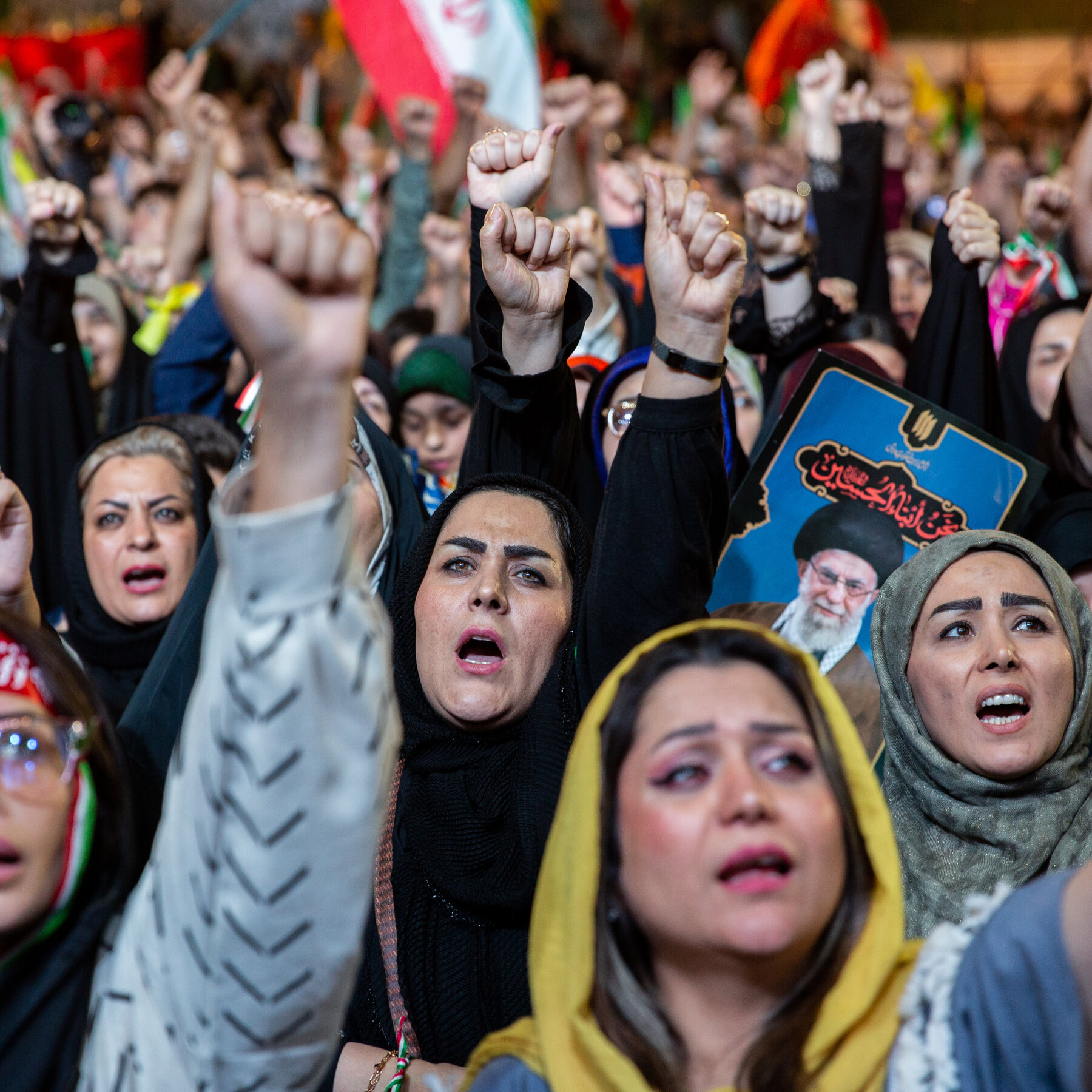
Iranian state media reported on 4 May 2026 that two missiles had been fired at a United States Navy vessel attempting to transit the Strait of Hormuz, according to a report carried by The Spectator Index citing Iranian outlets. The claim, which Monexus cannot independently verify as of publication, comes amid mounting US pressure on Iran's oil exports — a separate set of developments that have already cut Asian refineries off from approximately 1.8 million barrels per day of Iranian crude.
The twin dynamics — an unverified report of direct military contact and a sustained naval interdiction operation — reflect a more assertive US posture in the Persian Gulf than has been in evidence for several years. The blockage of Iran's primary revenue stream, combined with the physical presence of US naval assets in the world's most consequential oil transit corridor, places both sides closer to uncontrolled escalation than at any point since the exchanges of 2019-2020.
What Iranian media reported
According to the reporting as cited by The Spectator Index on 4 May 2026, Iranian state-linked media claimed two missiles were launched toward a US naval vessel transiting the Strait of Hormuz. The sources did not name the vessel, specify which branch of the Iranian military conducted the launch, or provide independently verifiable evidence of impact or near-miss. US Central Command had not issued a public statement as of the time of this report's filing.
The report circulates against a backdrop of heightened Iranian rhetoric. Senior Iranian officials, including the commander of the Islamic Revolutionary Guard Corps Navy, have in prior statements characterised the US naval presence in the Gulf as illegitimate foreign occupation and have reserved the right to respond to provocations with what Tehran frames as defensive action. The Strait of Hormuz has long occupied a central place in Iranian strategic planning: roughly a fifth of global oil trade passes through the 21-mile-wide shipping lane separating Iran from Oman and the United Arab Emirates.
The blockade and its economic weight
The missile claim follows by one day a Nikkei Asia report, filed 3 May 2026, documenting a US naval blockade that has effectively cut Iranian crude oil off from Asian markets. According to that reporting, 1.8 million barrels per day of Iranian production has lost its primary buyers — refineries in China, Japan, South Korea, and India that had continued taking Iranian shipments under various workarounds to US secondary sanctions. The US blockade, rather than the sanctions regime alone, represents a qualitatively different mechanism of enforcement: it physically prevents liftings rather than threatening financial consequences for buyers.
The economic significance of that volume is substantial. Iran produced approximately 3.2 to 3.5 million barrels per day prior to the latest enforcement action, according to industry tracking estimates widely cited in energy markets reporting. A blockade affecting 1.8 million barrels per day removes more than half of Iran's exportable surplus from the market at a moment when global spare capacity is constrained. Oil traders and analysts tracking freight markets have noted unusual activity in Suezmax and Aframax tankers that had been carrying Iranian cargoes — several vessels have been idled or redirected, according to shipping-industry sources cited in energy market reporting.
Tehran is, by the Nikkei Asia account, scrambling to find alternative buyers and alternative transit routes — a challenge of considerable logistical difficulty given that Iranian oil trade has depended heavily on a network of intermediaries, tanker shadow fleets, and port infrastructure that is now under direct threat from naval interdiction.
Strategic geometry of the Strait
The Strait of Hormuz is not merely an economic chokepoint; it is a geopolitical one. The US Fifth Fleet, headquartered in Manama, Bahrain, has maintained a continuous carrier and escort presence in the Gulf for decades. That presence is both a guarantee of freedom of navigation for US allies — Saudi Arabia, the UAE, Kuwait, and Qatar all rely on the strait to export the bulk of their own hydrocarbon production — and a source of persistent friction with Iran.
Previous episodes of strait-related tension have followed a recognisable pattern: Iranian Revolutionary Guard Navy fast-attack craft operating in close proximity to commercial shipping; harassment of US naval vessels through simulated attack runs; and occasional threats, both public and diplomatic, to close the strait entirely. Actual closure has never occurred — Iran lacks the conventional naval capability to sustain a blockade against US and allied maritime power — but the threat has functioned as a diplomatic lever in every major negotiation over the past two decades.
The current situation is analytically distinct. The US is not merely present; it is actively interdicting. That changes the geometry of deterrence. Iran's options, absent a willingness to escalate to direct engagement with US naval forces, are constrained. But the same dynamic constrains Washington: any decision to escalate from interdiction to strikes on Iranian soil would fundamentally alter the regional security architecture and carry risks of broader conflict that the Trump administration's stated preference for economic pressure rather than military adventure has, until now, sought to avoid.
What remains uncertain
The most important unknowns are threefold. First, the facts of the missile incident itself: whether missiles were in fact launched, whether they approached the US vessel, and whether any response was initiated. The absence of US Central Command confirmation as of filing leaves the incident unverified. Second, the scope and operational tempo of the US blockade — whether it represents a new standing posture or a discrete operation, and whether it extends to non-Iranian vessels carrying cargoes of unclear origin. Third, Tehran's decision calculus: whether the pressure on oil revenues is sufficient to push Iranian leadership toward negotiation, or whether it creates internal pressure that finds outlet in more aggressive military posturing.
Independent verification of the 4 May missile claim was not available at the time of publication. Monexus will continue to monitor statements from US Central Command, the Pentagon, and Iranian state media for corroboration or contradiction.
This publication's reporting on the Hormuz incident centred on operational detail and oil-market impact. Major wire services led with the missile claim and framed the developments as the most significant US-Iranian naval confrontation since at least 2019. The differential reflects editorial weighting: Monexus treats the economic strangulation of Iranian oil exports as the more structurally consequential development, with the missile report treated as a leading indicator of how Tehran may choose to respond rather than as an event with independent significance.
Wire provenance
This editorial synthesis draws on the following public wire/social posts:
- https://t.me/spectator_index/18536
- https://t.me/nikkeiasia/1248