Iran's Diplomatic Counter-Offensive Targets Allied Rifts as Death Toll Rises
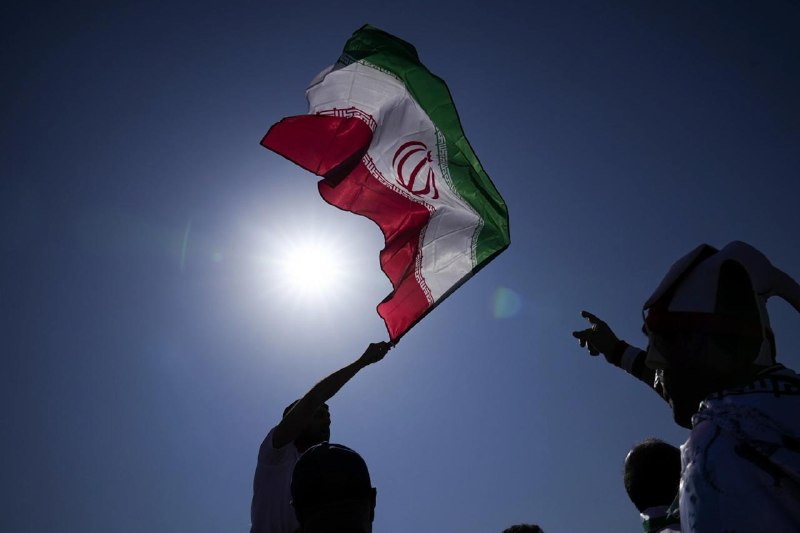
Iran's foreign ministry opened its weekly press conference on 4 May with a figure that is difficult to absorb: 184 students and 36 teachers, dead. The spokesperson named the toll directly, without qualification, in what appeared designed as much for international broadcast as for domestic consumption. The attack that produced those deaths — its attribution, its legality under international humanitarian law, its strategic calculus — remains contested across different capitals. But in Tehran's telling, the moral weight of the figure is the story.
What followed from the same podium, however, revealed something more consequential than grief: a coordinated diplomatic pressure campaign aimed not at Washington directly, but at the cracks running through Washington's coalition. The goal, insofar as the foreign ministry's statements can be taken as indicative of intent, is to convert military escalation into diplomatic fragmentation.
Civilian Toll and the Accountability Gap
The death toll cited at the press conference — 184 students, 36 teachers — represents the most specific accounting Iran has offered of civilian harm from the strikes launched in mid-April 2026. The figures could not be independently verified against open-source casualty monitoring at time of going to press. United Nations agencies and the International Committee of the Red Cross had not published corroborated tallies as of 2026-05-04T08:00 UTC.
The absence of independent verification is itself a feature of this kind of information environment. Iranian state media amplified the figures across Telegram channels with a velocity that suggested pre-production. Western wire services carried the statements but applied the standard caveat: the toll could not be independently confirmed. That asymmetry — Iranian precision with a political purpose, Western precision with an epistemic hedge — is not incidental to how this conflict is being communicated to different audiences.
The accountability gap matters for legal reasons that will outlast the current diplomatic phase. Should cases eventually reach international judicial review, the question of who controlled the target selection, who conducted proportionality assessments, and what patterns of civilian harm emerged across multiple strikes will be central. The Iranian foreign ministry's decision to lead with the student and teacher figures is an opening brief in that eventual proceeding, not merely a press tactic.
Leveraging Transatlantic Friction
The second track of Tehran's press conference response was more geopolitical in character. According to statements reported by Al Alam, the foreign ministry claimed that German officials had acknowledged America's direct entry into the conflict. Separately, Mehr News reported that Iran received Washington's response through Pakistan — a detail that places Islamabad in the uncomfortable position of having served as a conduit for communication between parties that are, at this moment, in active hostilities.
The German acknowledgment, if accurate, would be significant. Berlin has walked a careful line since the escalation began: publicly supporting de-escalation while declining to endorse specific strike authorisations. An admission that the United States entered the conflict directly would complicate Germany's diplomatic positioning within the European Union, where several member states have resisted aligning too closely with Washington's more maximalist demands on Iran.
That divergence was not created by the strikes. It has been building for years — over the Iran nuclear deal, over sanctions policy, over the question of whether European economic interests in Tehran were worth preserving as a diplomatic anchor. The strikes have now accelerated a fracture that European diplomats had been managing, not resolving.
The Pakistan channel adds another layer. Islamabad has maintained a complex equilibrium between Washington and Tehran for years, hosting Afghan peace negotiations while conducting its own security operations along the Iran border. That Pakistan served as an intermediary for Washington's response does not necessarily indicate a shift in Pakistani alignment — it may simply reflect the fact that direct diplomatic channels between the two governments have become functionally inoperable. But the fact of intermediary communication is itself a data point: neither party is willing to accept the costs of total rupture, even as kinetic strikes continue.
The Hormuz Calculus
The third element of the foreign ministry's statement addressed a question that has quietly animated Gulf state anxieties throughout this escalation: what happens to the Strait of Hormuz? According to Jahan Tasnim, the ministry spokesperson said Iran considers itself "the guardian of the security and peace of the Strait of Hormuz," citing a recent statement from the Central Command of the country's armed forces.
This is not a new claim. Iran has made it before, during periods of acute tension with the United States and its Gulf allies. The difference now is that the statement comes in the immediate aftermath of strikes that Iranian leadership has characterised as existential threats — a framing that colours every subsequent security pronouncement. The strait carries roughly 20-25 percent of the world's oil trade. Any credible threat to its passage would immediately trigger a global market response. Whether Iran's posture represents a genuine contingency plan or a deterrent statement intended to constrain further escalation is a question that Western military planners are presumably modelling intensively.
Gulf states have responded with notable restraint. Saudi Arabia and the UAE have avoided public endorsement of the strikes and have not altered their energy infrastructure posture in ways that would signal expectation of closure. That restraint is itself a diplomatic signal — these governments are calculating that the current trajectory does not yet justify the economic disruption that full confrontation would bring.
Stakes and the Diplomatic Window
The next phase of this conflict will not be decided on the battlefield alone. The foreign ministry's press conference was, at one level, a communications operation: it named a casualty figure, amplified allied friction, and reaffirmed a territorial security claim. But communications operations are not separate from strategy — they are part of it.
The casualty figure is intended to shape international opinion in ways that constrain further strikes. The reference to German admissions is intended to complicate alliance cohesion. The Hormuz statement is intended to remind Gulf states that escalation carries a price they may not be willing to pay. Taken together, they represent an attempt to fight a political war alongside the military one.
The sources reviewed do not indicate what specific diplomatic proposals Iran's foreign ministry presented at the press conference, nor whether any back-channel communications are active. What is clear is that Tehran is not sitting idle while the international narrative consolidates around the strike narrative. The question for Western capitals is whether their own diplomatic responses are sufficiently coordinated to prevent Tehran from exploiting the gaps between them.
This publication's wire inputs carried the Iranian foreign ministry statements prominently; the Western wire framing emphasised different angles, with the civilian toll receiving more granular corroboration efforts from some outlets than others.
Wire provenance
This editorial synthesis draws on the following public wire/social posts:
- https://t.me/alalamfa
- https://t.me/alalamfa
- https://t.me/mehrnews
- https://t.me/JahanTasnim