Iran Fires Missiles at US Warships Near Strait of Hormuz, Sources Say
Iranian naval forces reportedly targeted two US warships near Jask Island after they ignored IRGC warnings, according to Iranian state media. The incident marks a significant escalation in a region already strained by stalled nuclear talks and competing regional ambitions.
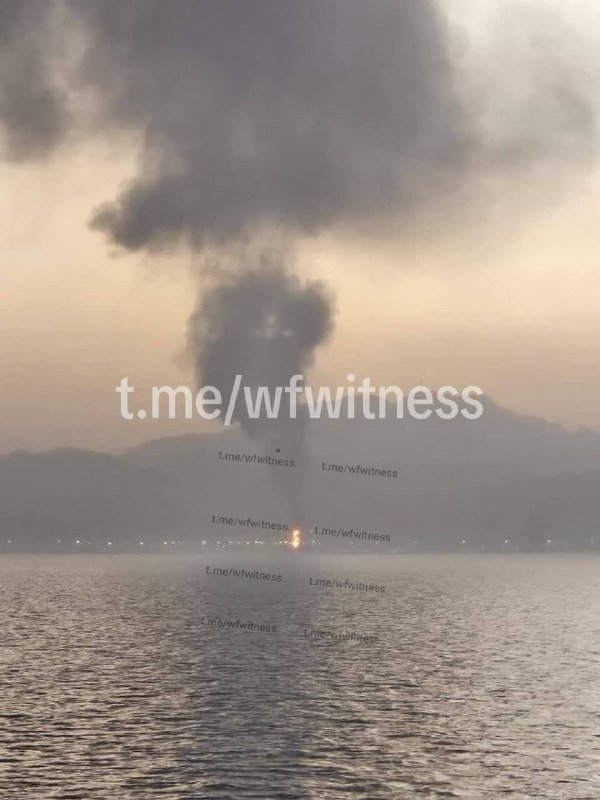
What happened
On 4 May 2026, Iranian naval forces reportedly fired two missiles at US warships in the Gulf of Oman near Jask Island, according to multiple reports citing Fars News Agency and the Iranian army's press service. The incident occurred after the IRGC Navy issued warnings to two US patrol boats that were operating near the island, sources said. The US vessels ignored those warnings, the Iranian side claimed, prompting the naval forces to act. Iranian state media described the operation as the prevention of American warships from passing through the Strait of Hormuz — one of the world's most strategically sensitive chokepoints, through which roughly a fifth of the world's oil supply transits.
The reports did not specify which classes of vessels were involved on either side. Iranian state media described the target as an American warship; initial Telegram dispatches used both "warship" and "patrol boat" terminology without clarification from the US side. American officials had not issued an on-the-record statement by early afternoon UTC.
The escalation context
This is not an isolated event. The Strait of Hormuz has been a flashpoint between Iran and the US Navy for decades, with periodic confrontations that occasionally cross the line into direct engagement. What makes this episode notable is its timing — it comes amid already elevated tensions over Iran's nuclear programme, the collapse of the Vienna-adjacent nuclear talks, and a broader contest over regional influence in the Gulf.
Iranian officials have long maintained that foreign military vessels transiting the strait must adhere to what Tehran defines as "rules of passage" — a position the US rejects as inconsistent with international maritime law. The US Navy has consistently exercised what it calls the right of free passage, a posture backed by the vast majority of maritime law scholars and the UN Convention on the Law of the Sea, which Washington applies without formal ratification. Iran, which has its own ongoing disputes with the legal framework, has at various points threatened to close the strait entirely — a threat it has never been able to execute against a determined US carrier group, but one that continues to animate its strategic rhetoric.
The immediate trigger — US patrol boats "spotted near Jask Island" — suggests a monitoring or surveillance operation rather than an incursion. But the Iranian framing treats any foreign naval presence in the vicinity of its coastline as a provocation requiring a response.
The counter-narrative
Western analysts and US military officials will likely frame this as another instance of Iranian provocativeness — a pattern of behaviour that includes the seizure of oil tankers, harassment of commercial shipping, and the 2019 downing of a US surveillance drone. That reading has merit. Iran has a documented record of using maritime pressure as a tool of coercive signalling, calibrated to send messages to both domestic audiences and foreign governments without crossing thresholds that would invite devastating retaliation.
But the Iranian position carries its own internal logic. Tehran views the permanent presence of US naval forces in the Persian Gulf as an existential encirclement — an historically grounded anxiety, given the US role in supporting Iraq during the Iran-Iraq war and the covert operations of the 1980s. Iranian strategists see the strait itself as a red line: not necessarily because they intend to close it, but because allowing American vessels to treat it as unchallenged American territory would cede a psychological and strategic advantage that normalisation of US presence has already largely given Washington. The missile launches, in this reading, are less about wanting a war and more about managing the perception of sovereignty.
Neither framing is complete on its own. The truth sits uncomfortably between them: Iran tests limits, the US pushes back, and the Gulf's essential geography ensures that no single incident stays small for long.
The structural picture
The Hormuz confrontation sits inside a larger contest over the architecture of the Gulf. For decades, American naval supremacy in the region was taken as given — a cornerstone of the US-led order that underpinned energy markets, alliance commitments, and the dollar's role in global oil pricing. That order has faced pressure from multiple directions: a more assertive Iran, a China that increasingly depends on Gulf oil and has demonstrated willingness to build its own Gulf partnerships, and a Russia that has found in Iranian alignment a useful counterweight to American influence.
The strait is, in this sense, a proxy for a broader question: who sets the rules of engagement in one of the planet's most economically critical waterways? The American answer — freedom of navigation, backed by overwhelming naval force — is not one Iran accepts, and it is one that Beijing watches with growing interest. Each incident like the one reported on 4 May adds a data point to a pattern that the global South reads differently than Washington does.
What we do not yet know
The sources reviewed for this article are all rooted in Iranian state-affiliated media — Fars News Agency and the IRGC-adjacent Telegram channels that amplified the reporting. No independent confirmation from US Central Command, the Pentagon, or Western wire services was available at time of publication. We do not know the US classification of the vessels involved, the outcome of the missile strikes, or whether any American personnel were injured. We also do not know whether the US vessels returned fire, a detail that would significantly alter the incident's characterisation. Those specifics matter, and they will determine whether this episode fades into the catalogue of Hormuz confrontations or marks a qualitative shift.
The reporting from Iranian sources describes two missiles striking the warship. Western accounts, if and when they emerge, may offer a different version. Readers should treat the scope of what occurred as contingent on corroboration that is not yet available.
The stakes
If the incident escalates — through retaliation, through an American decision to reinforce its presence visibly, or through a cycle of tit-for-tat signalling — the consequences extend well beyond the Gulf. Global oil markets are exquisitely sensitive to Hormuz-related disruptions: even the credible threat of closure is enough to move prices sharply. The US has significant naval assets in the region and has demonstrated willingness to use them; Iran has demonstrated willingness to absorb costs in pursuit of signalling objectives. The combination is dangerous precisely because both sides believe they have something to gain from hard-line responses.
The more durable question is whether the Hormuz order — informal but functional, based on mutual awareness of red lines and mutual restraint in their vicinity — is under structural stress. The answer depends partly on what the next few days reveal about how both capitals choose to manage this episode. Monexus will continue to update this story as verified information becomes available.
This publication covered the incident using Iranian state-affiliated sources as the primary input, a choice that reflects the absence of on-the-record US or Western-government confirmation at time of writing. We are tracking CENTCOM and Pentagon statements and will update when verified Western accounts emerge.
Wire provenance
This editorial synthesis draws on the following public wire/social posts:
- https://t.me/DDGeopolitics/38442
- https://t.me/DDGeopolitics/38439
- https://t.me/FotrosResistancee/11092
- https://t.me/myLordBebo/8921