Iran's Hormuz Gambit: How Tehran Turned the World's Most Critical Chokepoint Into a Lever
As Iran's parliamentarian warns that any US naval escort mission would constitute a ceasefire violation, the Strait of Hormuz has become the fulcrum on which a new Middle Eastern order may pivot — and Washington's leverage is thinner than the propaganda suggests.
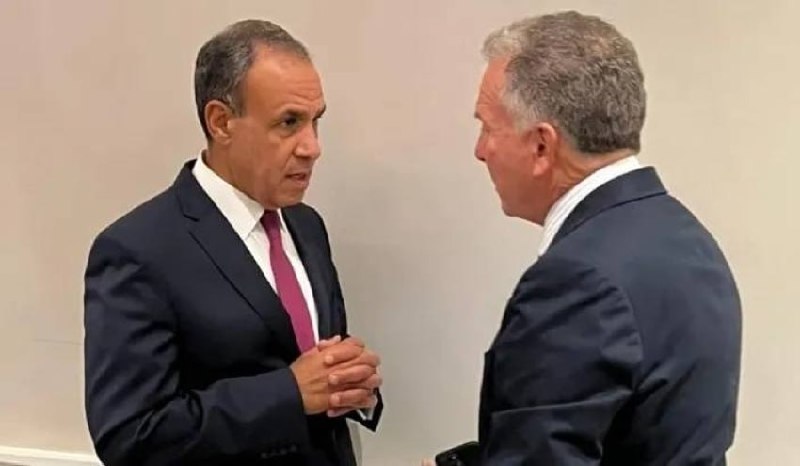
On the morning of 3 May 2026, a senior member of Iran's parliament stood before cameras in Tehran and delivered an unambiguous warning: any United States naval involvement in what Iran terms its newly established maritime regime in the Strait of Hormuz would constitute a violation of the ceasefire framework then holding — barely — between the two countries. The statement, carried in full by Iranian state media, came within hours of President Donald Trump's announcement from Washington that the United States would launch a mission to "guide" and ultimately escort stranded vessels through the same stretch of water where, for weeks, Iranian maritime authorities had been tightening their grip on traffic. The collision course was not accidental. It was engineered.
The Strait of Hormuz is not merely a shipping lane. It is the arterial vein through which roughly 20 percent of the world's oil supply passes daily — a 21-mile-wide channel flanked by Oman on its southern edge and Iran on its northern coast, funneling tankers from the Persian Gulf toward the Indian Ocean and beyond. To control Hormuz is to hold a trigger over global energy markets. For decades, that asymmetry — the world needing the strait more than any single actor needed to keep it open — has been the foundational power reality of the Gulf. What has shifted in the past six weeks is not the geography but the willingness of one side to act on it.
The anatomy of a squeeze
Iran's tightening grip on the strait did not begin as an act of pure provocation. According to reporting carried by Iranian state media on 3 May 2026, Tehran confirmed it had received the United States' response to its 14-point proposal — a document delivered through Pakistani intermediaries that represented Iran's opening position in what diplomats on both sides have been careful not to call negotiations. The proposal, the specifics of which have not been made public, appears to centre on sanctions relief in exchange for verifiable limitations on Iran's nuclear programme and its regional proxy networks. It is the maritime dimension, however, that has drawn the sharper international attention.
Iranian authorities confirmed the same day that they had established what they describe as a new maritime regime for the strait — effectively a set of procedural requirements governing which vessels may transit, under what conditions, and with whose authorisation. The description fits the pattern of what international maritime lawyers call "innocent passage" frameworks: technically lawful under the United Nations Convention on the Law of the Sea, which Iran has ratified, but implemented in ways that convert a shared international waterway into a checkpoint requiring Tehran's active consent. Two ships in the vicinity of the strait reported attacks in the preceding 48 hours, according to wire service reporting. The attribution of those attacks remained contested as of publication.
The practical consequence of Iran's move has been a backlog of vessels — some carrying oil cargoes, others transiting without cargo — effectively stranded in the Gulf or held at anchor awaiting clarity on whether they will be permitted to pass. Shipping industry sources tracking the congestion describe a queue that has grown week-on-week since mid-April. The economic pressure is immediate: each day a laden tanker sits anchored is a day of demurrage charges accumulating, insurance premiums ticking, and buyers on the other end of the supply chain facing contractual delays.
Trump's announcement and the limits of naval power
The President's statement on 4 May 2026, confirmed across multiple wire services including NPR and Al Jazeera, outlined what he described as a mission beginning that same day to "guide" stranded vessels through the strait. The language was deliberate. "Guide" is not "escort" in the conventional naval sense — it stops short of implying direct confrontation with Iranian patrol vessels. But it is not neutrality either. It signals that American naval assets will be present in and around the strait with the explicit purpose of ensuring certain ships pass through, and it invites the inference that those ships are doing so under American protection rather than under the terms of Iran's newly declared maritime order.
Iran's parliamentary response, as reported by PressTV on 4 May 2026, framed this precisely as a legal escalation. The lawmaker's statement — that any US interference in the new Hormuz regime constitutes a ceasefire violation — is a political claim rooted in the argument that Iran's maritime procedures are lawful exercises of coastal state rights, and that an American naval presence aimed at circumventing those procedures is itself a breach of the understandings that allowed the ceasefire to hold. Whether that argument holds legal water is a separate question from whether it is politically potent. In the current environment, with ceasefire negotiations in a fragile state, it is potent enough.
The gap between Trump's announcement and what a functioning US naval escort mission would actually require is wide. A genuine escort operation — where American warships physically accompany commercial vessels through contested waters — would require naval assets positioned in or near the strait, a communication chain with the vessels being escorted, coordination with flag-state governments, and a tolerance for the possibility of confrontation with Iranian coast guard or Revolutionary Guard naval forces. "Guide" is a word that preserves deniability while making the point. It is a statement of position as much as a plan of action.
A pattern older than the crisis
Hormuz has been a point of friction in US-Iranian relations since the 1979 revolution, but the strategic logic of weaponising it has surfaced repeatedly in periods when Iran has felt cornered by international pressure. In the mid-1980s, during the Iran-Iraq War, both sides conducted tanker warfare in the Gulf — a campaign that ultimately drew external powers into the waterway's defence. In 2011 and 2012, Iranian threats to close the strait in response to Western sanctions prompted emergency planning in Washington and among Gulf allies, even as analysts noted that a full closure would harm Iran's own oil exports as much as anyone else's. The paradox of Hormuz as leverage is that the actor controlling it cannot fully use it without damaging themselves — which is why every previous Iranian oscillation toward closure has been calibrated rather than absolute.
What distinguishes the current moment is the combination of factors: a domestic political environment in Tehran that rewards showing strength in the face of American pressure; a sanctions architecture that has pushed Iran's oil exports to historic lows, reducing the self-harm calculus; a United States administration whose stated preference is for bilateral negotiation rather than regime change; and a ceasefire framework whose continued viability depends on both sides avoiding the kind of incident that transforms a standoff into a shooting war. Iran's 14-point proposal, delivered through Pakistan, suggests Tehran is not seeking outright confrontation — it is seeking terms. The maritime regime is a negotiating position made physical.
The economic reality underneath the rhetoric
It is worth naming what a genuine disruption of Hormuz transit would mean for global oil markets, because the numbers are large enough to reframe the political theatre as something more than posturing. The strait handles approximately 21 million barrels of oil per day in normal conditions. A sustained reduction of even 30 percent — achievable through procedural harassment rather than outright blockade — would tighten global supply sufficiently to put upward pressure on crude prices significant enough to register in consumer economies far from the Gulf. The United States, where gasoline prices remain a first-order political variable, is not immune. Gulf Arab states — Saudi Arabia, the UAE, Kuwait — whose budgets depend on oil revenues at specific price thresholds, have a direct interest in keeping the strait open and are watching the American response with an attention that official statements do not fully convey.
This is the structural reason Washington has framed its position in terms of "guiding" rather than confronting. An open US-Iranian clash in the strait would be a supply shock that no allied producer could offset through increased output quickly enough to prevent price volatility — volatility that, in a US election cycle or near-election environment, becomes a domestic political liability. The economics constrain the military options in ways that Iran understands and has priced into its own calculations.
What comes next
The immediate trajectory is shaped by three variables. The first is whether Iranian authorities actually prevent or impede the vessels that American naval assets are present to "guide" — which is to say, whether the confrontation stays verbal or becomes physical. The second is whether the ceasefire framework, already described by diplomatic observers as "fragile," absorbs this latest exchange of position statements without formal rupture. The third, and perhaps most consequential, is what the United States' written response to Iran's 14-point proposal actually contains — and whether the gaps between the two positions are narrow enough that the Pakistani back-channel can translate them into something face-saving for both sides.
The parliamentary warning from Tehran on 4 May carries weight precisely because it comes from within Iran's system, not from a Revolutionary Guard commander or a foreign ministry spokesperson. It signals that the hardline bloc within the Iranian political establishment is watching the American naval announcement and is prepared to treat it as a test — one whose outcome will shape how Iran positions itself in whatever negotiations are or are not taking place. Trump, for his part, has shown in previous standoffs a preference for dramatic public declarations over the quiet diplomatic grinding that agreements typically require. The announcement that the US would "guide" stranded ships was made in a press availability, not in a demarche delivered through intermediaries. That is a signal of its own kind.
The Strait of Hormuz has survived every previous crisis over it. The geography has not changed; the leverage calculus has not changed in its fundamental structure. What has changed is the willingness of the current Iranian government to push the operational envelope — to move from threatening closure to implementing a licensing regime that makes passage contingent on Tehran's say-so. And what has changed in Washington is the frame under which a naval presence is justified: not freedom of navigation operations in the abstract, but the immediate needs of stranded ships and their owners. Both sides are doing something carefully calibrated. The risk is that the calibration fails on one side or the other — that a commander on the water makes a call his superiors in Tehran or Washington did not authorise, and the crisis that was managed in public statements becomes a crisis that requires managing in wreckage.
This publication has covered the Strait of Hormuz stand-off through the lens of maritime law and Great Power competition rather than through the prism of bilateral hostility. The framing emphasises the structural incentives on both sides to avoid escalation — and names the economic costs of failure clearly — in part because a framework that treats this as a simple contest between a lawless actor and a benevolent protector misses what is actually driving the decisions on each side.