Iran's Hormuz Gambit: When Geopolitical Leverage Meets Diplomatic Theatre
Tehran's latest Foreign Ministry communiqués frame the Strait of Hormuz as sovereign Iranian territory under international law. That framing is deliberate — and it exposes a fundamental mismatch between Western threat-assessment and the structural reality of Gulf geopolitics in 2026.
On the morning of 4 May 2026, Iranian Foreign Ministry Spokesperson Esmail Beqaei delivered a cluster of statements that Western wire services will characterise as bellicose posturing. The Tasnim news agency — Iran's semi-official Farsi-language outlet with a known editorial proximity to the Islamic Revolutionary Guard Corps — reported Beqaei asserting that no diplomatic process would conclude with America "breaking the agreement," that Iran was "the guardian of the security and peace of the Strait of Hormuz," and that the United States was sinking deeper into a "self-made swamp." Reuters, the BBC, and the Associated Press will carry versions of these communiqués. Their framing will be familiar: Tehran escalates, Washington responds, the Strait of Hormuz becomes a pressure point in an old, cold conflict.
That framing is not wrong. But it is incomplete in a way that matters.
The geography is the argument
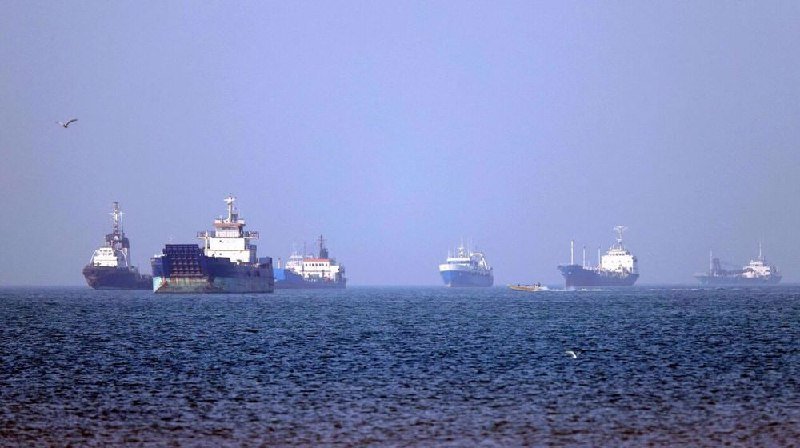
The Strait of Hormuz is not a metaphor. It is the world's most consequential maritime chokepoint, carrying roughly 20-25 percent of global oil trade on any given day, according to the US Energy Information Administration's multi-year tracking data. Tankers moving through its narrowest point — roughly 33 nautical miles wide at its narrowest corridor — represent a logistical dependency that no amount of strategic diversification has eliminated. The United States Central Command has maintained a persistent naval presence in the Gulf for decades. Saudi Arabia, the UAE, and Qatar operate under the assumption that Hormuz transit is guaranteed by American deterrence.
Tehran's position, articulated through Beqaei's statements on 4 May, is that this assumption is a political choice masquerading as a natural fact. Iran cites the Khatam-al-Anbia central headquarters' recent statement — referenced explicitly in the Foreign Ministry communiqués — as the authoritative frame: Iran, as a littoral state with sovereignty over its territorial waters, bears primary responsibility for the waterway's security. This is not merely rhetoric. It is a legal argument embedded in the 1982 United Nations Convention on the Law of the Sea, to which Iran is a signatory and which the United States has signed but not ratified. Tehran is not making a threat; it is making a claim. The difference matters for how one reads the diplomatic temperature.
Reframing the swamp
Beqaei's characterisation of American policy as a "self-made swamp" will read as propaganda in most Western newsrooms. It should not be dismissed so quickly. The phrase points at something structural: every American administration since 1979 has approached Iran through the dual-track logic of sanctions and military deterrence, and that dual track has consistently produced the same outcome — a more technologically sophisticated, more regionally networked Iranian state, with every round of sanctions producing indigenous substitution effects that the Iranian defence-industrial base has absorbed and commercialised. The 2018 withdrawal from the JCPOA, which Beqaei cited as America's breach of the agreement, accelerated rather than reversed that trajectory.
This is not an argument that Tehran is blameless. The IRGC's drone and missile programmes, its support for Lebanese Hezbollah, Iraqi PMU networks, and Houthi forces in Yemen — all of these represent genuine threats to regional partners and to American personnel stationed across the Gulf. But understanding the structure of the swamp requires acknowledging that American policy has been feeding the conditions Beqaei is now pointing to. The counterclaim — that Iran is the aggressor and the sanctions are proportionate — is also true, but it does not constitute a policy solution. It is a restatement of the problem.
The multipolar margin
What the Western wire framing consistently underweights is the degree to which Gulf states themselves have repositioned over the past four years. Saudi Arabia's normalization talks with Iran, brokered in part through Iraqi and Omani intermediaries, have produced a de facto détente that has held. The UAE and Qatar have deepened commercial ties with Tehran across sectors including port logistics, tourism infrastructure, and energy-adjacent trade. This is not alliance-switching — the Gulf monarchies remain bound to American security guarantees — but it is hedging of a kind that was absent in the 2015-2019 period. States with significant oil-revenue exposure to Hormuz transit have every incentive to keep that waterway from becoming a theatre of great-power competition.
Beqaei's statements, read in that context, are not only directed at Washington. They are also a signal to the Gulf states: the Iranian position on Hormuz is sovereign, non-negotiable, and durable. The Khatam-al-Anbia framing — which references the Islamic Revolutionary Guard Corps' Khatam-al-Anbia Construction Headquarters, an entity with significant economic and infrastructure reach — is doing institutional work here. It positions not just the Foreign Ministry but the IRGC's economic arm as a stakeholder in the Hormuz-security narrative. That institutional signal is as important as the diplomatic language.
What a resolution might look like
The sources do not specify any proposed diplomatic off-ramp, nor do they indicate that a back-channel process is active. Beqaei's communiqués are best read as a statement of position, not an opening gambit. What they do establish is the floor beneath which Iranian diplomacy will not go: sovereign authority over Gulf waters, legal standing grounded in international law, and the characterisation of American policy as destructive and self-defeating.
If that floor is real — and the structural evidence (IRGC naval modernisation, indigenous satellite-launch capability, sustained drone-export networks) suggests it is — then the Western strategy of incremental sanctions and deterrence positioning faces a fundamental mismatch. It is applying pressure on an actor whose willingness to absorb that pressure is itself the evidence that the pressure is not working. The question is not whether Tehran will blink. The question is whether Washington has a theory of change that accounts for a region in which every neighbouring state has decided, quietly, to manage its relationship with Iran rather than contain it.
Tehran's Hormuz communiqués on 4 May are not a crisis. They are a statement that the old binary — either you accept Iranian regional primacy or you contain it — no longer maps onto the actual geography of Gulf power. What happens next depends on whether anyone in the policy apparatus is willing to read the map.
This article was desked on 4 May 2026. The wire services led with the "swamp" characterisation; Monexus foregrounded the Khatam-al-Anbia institutional signal and the multipolar hedge context, which the major outlets buried as background context.
Wire provenance
This editorial synthesis draws on the following public wire/social posts:
- https://t.me/tasnimnews_en
- https://t.me/JahanTasnim