Iran's Hormuz Gambit Shows the Limits of Economic Coercion
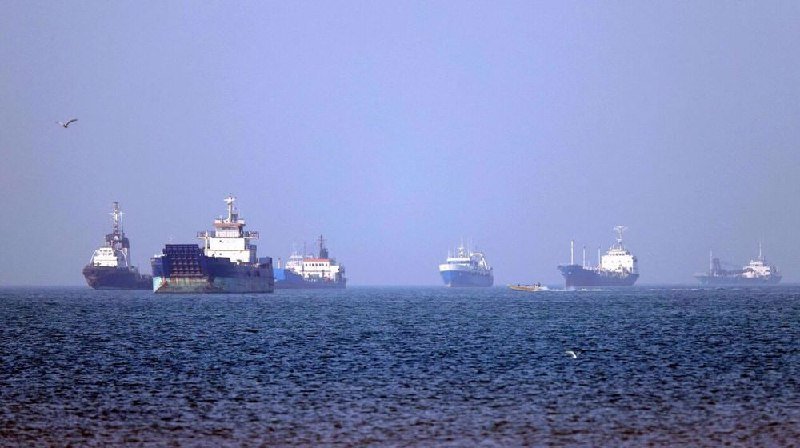
On the evening of May 4, 2026, multiple Iranian security officials delivered a set of coordinated statements that amount to an unambiguous threat. According to reporting by Tasnim News, a senior Iranian political-security source told the Al Mayadeen network that the management of the Strait of Hormuz is entirely in Iran's hands. An Iranian security official speaking separately to the same outlet was more direct: American aggressor forces would be targeted if they advanced. The statements, carried across Tasnim, Fars News, and Al-Alam within a twelve-minute window, were not the remarks of an isolated hardliner. They were a coordinated signal from Tehran's security apparatus — one that deserves to be taken seriously, not least because it arrives at a moment of heightened strain in US-Iranian relations.
What Iran Is Saying — and Why Now
The language used in these statements is notable for its precision and its escalation from routine Iranian rhetoric. The reference to "American aggressor forces" is not the neutral diplomatic phrasing of a government seeking negotiation. It is the language of a state that has decided its counterpart is an enemy to be confronted, not a partner to be worked with. The claim that the Strait of Hormuz is entirely under Iranian control is a direct repudiation of the longstanding American position that the waterway must remain open to all traffic and that the US Navy exists in part to guarantee that openness.
The timing matters. The coordinated release across at least four Iranian state-adjacent outlets — Tasnim, Fars News, Jahan Tasnim, and Al-Alam — on the same evening suggests orchestration rather than improvisation. Iran has issued warnings about Hormuz before. What distinguishes the current moment is the convergence of a stalled nuclear negotiation, maximum-pressure sanctions that have not achieved their stated goal of regime capitulation, and what Tehran frames as American complicity in regional violence. Viewed from Tehran, economic strangulation produces a logic of asymmetric counter-pressure — not submission.
The Counter-Narrative: Just Deterrence Rhetoric?
Western analysts will note that Iran has made similar threats before without acting on them. The Strait of Hormuz is too economically vital — roughly 21 percent of global oil trade passes through it — for Tehran to actually close it without triggering consequences it cannot survive. In this reading, the warnings are precisely calibrated brinksmanship: demonstrate enough resolve to extract concessions, but stop short of the action that would justify American military retaliation.
A senior American defense official, asked about earlier cycles of Iranian Hormuz rhetoric, described them as "theatre" — designed for domestic and allied audiences rather than as genuine operational intent. The official argued that Iran's naval capabilities, while real, remain inferior to the combined firepower the US and its Gulf partners can deploy.
That reading is not wrong. But it underestimates what has changed: the nuclear talks are genuinely deadlocked, the sanctions regime has been tightened, and Washington's regional posture — particularly its support for Israel's military campaigns — has reinforced Tehran's conviction that American pressure is existential, not transactional. When a state believes its survival is at stake, the deterrence calculus that worked during earlier crises may no longer apply.
The Structural Frame: Chokepoints and the Limits of Dollar Hegemony
The Hormuz standoff is also a window into a broader pattern reshaping global resource politics. The dollar-denominated oil trade that has anchored American financial power since the 1970s has given the US a potent lever over energy producers. Iran's exclusion from the SWIFT financial messaging system, the secondary sanctions that have cut off its banking relationships, and the squeeze on its oil exports — these have caused genuine economic pain.
But the same sanctions architecture has created an incentive for energy producers and consumers to explore alternatives to dollar-denominated transactions. Russia, already under Western sanctions, has deepened its energy trade with China in rubles and yuan. Several BRICS members have publicly floated proposals for non-dollar settlement mechanisms. Iran, long outside the dollar system, has found that geographic leverage — controlling a chokepoint through which a fifth of the world's oil flows — offers a form of counter-pressure that financial exclusion cannot neutralize.
This is the underlying dynamic: the US Navy's dominance in the Persian Gulf has been a cornerstone of American power projection for decades. That dominance is being contested not through conventional naval competition, which Iran cannot win, but through the development of asymmetric capabilities — drones, anti-ship missiles, naval mines — that raise the cost of American intervention to levels the US electorate may not tolerate. The lesson Iran has drawn is that economic pressure and military threat can be combined into a coherent strategy of resistance.
Stakes: Who Wins If This Trajectory Holds
The short-term losers are oil markets and the consumers who depend on them. The US has committed to keeping Hormuz open. That commitment will be tested. A direct military confrontation in the Strait would be enormously costly for all sides — and Iran possesses anti-ship missile systems that could genuinely threaten American vessels operating in confined waters. Even a limited exchange would send oil prices sharply higher, with downstream consequences for global inflation and economic growth.
Iran itself faces significant risk. Escalation that draws American retaliation could set back its economy by years and potentially trigger internal instability. But Tehran appears to be calculating that American credibility is more fragile than its own. If Iran can demonstrate that the Strait of Hormuz remains vulnerable to its control, it forces the US to either accept Iranian red lines or commit to a military confrontation that carries substantial risk of escalation.
The longer-term stakes extend beyond the Gulf. China, Japan, South Korea, and India — all heavily dependent on Gulf oil — have a direct interest in the Strait remaining open. A prolonged period of heightened tension would accelerate their already-growing efforts to diversify energy supplies and reduce dependence on Gulf transit routes. The structural shift toward a more multipolar energy architecture would, paradoxically, be advanced by the same American pressure campaign intended to keep Iran isolated.
The trajectory is likely to worsen before it improves. If nuclear talks remain frozen, Iran has little incentive to moderate its posture — and every incentive to demonstrate that its willingness to impose costs on the US and its allies exceeds American willingness to absorb them. A diplomatic breakthrough could defuse the immediate rhetoric. Without one, the Hormuz gambit will be followed by further escalation.
Western capitals should be under no illusion about what Tehran intends. But the appropriate response is not overreaction that feeds Iranian hardliners' narrative of American hostility. It is an urgent search for an off-ramp — one that acknowledges Iran's legitimate security interests even as it rejects the language of threats and targeting. The world cannot afford a miscalculation in the Strait of Hormuz.
This publication finds that the coordinated nature of the May 4 Iranian statements — released across four outlets within twelve minutes — is itself a signal Tehran intended to be read by Western intelligence services and regional capitals. Western wire coverage of the same statements tended to characterise them as standard Iranian brinksmanship. Monexus frames them as a deliberate escalation requiring a proportional diplomatic response.
Wire provenance
This editorial synthesis draws on the following public wire/social posts:
- https://t.me/tasnimnews_en/45678
- https://t.me/alalamarabic/23491
- https://t.me/JahanTasnim/18923
- https://t.me/FarsNewsInt/11245