Iran's Hormuz Warning and the Fragile Architecture of Gulf Deterrence
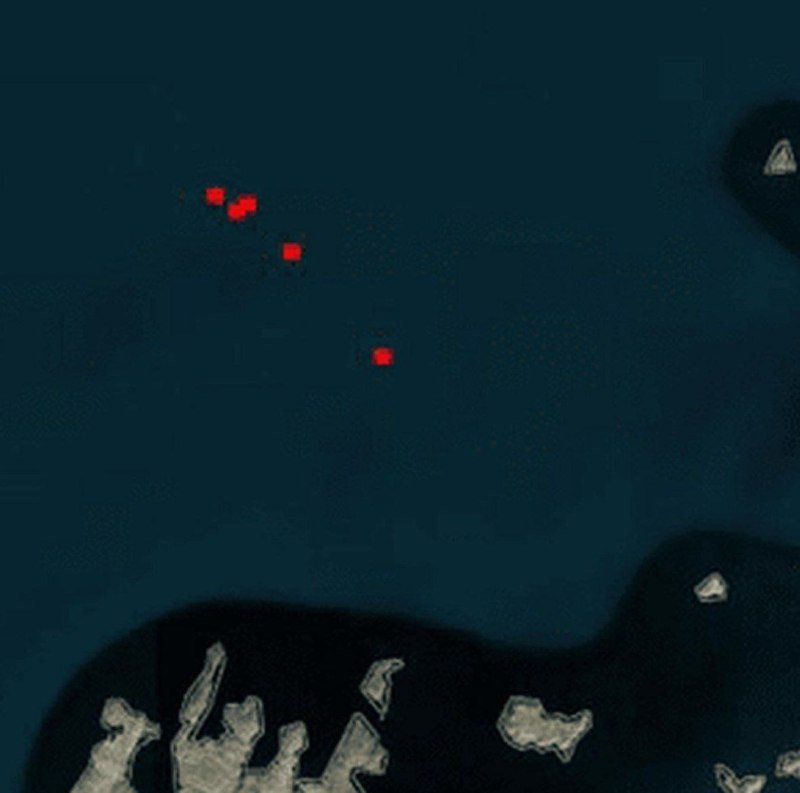
On the morning of 4 May 2026, Iranian state media reported an incident at the mouth of the Strait of Hormuz that, in the telling of the Islamic Republic's army public relations office, saw the Iranian Navy issue what it described as a "decisive and swift warning" to prevent American destroyers from entering waters Iran regards as its jurisdiction. Two missiles reportedly struck an American frigate that ignored the initial warning, according to local news sources cited by the Fars News Agency — an account the Islamic Republic's other military-affiliated outlets, including Tasnim and Mehr News, echoed within the hour with remarkably consistent language.
The story, as reported through Tehran-aligned channels on this date, is straightforward: a US warship pushed into contested space; Iranian forces pushed back; the Americans withdrew. That is one version of events. It is also the only version currently available, and responsible editorial practice requires acknowledging that plainly.
No independent confirmation from US Central Command, the Pentagon, or Western wire services had appeared by the time of this publication. The reporting comes exclusively from Iranian state-adjacent sources — a category that includes Fars News, Tasnim, and Mehr News, all of which operate within a media environment where official military statements pass through a structure that serves the interests of the Islamic Republic before it serves the interests of factual disclosure. That is not a reason to dismiss the reporting outright; it is a reason to hold it with appropriate epistemic care and to wait for corroboration that has not yet arrived.
What the sources say — and what they don't
The Islamic Republic's framing is precise in its construction. The language used — "American Zionist enemy," "decisive and quick warning," "entry was prevented" — is not the vocabulary of accidental escalation. It is the vocabulary of a choreographed statement, designed to convey strength to a domestic audience while delivering a signal to Washington. The consistency across multiple Iranian outlets suggests the messaging was coordinated, which is itself informative: Tehran wanted this account in circulation.
What the sources do not tell us is the preceding sequence. They do not say whether the US vessel had entered Iranian-claimed territorial waters or was transiting international shipping lanes. They do not specify the class of the American frigate, its location at the time of the alleged warning, or whether any crew were injured in the reported missile strike. They do not explain why a vessel described as ignoring an initial warning would then be targeted — a significant escalation that, if accurate, would mark a meaningful change in the rules of engagement in one of the world's most economically consequential waterways. These omissions are not incidental. In a media environment that controls the flow of information about its own military, what is not said carries weight alongside what is.
The Hormuz problem
The Strait of Hormuz is not a theoretical flashpoint. Roughly 20 percent of global oil trade passes through its narrowest point — a shipping lane about 33 kilometres wide at the El Abu Musa corridor. Any disruption, whether from military conflict, mining, or the mere perception of instability, reverberates immediately through global energy markets. This is not a secondary concern. It is the reason every administration in Washington for four decades has treated Iranian access to anti-ship capabilities as a Tier One strategic problem.
Tehran knows this. The Islamic Republic has used the geography of the strait as leverage since the early 1980s, when it began mining the waterway during the Iran-Iraq War — a campaign that nearly doubled global oil prices and drew American naval forces into the Persian Gulf on a sustained basis. The pattern has not changed in its essential logic, even as the technology has evolved. What has changed is the context: an Iranian economy under severe sanctions pressure, a regional footprint expanded through proxy networks, and a leadership structure navigating succession questions that make its decision-making calculus harder to model from the outside.
The United States, for its part, has maintained a continuous naval presence in the Gulf since the early 1990s, conducting what it calls "freedom of navigation operations" — deliberate transits designed to assert the international legal right of passage that Iran disputes. These operations are intentionally provocative in the sense that they are designed to be noticed. They are also, from the US perspective, non-negotiable. The question is whether the signals sent by both sides — the routine provocation and the routine response — are still operating within a shared framework of understood limits, or whether that framework has frayed.
The signal and the silence from Washington
What is notable about the 4 May 2026 reporting is not what it says about the incident itself, but what it says about the current state of communication between Tehran and Washington. Iranian state media produced a rapid, coordinated, stylistically consistent statement. The United States, at the time of this publication, had not issued a corresponding readout, confirmation, or denial.
That silence is itself a data point. It could reflect a decision to de-escalate by not amplifying. It could reflect uncertainty about what actually occurred. It could reflect internal deliberation about how to characterise an incident that does not yet have a洗干净 narrative. What it does not reflect, in any of these scenarios, is a functioning de-escalation channel between two powers that have no formal diplomatic relations and a history of misreading each other's signals. The silence is the absence of a phone call that, in a more stable period, might have happened at the working level before the statement reached the press.
The absence matters because the most dangerous moments in Gulf history have not been the ones where both sides wanted confrontation. They have been the ones where each side believed the other had signalled more willingness to back down than was actually the case — where a commander on a vessel made a call that no one in either capital had authorised, and where the domestic political calculus of both governments made retreat politically more expensive than escalation. The structure of deterrence in the Gulf has always relied on communication as much as on capability. When the communication degrades, the capability becomes more dangerous.
Stakes beyond the strait
If the Iranian account is substantially accurate — that a US warship was hit and withdrew — then the incident represents a meaningful step beyond the routine harassment that has characterised US-Iranian naval interactions for years. A missile strike on a US vessel is not a warning shot; it is an attack. The question of whether it was a retaliatory strike following an incursion into Iranian-claimed waters, or something less defensible under international law, is not a secondary debate. It determines whether the framework governing the strait is intact or broken.
If the framework is breaking down, the consequences extend well beyond the Gulf. Oil markets, already navigating the secondary effects of continued sanctions on Russian exports, would face a supply-side shock for which there is no quick remedy. The broader project of keeping Iran away from nuclear weapons, which the Trump administration has pursued through a strategy of maximum pressure that the Biden administration maintained, depends on the assumption that both sides can manage the kinetic rivalry without it spiralling into a conflict neither wants. A direct naval exchange tests that assumption in the most uncomfortable possible way.
Neither Washington nor Tehran has an interest in a war neither can win quickly. But interest is not always sufficient to prevent accident, and in a body of water this narrow, this economically central, and this politically charged, accident is not a peripheral concern. The sources that reported this incident did so on terms favourable to the Islamic Republic's narrative. Whether that narrative corresponds to what actually happened remains, for now, unanswered. That is the most important fact in the room.
This publication notes that coverage of the incident at time of writing drew exclusively from Iranian state-adjacent sources. No independent corroboration from US military authorities or Western wire services was available. Monexus will update as reporting develops.
Wire provenance
This editorial synthesis draws on the following public wire/social posts:
- https://t.me/farsna/29481
- https://t.me/tasnimnews_en/47228
- https://t.me/mehrnews/89123
- https://t.me/alalamfa/31844
- https://t.me/osintlive/11203