Iran's Maritime Blockade of the UAE Reshapes Gulf Security Architecture
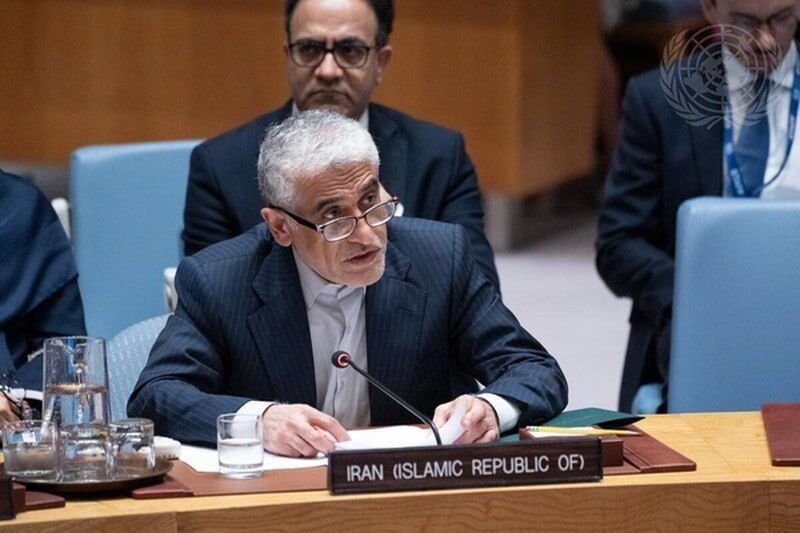
On the evening of 4 May 2026, a Twitter account identifying itself as @sprinterpress posted a terse message that rewrote the operating assumptions of every energy trader, naval commander, and foreign ministry in the world: "The maritime blockade of the UAE has begun. From now on, the Emirates will need to obtain permission from Iran to export oil." Within minutes, the claim was circulating across terminals in Singapore, trading desks in London, and crisis rooms in Washington and Brussels. The era of unchallenged Gulf maritime transit had ended.
That same evening, the Emirati armed forces disclosed that they had intercepted 12 ballistic missiles, 3 cruise missiles, and 4 unmanned drones fired from Iranian territory, in an attack that killed at least three people. The disclosure, posted to the Telegram channel operativnoZSU, marked the most significant direct assault on Emirati sovereign territory in recent memory. Iranian state-aligned media, including the Tasnim News English-language service, carried the UAE's figures but noted that Iran had not formally confirmed the attack. A simultaneous report from Middle East Eye, posted to X before the strikes, had revealed that Emirati officials were in confidential talks with Washington regarding a bilateral swap line loan — a financial arrangement that would provide the UAE with dollar liquidity outside the conventional IMF and SWIFT architecture, precisely the kind of structural financial lifeline a Gulf state would need if maritime commerce became unpredictable.
The coincidence of those three data points — a declared blockade, a missile barrage, and the quiet pursuit of dollar-swap protection — tells a story about how the Gulf's security architecture is being rebuilt in real time, not by a single dramatic event but by a cascading set of decisions made under pressure by actors on every side.
The Blockade Claim and Its Strategic Logic
The @sprinterpress account's framing of the blockade requires careful handling. The sources do not confirm that Iranian naval vessels are physically intercepting tankers in the Strait of Hormuz or the Persian Gulf proper. What is clear is that Tehran has declared a political-military intention: UAE-origin oil exports now require Iranian acquiescence, effectively making the Hormuz chokepoint a bilateral permission structure rather than an open transit corridor. Whether this translates into actual interdiction — vessels stopped, boardings conducted, tanker crews detained — is not yet documented in the available reporting. The distinction matters enormously: a declared intention is a diplomatic weapon; actual interdiction is an act of war.
The strategic logic for Tehran, however, is consistent with the broader posture Iran has maintained since the re-imposition of sweeping US sanctions in 2018 and the further tightening that followed. A maritime choke point leveraged against the UAE — the Gulf's third-largest oil producer after Saudi Arabia and Iraq — allows Iran to impose costs on a US-aligned Gulf state without directly attacking American personnel or vessels, a threshold that would trigger a far more severe response. The blockade framing also positions Iran as the region's primary security arbiter, a role that carries significant prestige in a region where US reliability is increasingly questioned in Gulf capitals.
For the UAE, the blockade declaration creates a two-track crisis. The immediate track is military: the missile barrages demonstrate that Iranian surface-to-surface capability can reach Emirati population centres and infrastructure. The longer track is economic: if tanker insurance premiums spike, if routes through the Gulf become conditional on Iranian clearance, the structural cost to UAE oil revenue could be severe.
The Missile Strikes and Their Disputed Dimensions
The strikes themselves remain partially contested. The UAE's official disclosure, as posted to operativnoZSU, stated that three people were killed and that the interception operation was largely successful — meaning the vast majority of inbound projectiles were destroyed before impact. Iranian state media has not confirmed the attack, which is consistent with Tehran's general practice of declining to comment on specific military operations while asserting a broader right to retaliate against what it defines as hostile acts.
The composition of the attack — 12 ballistic missiles, 3 cruise missiles, 4 drones — is significant. Ballistic missiles, even when intercepted, carry kinetic and psychological weight that drones do not. Cruise missiles, which fly at low altitude and can hug terrain, are harder to intercept with ground-based systems and suggest a degree of mission planning and target selection sophistication. The combination, delivered simultaneously, implies a coordinated strike rather than a saturation attempt, which in turn suggests the targets were pre-designated and the weapons were positioned in advance — a sign of deliberate escalation rather than reactive firing.
That said, the successful interception rate raises questions about Iranian intent. A force that wanted maximum destruction would have concentrated on overwhelming the Emirati air defence grid rather than distributing ordnance across a mixed payload. A force that wanted to demonstrate capability while limiting casualties might calibrate in exactly this way. Without Iranian confirmation of the strike's objectives, the interpretation remains open.
The Swap Line and the Dollar Architecture Response
The Middle East Eye disclosure, published to X before the strikes began, revealed that Emirati officials were in discussions with Washington regarding a bilateral currency swap line. A swap line — an agreement between two central banks to exchange their currencies at a fixed rate — would give the UAE access to dollar liquidity without requiring it to draw on its own reserves or go through IMF conditionality. For a Gulf state whose banking system and energy trade remain dollar-denominated, the arrangement would insulate the UAE from the kind of secondary sanctions pressure that the current US treasury architecture can deploy against financial counterparties.
The timing — reported before the strikes as a form of quiet contingency planning — suggests Emirati officials anticipated significant disruption and were attempting to construct financial resilience in advance. Whether Washington was willing to extend such an arrangement is not resolved in the available reporting. The US has used swap lines selectively: the Federal Reserve's emergency swap facilities during the 2008 and 2020 crises primarily served allied central banks with strong existing relationships. A new bilateral arrangement with the UAE would be a notable expansion of that precedent.
The broader significance is structural: the swap line question is inseparable from the dollar's role in Gulf energy commerce. Any Gulf state that finds its oil exports disrupted by a non-dollar power has a long-term incentive to explore whether the dollar's dominance in energy pricing is as durable as it once appeared. Iran's assertion of a right to control UAE maritime transit is simultaneously an energy-security challenge and a challenge to the dollar-denominated trading system that underpins Gulf sovereign wealth and state financing.
Regional Realignment and the Path Ahead
What the available evidence points to is a Gulf security order under active reconstruction. The US presence in the region — naval assets in the Persian Gulf, air defence deployments in Qatar and Saudi Arabia, the broaderCENTCOM architecture — remains the dominant structural fact. But the capacity of that architecture to guarantee safe transit for Gulf energy exports has now been directly challenged by a declared Iranian intention that the UAE cannot export oil without Tehran's approval.
The responses available to the UAE and its allies are limited in kind. Military deterrence — additional air defence deployments, expanded Patriot batteries, increased US naval presence — raises the cost of future strikes but does not resolve the underlying question of who controls Gulf maritime access. Financial architecture tools — swap lines, SWIFT exemptions, expanded insurance frameworks — address the economic symptom but not the political cause. The third option — diplomatic accommodation with Tehran — is politically toxic in Abu Dhabi but is the only route that could de-escalate the maritime dimension of the conflict.
The sources do not confirm whether Iran has actually interdicted vessels or whether the blockade remains at the level of declared intention. That distinction will define whether this moment is a serious diplomatic signal or a casus belli. What is clear is that the signalling has already altered the risk calculations of every energy market participant with exposure to Gulf transit. The era of predictable Gulf maritime passage has been called into question — and the resolution of that question will shape the architecture of global energy trade for years to come.
—
Monexus covered this as a structural escalation in Gulf security architecture and dollar-denominated energy transit, rather than as a narrowly bilateral dispute. The dominant Western wire framing centred on the missile strikes as a self-contained military incident; the structural frame here foregrounds the maritime dimension, the financial architecture response, and the longer-term question of whether the Gulf's energy transit guarantee can be taken for granted.
Wire provenance
This editorial synthesis draws on the following public wire/social posts:
- https://x.com/sprinterpress/status/1920048194079834368
- https://t.me/operativnoZSU/28451
- https://x.com/MiddleEastEye/status/1920047308982477073
- https://t.me/tasnimnews_en/31847