Iran Fires Warning Missiles at US Guided-Missile Destroyer in Persian Gulf
Iran launched two anti-ship ballistic missiles at the USS Canberra in the Persian Gulf on Monday morning — a move the Pentagon described as a deliberate but non-combat signal, arriving amid heightened regional tensions following Iran's April attacks on Israel and subsequent Israeli retaliatory strikes.
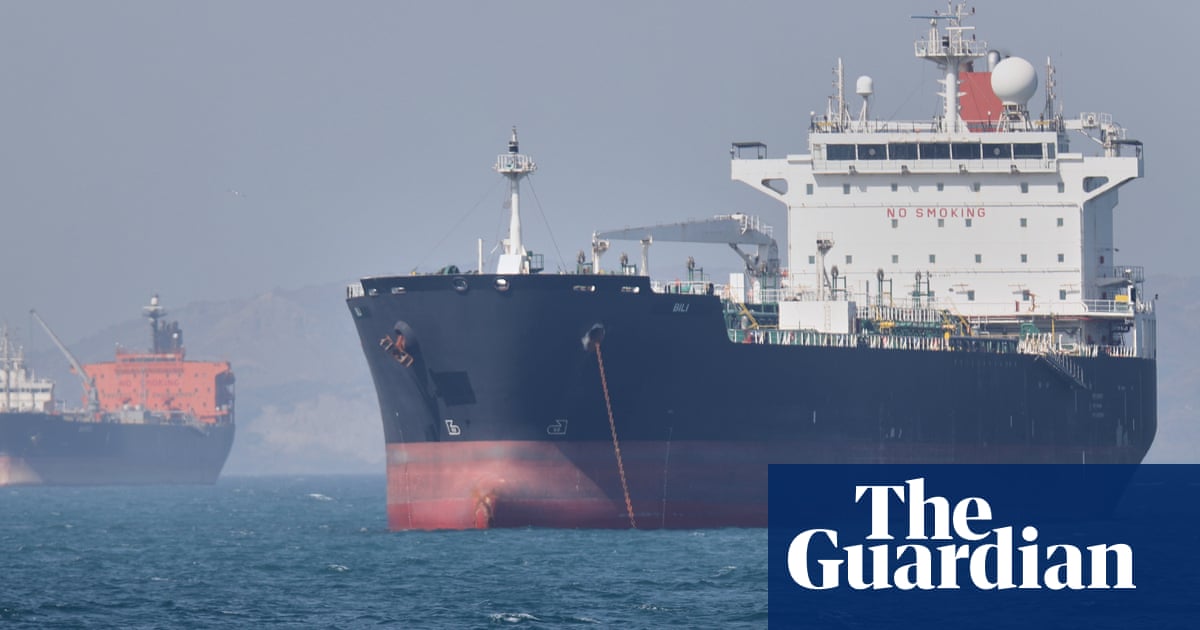
Iran fired two anti-ship ballistic missiles at the USS Canberra in the Persian Gulf on Monday morning, according to a flash alert carried by the Middle East Spectator Telegram channel citing Reuters. The Pentagon confirmed the strikes, describing them as a calibrated warning with no intent to cause casualties. No injuries to US personnel were reported. The incident lands amid an intensifying cycle of Iranian and Israeli military exchanges that has tested the limits of US diplomatic containment efforts in the region.
The incident and immediate context
The two missiles were launched from an Iranian position toward the USS Canberra, a Freedom-class littoral combat ship operating in the Persian Gulf as part of routine US naval posture in the region. The US Department of Defense confirmed the strikes in a statement on Monday, asserting that the vessel sustained no damage and that crew were unharmed. A US defence official, quoted by Reuters wire, described the launches as "deliberate and calibrated" — a signal, not an attempt to strike. The Pentagon added that diplomatic channels remained open and that the US presence in the Gulf would not be altered as a result of the incident.
The timing is notable. Monday's firing comes nineteen days after Iran launched a large-scale barrage of drones and ballistic missiles at Israeli territory on 13 April, triggering Israeli air strikes on an Iranian air base near Isfahan four days later. That exchange — the first direct Iranian-Israeli military exchange in decades — broke a long-standing shadow conflict pattern and introduced new uncertainty into the regional security architecture. Iran's reported use of an intermediate ballistic system for a maritime warning shot fits a pattern of messaging calibrated to the audience: Israel to demonstrate reach, the United States to communicate red lines without triggering the broader conflict Washington has sought to prevent.
The counter-framing
The Telegram-sourced framing treats the incident as a warning signal rather than an attempted strike — a distinction the US side has emphasised. But independent analysts tracking Iran's maritime posture note that the Islamic Revolutionary Guard Corps has employed anti-ship ballistic missiles in multiple contexts over the past decade, including against vessels in the Gulf of Oman and against a Saudi-led coalition frigate off Yemen. The precision of Monday's strikes — reportedly in the water near the Canberra, not at the vessel itself — is consistent with the IRGC's documented preference for graduated signalling over direct engagement when attempting to influence adversary behaviour without triggering escalation.
The Reuters dispatch and subsequent wire coverage has carried the Pentagon's characterisation as the dominant frame. Regional outlets, including Iranian state-adjacent media, have not independently confirmed the incident as of Monday afternoon UTC. The framing gap — US officials describing a calibrated warning, IRGC statements not yet publicly available — leaves material uncertainty about what specific demand or deterrent Iran intended to communicate.
The structural picture
What is more visible is the broader rhythm. The Persian Gulf has been a zone of continuous US naval presence since the end of the Iran-Iraq war, with the Fifth Fleet maintaining patrols through the Strait of Hormuz. For Tehran, that presence is both a strategic fact and a political irritant — the US Navy provides the hard-power scaffolding for sanctions enforcement, for the deterrence of Iranian maritime interference, and for the broader architecture of allied partnerships Washington has built with Gulf monarchies. Anti-ship ballistic missiles are, in this context, Tehran's most credible asymmetric capability against a superior conventional force: a relatively low-cost way to hold US naval assets at risk and to raise the cost of continuous forward deployment.
The April exchange and Monday's incident together suggest an Iranian calculus that mixes deterrence signalling with demonstration of resolve. Iran does not want a direct war with the United States; the economic and military asymmetry is too great. But it does want to project the message that its deterrent is active and that US-backed regional partners — particularly Israel — cannot strike Iranian interests without cost. The missile launches function as a two-channel communication: to Washington, a reminder of the risks of continuous Gulf operations; to domestic audiences, an assertion that the Islamic Republic retains the initiative even under maximum pressure.
Stakes and what remains unclear
For Washington, the immediate calculation is containment: prevent the incident from becoming the pretext for a broader exchange while maintaining the credibility of forward presence. The US Navy's posture in the Persian Gulf is not incidental — it underpins the sanctions regime, deters Iranian maritime disruption, and reassures Gulf partners who host US forces. A posture change in response to Monday's incident would signal that Iranian pressure can alter US operational behaviour; a continued posture signals that the warning did not succeed in its intended effect.
For Tehran, the cost of the signalling is limited — two missiles expended, no casualties, no escalation triggered. If the goal was to remind Washington that the Gulf carries inherent risk for US forces, the minimum threshold has been met. The domestic political dividend — a visible assertion of Iranian capability after Israeli strikes on Iranian soil — is also served.
What the current sources do not specify is the precise origin point of the launches, whether IRGC naval or ground-based platforms were used, or whether any direct communication from Tehran to Washington followed the strikes. The Pentagon characterised the incident as containing no intent to harm US personnel — a phrasing that suggests either pre-communication through third channels or an assessment based on trajectory and ordnance type. Neither interpretation can be confirmed from the wire reporting available as of Monday afternoon UTC. The incident is confirmed; its precise diplomatic context remains, for now, below the public record surface.
This desk initially framed the incident as a straightforward escalation marker. The Reuters framing — calibrated warning, no casualties, diplomatic channels open — suggests the more accurate read is a signal-and-contain cycle rather than a new front. Monexus will follow the Pentagon and State Department record as it develops.
Wire provenance
This editorial synthesis draws on the following public wire/social posts:
- https://t.me/Middle_East_Spectator/1200055399