Iran's Revolutionary Guards Claim Expanded Authority Over Strait of Hormuz
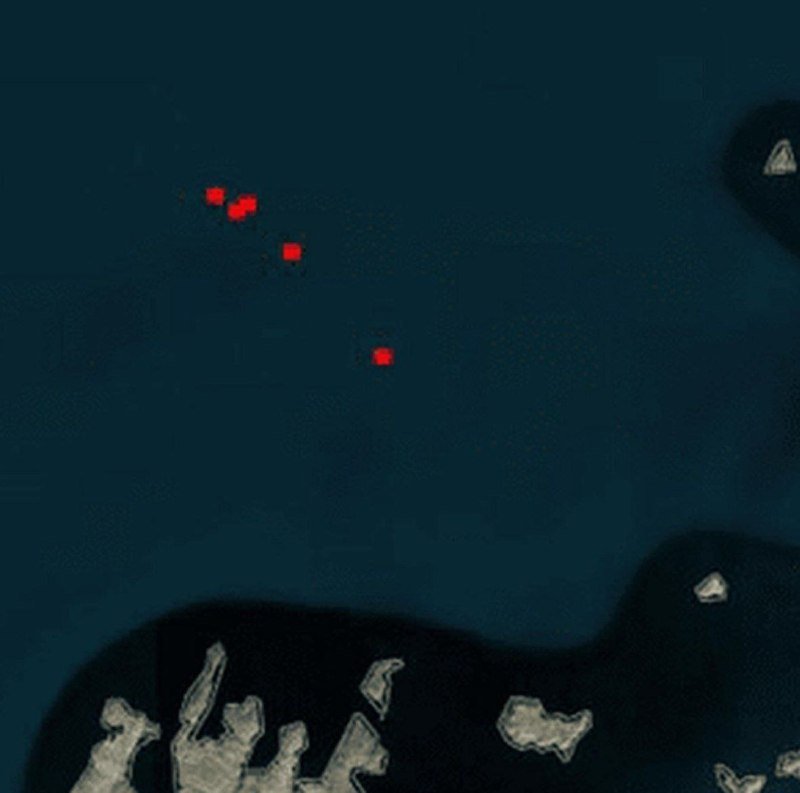
On 4 May 2026, Iran's Islamic Revolutionary Guard Corps unveiled a new map of the Strait of Hormuz that its naval arm says represents a redefined scope of the waterway under the control of the Iranian Armed Forces. According to reports carried by state-linked media, the IRGC Navy specified that the new operational zone stretches from Iran's Koh Mubarak coastline southward to Fujairah on the United Arab Emirates shoreline. A companion statement, published simultaneously across multiple Persian and Arabic-language channels, was more blunt in its implications: there is, the Guard asserted, no longer passage through the Strait of Hormuz without Iran's permission.
The announcement follows months of heightened tension between Iran and Western-aligned Gulf states, against a backdrop of stalled nuclear talks and intensifying US naval presence in the Persian Gulf. It arrives at a moment when global energy markets are already under pressure from supply disruptions elsewhere, making the timing of Tehran's claim a factor in assessing its intent.
A Claim or a Provocation?
The language used by the IRGC is notable for its declarative certainty rather than its diplomatic hedging. Iranian state media and affiliated Telegram channels carried the announcement as a statement of fact — a delineation of sovereign naval prerogative, not a proposal for negotiation. The framing treats what has long been an internationally recognised waterway under joint stewardship as now subject to Tehran's unilateral terms.
The geographic specificity of the claim matters. The Strait of Hormuz, at its narrowest point, is roughly 34 kilometres wide, and roughly a third of the world's liquefied natural gas and 20 percent of global oil shipments pass through it annually. Fujairah, on the eastern seaboard of the UAE, sits outside the Persian Gulf proper but is the primary anchorage for tankers waiting to enter Gulf ports. By extending the operational definition southward to include UAE territorial adjacency, the IRGC's map effectively places the waiting zone for hundreds of vessels within what Tehran now characterises as its jurisdiction.
Western governments have not yet issued formal responses as of this publication. Analysts caution, however, that the announcement's immediate practical effect depends entirely on whether Iran intends to enforce this claimed scope — and what enforcement would look like in practice. Iran's previous episodes of interference in Gulf shipping, including the seizure of vessels and the mining of tankers, have been episodic rather than continuous. A permanent interdiction posture would represent a qualitative shift.
The Structural Context: Who Controls the Chokepoint?
The Strait of Hormuz is not an uncontested space. Iran sits on the northern shore; Oman and the UAE occupy the southern side. International law, as codified in the United Nations Convention on the Law of the Sea — to which Iran is not a signatory but whose norms it selectively invokes — guarantees rights of innocent passage and transit passage through international straits. Tehran has historically rejected the notion that US naval operations in the Gulf constitute legitimate passage, and has consistently maintained that the strait's security is a matter for regional, not extra-regional, actors.
What the Guard's statement does is strip away the diplomatic circumlocution that has typically accompanied Iranian posture statements. The claim that there is no passage without Iranian permission is, in effect, an assertion of a veto over a corridor that global commerce treats as open. Whether it is enforceable is a separate question from whether it is being stated as policy. The two should not be conflated.
The announcement also arrives amid parallel pressures on Tehran's nuclear programme. Indirect talks between the United States and Iran, mediated by Qatar and Oman, have produced no breakthrough, and the Trump administration re-imposed maximum pressure sanctions in early 2026. For a regime that has historically used chokepoint diplomacy as leverage in broader negotiations, the timing is not incidental.
Reactions and Counterweights
The UAE, whose Fujairah facility is directly implicated in the IRGC's geographic description, has not issued a public statement. Emirati officials have historically navigated between Western security partnerships and their geographic proximity to Iran with considerable care. A direct rebuttal of Tehran's claim would escalate; silence allows room for back-channel communication.
The United States Central Command, which maintains a persistent naval presence in the Gulf, has also not commented publicly as of the time of publication. American officials have in the past characterised Iranian interference as unlawful and have responded with show-of-force operations, including escort missions for US-flagged vessels.
Regional analysts note that the timing coincides with a broader realignment of Gulf security arrangements, including an expanded US naval cooperative agreement with Bahrain and an ongoing review of maritime patrol frameworks with Saudi Arabia. Whether the IRGC's announcement is calibrated to test the resilience of those arrangements — or simply to remind Washington's Gulf partners that they sit within Iran's reach — remains an open question.
Stakes and Forward View
If the IRGC's claim is treated by Tehran as a standing operational doctrine rather than a rhetorical gesture, the implications extend well beyond the Gulf. Insurance costs for tankers transiting the strait would rise. Asian refiners — particularly in South Korea, Japan, and India — have built supply chains that assume uninterrupted passage. A sustained Iranian enforcement posture would force those assumptions to be revisited.
The immediate risk is miscalculation. A tanker captain who misreads Tehran's red lines, a US escort vessel that perceives an imminent threat, or aIRGC commander acting on standing orders in a moment of heightened alert: any of these could produce an incident that outpaces diplomatic resolution. That has always been the underlying danger in Hormuz politics. What changes is the stated baseline — and on 4 May 2026, Iran raised it.
This publication's reporting on the Gulf follows the standard practice of leading with Western wire and regional state reporting, with Iranian state-linked sources cited as claims rather than confirmed facts. The map published by IRGC-adjacent channels has not been independently verified against naval charts or international legal definitions of the strait's boundaries.
Wire provenance
This editorial synthesis draws on the following public wire/social posts:
- http://reut.rs/4eqZwQw
- https://t.me/tasnimplus
- https://t.me/alalamarabic
- https://t.me/alalamarabic