The Strait at the Edge: Iran Tensions, Bahrain's Readiness, and the Calculus of Regional Escalation
A convergence of signals — from the US Senate's call for punitive action to Bahrain's defensive elevation and markets pricing an Iranian airspace closure — suggests a region moving toward a threshold it has not crossed in years.
The Strait of Hormuz has long been the chokepoint the world cannot afford to forget and keeps forgetting anyway. On 4 May 2026, the forgetting stopped. Three separate signals arrived within hours of each other — a Senate resolution demanding punitive action against Iran, Bahrain quietly elevating its military posture, and prediction markets assigning a 64% probability to Iran closing its airspace by month's end — and the compound effect was something different from the usual Middle Eastern churn. This was a region calibrating, for the first time in years, for a scenario it had treated as theoretical.
The US Senate, in a resolution that crossed party lines, called for what it described as a "decisive and painful response" to Iran's reported violations of an existing ceasefire arrangement. The language was deliberately calibrated: not a declaration of intent, but a threat structure, designed to signal resolve while preserving diplomatic off-ramps. Whether it achieves either aim depends entirely on how Tehran reads the signal — and on what calculations are driving Iran's own posture at this particular moment.
The ceasefire referred to is understood, according to diplomatic briefings cited in regional wire reporting, as a set of tacit understandings brokered through back-channel exchanges over the preceding months, rather than a formal signed agreement with verification mechanisms. That ambiguity matters. A ceasefire without agreed terms is easier to violate — and easier to claim has been violated — than one with them. It also means the Senate's demand for a "decisive and painful response" is a response to a contested factual baseline: which party, if any, actually crossed a line, and when, and by how much.
Bahrain's move was quieter but structurally significant. The kingdom increased its readiness posture for attacks from Iran — a formulation that implies not merely that a threat exists, but that Bahrain's leadership believes that threat has moved from theoretical to operational. Bahrain hosts the US Fifth Fleet's headquarters at Mina Salman, and its geographic position — separated from Iran by roughly 200 kilometres of Gulf water — gives it a particular stake in any escalation that narrows the waters between the two countries. A country does not publicly increase its readiness posture for contingencies it considers remote. The fact that Bahrain did so on 4 May, in parallel with the Senate resolution, suggests a degree of coordination or at minimum shared intelligence assessment between Washington and Manama.
The third signal came from a prediction market. Polymarket, the blockchain-based forecasting platform, registered a 64% probability that Iran would close its airspace by the end of May. Markets are not omniscient; they reflect the aggregated view of participants placing real financial stakes on outcomes. A 64% probability of airspace closure is not a certainty — it means, roughly, that the market believes the odds of this outcome exceed the odds against it by roughly two to one. That is a high number for a specific, date-bound geopolitical event, and it reflects either genuine expectation inside the policy community or a market repricing of previously underweighted tail risk.
What would an Iranian airspace closure actually mean? Closure could take multiple forms. A full closure — prohibiting all civilian and transit flights through Iranian airspace — would represent a maximalist signal, a deliberate act of economic disruption targeting airlines, freight companies, and the governments and airlines of transit states. A partial or selective closure, targeting specific flight corridors or applying only to certain categories of operator, would be more calibrated — a pressure tool rather than an act of full severance. The distinction matters because it determines the response options available to Washington and its regional partners. A full closure invites a response; a partial one creates a grey zone where escalation becomes a matter of degree rather than a binary crossing.
The structural logic driving these moves is not new. Iran has pursued a uranium enrichment programme that, in the view of Western intelligence agencies, has moved well beyond what a civilian energy programme would require. The International Atomic Energy Agency has repeatedly flagged gaps in its monitoring access, particularly at the Fordow and Natanz facilities. Each cycle of Iranian enrichment advance is met with sanctions intensification, and each round of sanctions is met with Iranian pushback at points of US regional exposure. The cycle has repeated enough times that neither side has the benefit of novelty — but repetition has not bred stability. It has bred a kind of mutual exhaustion and, with it, a narrowing of the guardrails that kept earlier crises from tipping over.
The counter-narrative — the argument that Iran is not the reckless actor the Senate resolution implies — runs roughly as follows: Iran's Enrichment programme is a response to a US withdrawal from the Joint Comprehensive Plan of Action in 2018 and to subsequent economic pressure that the Iranian public, not its government, has borne. Iran's regional posture is defensive, rooted in the experience of having been invaded in the 1980s and having US military infrastructure deployed in nearby states since. The ceasefire violations, if they occurred, were responses to US or allied actions in the Gulf that Iran characterises as provocations. Under this reading, the Senate resolution is not a measured response to bad behaviour; it is a justification for a policy of regime constraint that was already underway before any ceasefire was in question.
Neither framing is complete. The reality inside Iran is contested — between hardliners who want to maximise leverage through enrichment and pragmatists who want sanctions relief — and the reality inside the Gulf is contested between states that see Iranian power as existential threat and states that see engagement as the only viable path. The ceasefire itself was never publicly acknowledged by name by either side, which means the violations are assessed through inference rather than inspection. This is the epistemic fog in which crises are managed — and mis-managed.
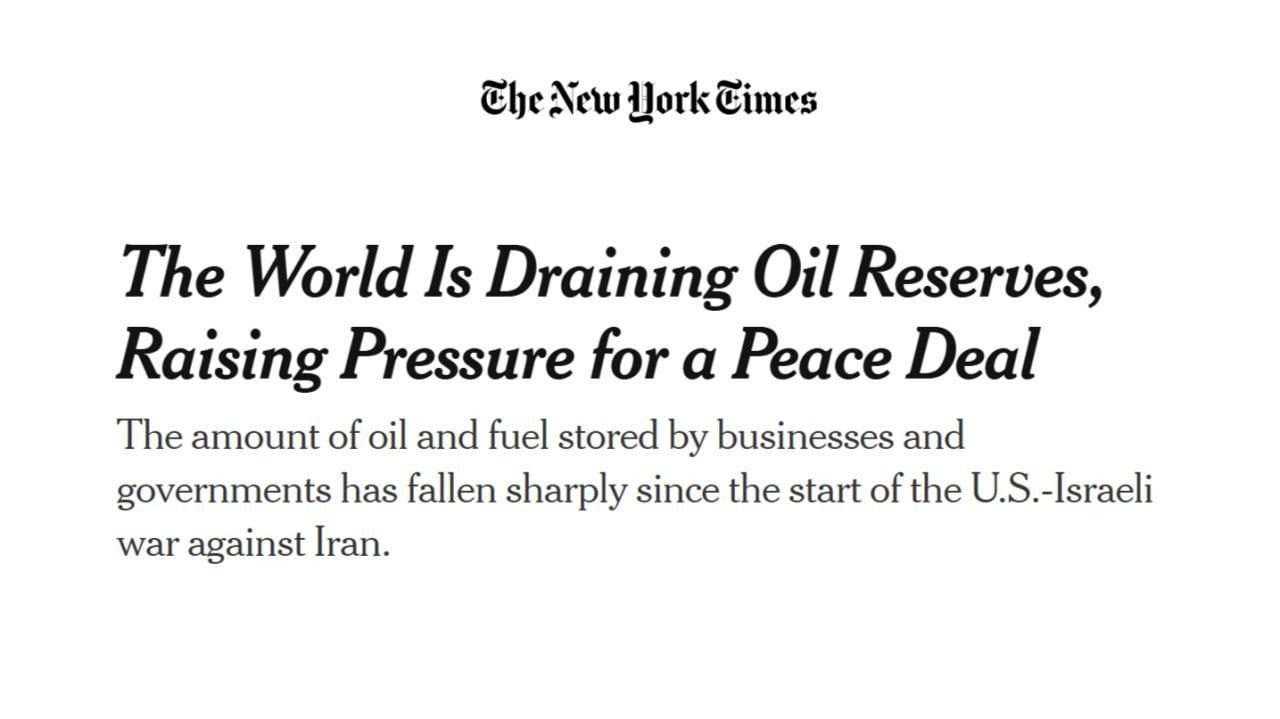
The regional stakes are concrete. The Strait of Hormuz handles roughly 20% of global oil trade by volume, according to US Energy Information Administration data. A closure — even a temporary one — would send oil markets into a spike. US strategic stocks could blunt the immediate impact, but the signal effect alone, in a market already sensitive to supply disruption, would be significant. Airlines operating transcontinental routes through Iranian airspace — and there are many — would face immediate rerouting costs and delays. Iran itself would absorb economic damage from the loss of transit fees and the intensified sanctions response that would follow. Whether Iran's leadership believes the geopolitical gain from closure outweighs the domestic economic cost is the central unresolved question.
Bahrain's position adds a layer of risk that goes beyond the airspace calculus. The Fifth Fleet presence means any Iranian attack on Bahraini territory, or any Iranian action that threatens the free flow of traffic through the Gulf, is an attack on a US operational asset. Bahrain's readiness increase signals that its leadership is not willing to bet on de-escalation and is preparing for the alternative. That is not itself an escalation — it is a defensive posture — but it changes the geometry of any future incident. A crisis that would once have played out through diplomatic channels now has a military dimension embedded in the baseline posture of both sides.
The Senate resolution, for its part, creates pressure on an administration that has so far sought to calibrate rather than escalate. The language of "decisive and painful response" is easier to author than to operationalise. A pain threshold that is sufficient to deter Tehran while not triggering the kind of Iranian countermove that spirals into something uncontrollable is a narrow corridor — and the Senate resolution gives the administration less room to manoeuvre inside it. If nothing happens, the resolution's signatories will claim credit for deterrence. If something does happen, the resolution will be cited as a commitment that required fulfilment. Either outcome binds the executive.
What remains genuinely uncertain is whether Iran intends to close its airspace, and if so, whether it intends that as the opening move in a broader escalation or as a one-time pressure signal that stops there. The prediction market assigns a 64% probability — high, but not conclusive. Markets have been wrong on geopolitics before, and a 36% probability of non-closure is not trivial. The question is not whether the closure is likely, by market reckoning; the question is whether Tehran believes the cost of closure is worth paying, and what it expects the response to be. That calculation is not legible from the outside. It depends on intelligence assessments inside the Iranian leadership that Western governments do not have full access to, and on a risk calculus that has historically differed from what Washington assumes Iran should be doing.
What is clear is that on 4 May 2026, the signals were not pointing toward de-escalation. The Senate called for pain. Bahrain readied itself for attack. Markets priced in a closure. These are not independent events; they are facets of a single moment in which a region's worst-case scenario moved from the margins of planning to the centre of probability. The Strait of Hormuz has been the chokepoint the world cannot afford to forget. For the first time in a while, it seems the region itself is ready to stop forgetting.
This publication framed the 4 May signals as a convergence rather than isolated incidents — tracking the Senate resolution, Bahrain's readiness posture, and the Polymarket probability as part of a single directional move toward elevated regional alert, rather than treating each item as a separate news item.
Wire provenance
This editorial synthesis draws on the following public wire/social posts:
- https://t.me/TSN_ua