Iran war shock drives Asian capital pivot toward local currencies and Hong Kong listings
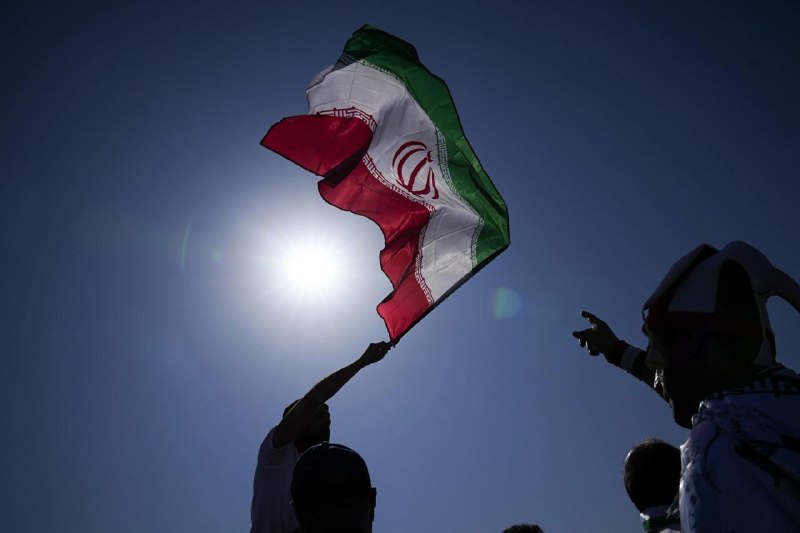
The Iran conflict and the escalating US tariff regime have produced an unexpected outcome in Asian capital markets: a broad rotation away from dollar-denominated assets and into local currency debt instruments, even as the Hong Kong Stock Exchange posts its strongest listing pipeline in years.
According to Nikkei Asia reporting published on 4 May 2026, Asia's local currency bond markets have emerged as what the outlet described as an "unlikely winner" from the market turbulence triggered by the Iran war and a deepening dollar-exposure retreat among regional institutional investors. The shift is not merely a short-term flight to safety — multiple sources indicate it reflects a structural reassessment of dollar-denominated portfolios by sovereign wealth funds, central banks, and large asset managers operating across the Association of Southeast Asian Nations, India, and Northeast Asia.
The same reporting cycle shows Hong Kong's equity market bucking the global IPO slowdown. HKEX is riding a listing boom led by artificial intelligence and technology companies, with bankers in other financial centres reporting constrained deal-flow as volatility deters new issuances. The divergence is striking: while equity capital markets in New York and London face a near-stall, Hong Kong's pipeline has proven resilient, suggesting that Asian institutional demand for domestic tech listings remains robust even as broader risk sentiment compresses.
The mechanics of dollar exit
The mechanics of the current rotation are worth examining closely. When geopolitical shocks — in this case, active conflict involving Iran — introduce sustained uncertainty into oil markets and shipping lanes, the conventional response in Asia has historically been dollar hoarding: institutions rush into US Treasury instruments and USD-denominated sovereign bonds as a hedge. That playbook is now being disrupted by a secondary effect of Washington's tariff policy, which has made dollar assets simultaneously more volatile and more politically loaded as a reserve choice.
The combination has produced a bifurcated response. Large sovereign and quasi-sovereign investors have begun diversifying into local currency sovereign debt — Indian government bonds, Indonesian rupiah-denominated instruments, and Thai baht assets have all seen inflows that analysts attribute partly to reserve diversification away from dollars. The other cohort — more speculative, more short-duration — has pivoted into Hong Kong tech listings, where equity valuations are being propped by domestic demand that is less sensitive to dollar volatility than cross-border flows.
The counter-argument, which some Western financial analysts have raised, is that the dollar's global plumbing is too embedded to be dislodged by geopolitical friction alone. According to this view, any rotation into local currencies is bounded by the absence of deep, liquid alternative markets — particularly for countries that lack the sovereign debt infrastructure to absorb large-scale reserve reallocation. The structural depth of US Treasury markets, the argument goes, remains unmatched by any regional alternative, and short-term political aversion to dollar assets tends to be cyclical rather than permanent.
Hong Kong's AI-fuelled listing paradox
That counter-argument finds some empirical pressure in the Hong Kong story. HKEX's resilience is specifically attributed to AI and technology company pipelines — companies whose business models are largely dollar-denominated at the revenue level, given the global nature of enterprise AI software markets. If dollar hegemony were genuinely fraying at the structural level, one might expect Hong Kong tech listings to be under equal pressure. Instead, they are outperforming.
The resolution may lie in distinguishing between reserve currency preference and corporate financing preference. Sovereign and quasi-sovereign entities — the actors making reserve allocation decisions — appear to be genuinely rotating out of dollars into local currency instruments. Companies, particularly those in high-growth tech sectors that draw global institutional capital, are drawing on a different pool: one that is more willing to accept Hong Kong-denominated equity risk because the underlying business generates dollar-revenue or dollar-linked earnings.
This bifurcation matters for how the broader de-dollarisation narrative should be read. The rotation into local currency sovereign debt is real, sustained, and driven by institutional actors with long-horizon mandates — it is unlikely to reverse quickly. The Hong Kong equity pipeline, meanwhile, reflects an investor base that is less concerned with currency politics and more focused on sectoral growth. Both can be simultaneously true without one cancelling the other out.
Structural stakes: who wins, who loses
The stakes of this capital re-routing are substantial and unevenly distributed. Countries with deep local currency bond markets — India, Indonesia, and, to a lesser extent, Vietnam — are positioned to benefit from inflow-driven yield compression, which reduces their government borrowing costs and can support currency stability. Sovereign wealth funds in the Gulf Cooperation Council region, which have historically recycled petrodollars into US Treasuries, are watching the shift carefully; if GCC sovereign funds begin rebalancing toward Asian local currency instruments, the liquidity effect on regional markets could be significant.
The losers in this configuration are less obvious but not hard to identify. US Treasury demand, if it weakens at the margin, raises borrowing costs for the federal government at a moment when the fiscal position is already strained by tariff-revenue dynamics and defence spending. Investment banks that have built their Asian operations around dollar-denominated deal-flow — particularly those with large debt capital markets desks focused on USD issuance — face structural pressure as local currency markets deepen and absorb a greater share of regional financing needs.
There is also a geopolitical dimension that is difficult to quantify. The combination of Iran conflict-driven oil market disruption and US tariff escalation has made the cost of dollar-denominated trade, for countries that deal extensively with both Iran-adjacent energy suppliers and US consumer markets, significantly more complex to manage. Countries like India, which imports Iranian-origin oil but also runs a large bilateral trade surplus with the United States, are finding that the two relationships pull in opposite directions on the dollar question — and are responding by building hedging capacity in non-dollar currency corridors.
What this moment signals and what remains unclear
The Iran conflict and the tariff regime together represent something unusual: a shock that is simultaneously geopolitical and macroeconomic, one that is hitting emerging market central banks at the same time as it is reshaping corporate financing strategies. The result is a capital allocation shift that is more structural than the usual risk-off rotation — it appears to be inducing lasting changes in portfolio construction among large Asian institutional actors, not just a temporary repositioning.
What remains less clear is the timeline and the trigger conditions under which a further acceleration could occur. The current rotation is bounded by the limited depth of many local currency bond markets; if those markets deepen sufficiently — a process that would require both regulatory reform and capital account liberalisation in several Southeast Asian economies — the pace of dollar exit could accelerate meaningfully. Whether the Iran conflict resolves in a way that eases oil market stress, or whether it sustains the geopolitical premium that is currently incentivising diversification, will be the decisive variable.
The Hong Kong listing boom, meanwhile, is a product of domestic investor demand and technology sector momentum that is partially insulated from these cross-currency dynamics. That insulation may prove temporary — if dollar funding costs for Hong Kong-listed companies rise as USD liquidity tightens globally, the pipeline's resilience could face its own test. For now, the two stories — local currency bond inflows and AI-driven equity listings — are running parallel rather than in opposition, each reflecting a different slice of a region that is navigating a genuinely new capital market environment.
Monexus framed this story around the intersection of geopolitical shock and structural capital reallocation rather than treating it as a simple risk-off narrative. The dominant wire framing positioned the local currency debt story as a flight-to-safety anecdote; this piece treats it as evidence of a deeper institutional portfolio shift that has been building well before the Iran conflict and is now being accelerated by it.
Wire provenance
This editorial synthesis draws on the following public wire/social posts:
- https://t.me/nikkeiasia/12473
- https://t.me/nikkeiasia/12472
- https://t.me/nikkeiasia/12465
- https://t.me/nikkeiasia/12464