Iran Warns US of Asymmetric Response to Naval 'Piracy' in Global Shipping Lanes
Tehran's top defense council representative issued a stark warning on 4 May 2026, declaring Iran's security non-negotiable and threatening complex asymmetric operations against what he called US piracy in global shipping. The statements mark a significant escalation in the diplomatic standoff between the two nations.
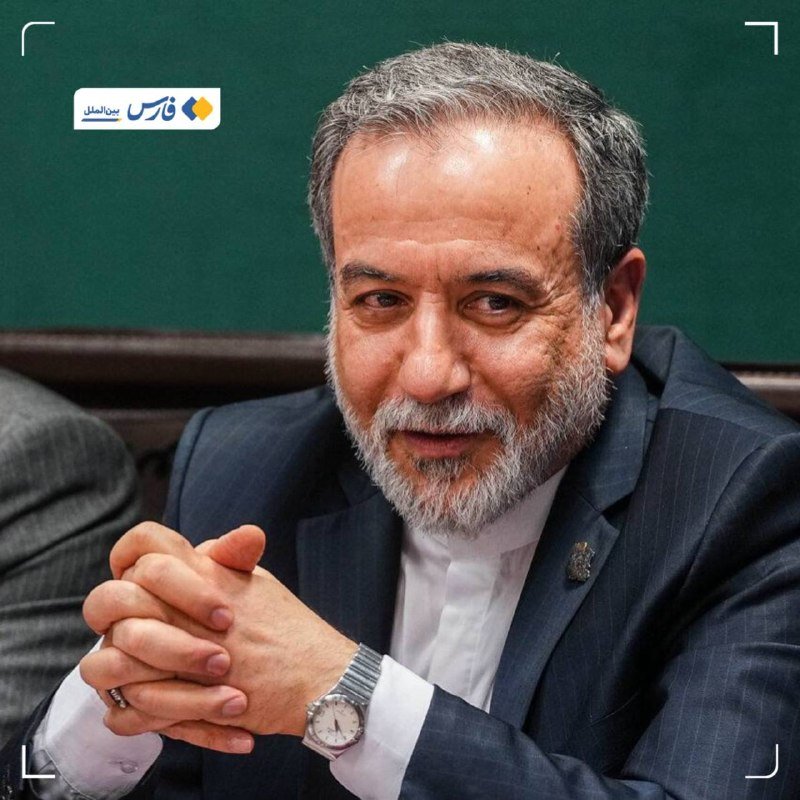
Iran's representative to the Supreme Defense Council delivered a pointed warning on 4 May 2026, telling the United States that its security posture is inviolable and that American activity in global shipping corridors would not go unanswered. The statements, reported simultaneously across multiple Iranian state-affiliated news outlets, described US naval conduct as piracy and promised a response that would exceed the enemy's threshold of tolerance.
The official, identified as Ahmadian in reporting by Tasnim News and Mehr News, spoke in his capacity as the representative of Iran's Supreme Leader to the Supreme Defense Council — the Islamic Republic's highest strategic decision-making body on matters of national security. His remarks, delivered as a coordinated press cycle across Iranian channels, constitute one of the most explicit public warnings to emanate from Tehran's defense establishment in recent months.
The immediate trigger remains unclear from available sources, which do not specify a precipitating incident. Western naval activity in the Persian Gulf and Gulf of Oman has been a persistent source of friction between Washington and Tehran, particularly around the Strait of Hormuz — a chokepoint through which roughly a fifth of global oil trade transits. The United States has maintained a naval presence in the region under the banner of freedom-of-navigation operations, a framing Tehran has long rejected as a euphemism for pressure campaigns.
The Immediate Context: Hormuz Tensions and the Sanctions Architecture
The Strait of Hormuz has been a fault line in US-Iranian relations since the 1979 revolution, but the pressure has intensified markedly since the Trump administration reimposed maximum-pressure sanctions in 2018 and withdrew from the Joint Comprehensive Plan of Action (JCPOA) nuclear agreement. For Tehran, the combination of biting economic sanctions and sustained US naval presence represents a dual constraint — on oil revenue and on maritime freedom of action — that the Islamic Republic has consistently characterized as economic warfare dressed in legal clothing.
Iranian officials have repeatedly accused the United States of weaponizing the international banking system and maritime insurance networks to strangle Iranian oil exports. The counter-pressure has included periodic threats to close or disrupt Hormuz transit — threats that have historically been met with increased US military deployments to the region. The cycle has become a familiar rhythm of escalation and signaling.
What distinguishes the statements from Ahmadian is their specificity about means. Previous Iranian warnings about Hormuz have often been vague about the mechanism of disruption. Ahmadian's reference to complex, asymmetric operations points toward the kind of hybrid tactics — naval mines, drone swarms, fast-attack craft, cyber operations against ship navigation systems — that Iran has developed specifically to counter a technologically superior adversary. The language signals preparation for a domain where US conventional superiority is less decisive.
The American Counter-Position: Freedom of Navigation as Institutional Norm
The United States has consistently framed its Gulf presence as a service to global commerce rather than a provocation directed at Tehran. Freedom-of-navigation operations (FONOPs) are presented publicly as exercises of international law — the principle that innocent passage through international straits cannot be impeded by coastal states. American officials have maintained that US naval vessels operate within lawful parameters and that any Iranian interference would constitute a violation of the United Nations Convention on the Law of the Sea (UNCLOS), even though the United States has never ratified the treaty.
This framing has a practical function: it positions any Iranian response as a breach of international norms and mobilizes allied support, particularly from Gulf monarchies who share American concerns about Iranian regional influence but are deeply dependent on Hormuz transit themselves. The UAE, Saudi Arabia, and Bahrain have all deepened their security ties with Washington in recent years, creating a regional architecture that constrains Tehran's options.
Iran's counter-framing — casting US operations as piracy rather than lawful navigation — inverts this logic entirely. Under Tehran's framing, the United States is the lawless actor: enforcing extraterritorial sanctions, monopolizing maritime insurance infrastructure, and using naval power to compel compliance with a sanctions regime that Iran views as illegitimate. The asymmetry is not just military but epistemological — two incompatible accounts of what the legal order in the Gulf actually requires.
Structural Frame: The Shipping Lane as Geopolitical Battleground
The statements from Tehran arrive at a moment when the architecture of global shipping is under unusual stress. The Houthi campaign against commercial vessels in the Red Sea, which began in late 2023 and has persisted despite Western airstrike campaigns, demonstrated that non-state actors could impose substantial costs on global supply chains. The insurance market disruptions and rerouting of vessels around the Cape of Good Hope that followed drove measurable increases in shipping costs and transit times, with downstream effects on inflation metrics across G7 economies.
Iran has historically avoided direct attacks on commercial shipping — its preferred method of pressure has been support for proxy forces — but the institutionalization of maritime disruption as a tool of statecraft creates a context in which Iranian capabilities could be deployed more directly. Ahmadian's language about asymmetric operations is precisely calibrated: it promises disruption without claiming direct attribution, and it focuses on the United States rather than on commercial vessels directly. This leaves Tehran room to maintain plausible deniability while still signaling resolve.
The deeper structural dynamic is the erosion of American ability to dictate the rules of the maritime order. The dollar's role in global trade settlement has been a core pillar of US financial hegemony, but the weaponization of that system through sanctions has accelerated efforts by China, Russia, and others to build parallel financial infrastructure. If the dollar's grip on global shipping finance loosens, the mechanism through which the United States enforces sanctions compliance weakens correspondingly. Tehran's warning is not merely about naval tactics — it is a bet that the rules-based order American officials invoke is increasingly contested rather than universally accepted.
Stakes and Forward View: Who Bears the Cost
The stakes of an extended confrontation in the Gulf are asymmetric but severe for all parties. An Iranian disruption of Hormuz transit would send oil prices sharply higher — estimates from previous episodes suggest a 20-30% price spike within days of a credible closure threat. For an administration that has made energy price stability a domestic priority, that outcome carries significant political risk. For Asian importers — China, India, South Korea — whose economies depend on Gulf crude, the disruption would impose direct economic costs that could redraw the politics of the standoff.
The United States retains substantial escalation advantages: a carrier strike group's presence can deter direct Iranian interdiction, and the US cyber arsenal has demonstrated capabilities against Iranian nuclear and military networks. But deterrence works poorly against gray-zone aggression — the kind of operations that fall below the threshold of armed conflict but above routine presence. Iranian forces have shown they can operate in that space effectively, particularly when they can claim they are responding to US provocation rather than initiating it.
The sources do not indicate what specific US action prompted Ahmadian's warning, or whether the statements are reactive or pre-emptive in character. What is clear is that Tehran has chosen to escalate its public rhetoric at a moment when diplomatic back-channels remain largely inactive. Whether this reflects a calculation that the Trump administration's pressure campaign has reached a new threshold, or simply a domestic signaling exercise ahead of domestic political milestones, cannot be determined from available reporting.
This publication's coverage of Iranian defense statements foregrounds the maritime security dimension that Western wires often subordinate to nuclear negotiations. Where the wire framed Ahmadian's remarks as standard regime rhetoric, this desk reads them as a specific operational warning tied to a contested legal order in the Gulf.
Wire provenance
This editorial synthesis draws on the following public wire/social posts:
- https://t.me/FotrosResistancee
- https://t.me/mehrnews
- https://t.me/tasnimnews_en
- https://t.me/farsna