Iranian Cruise Missiles Strike UAE Facility as Oil Markets Reel
The UAE Ministry of Defence confirmed at 15:31 UTC on 4 May 2026 that the country was under an Iranian drone and missile attack, with explosions reported across multiple areas of the Emirates and a fire breaking out in the Fujairah oil industries zone. The incident marks one of the most significant direct strikes on UAE territory since the Houthis' 2022 campaign tested Gulf air-defence networks — and, according to initial accounts, it produced an immediate and measurable shock to global energy markets.
Brent crude briefly surged above $114 a barrel within minutes of reports of Iranian attacks near Fujairah circulating on wire services, according to real-time market data reported via OSINT monitoring channels. The price move — sharp by any measure — underscored how persistently the Gulf's oil-infrastructure geography shapes global commodity pricing, even as the world has spent two decades diversifying supply chains and building strategic reserves. Within the hour, UAE authorities described the incident as involving four cruise missiles, a designation that points toward a deliberate rather than opportunistic strike: cruise-missile trajectories require pre-loaded targeting data, which in turn implies deliberate mission planning rather than the opportunistic firing seen in many Yemen-based attacks.
What happened at Fujairah
According to UAE government statements reported on 4 May, Iranian cruise missiles targeted a facility in the Fujairah oil industries zone on the Arabian Peninsula's eastern seaboard, some 250 kilometres east of the Strait of Hormuz. A fire broke out at the site following impact. Separately, eyewitnesses near Buhaira corniche in Sharjah — one of the northern Emirates — reported feeling an explosion consistent with an interception in progress, suggesting that UAE air-defence assets engaged some of the inbound munitions before they reached their intended targets.
Neither Iranian state media nor its affiliated outlets had claimed responsibility as of the time of this report's filing. That absence is notable: when Iran-backed forces in Yemen or Iraq have launched operations against Gulf states in recent years, Tehran's affiliated channels have typically moved quickly to frame the strikes as legitimate responses to US or allied actions. The silence here may reflect a desire to manage escalation optics — or it may simply reflect the speed at which events unfolded. The UAE's Ministry of Defence described the situation as a "missile threat" being "dealt with," language that stopped short of formally invoking mutual defence clauses but left little ambiguity about the source of the threat.
Regional signalling and the framing contest
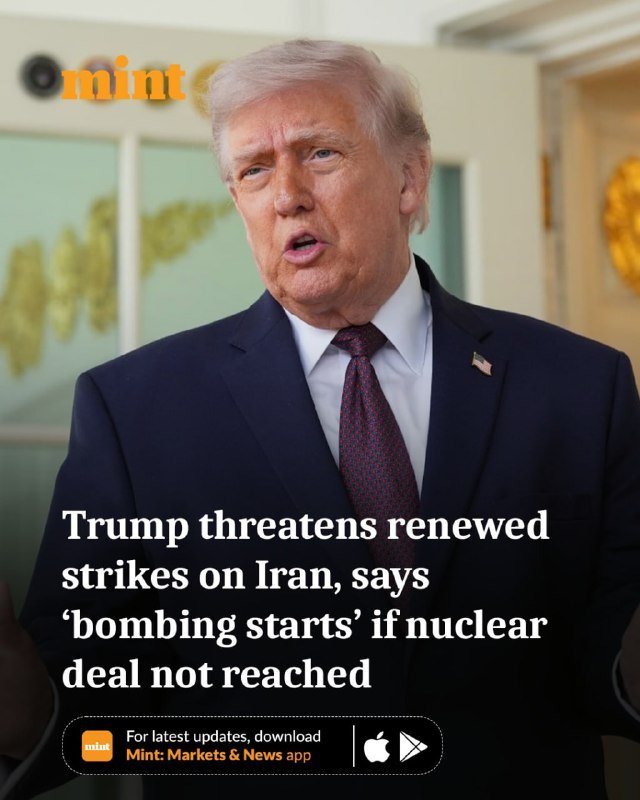
The attack arrives at a moment of acute tension in US-Iran relations. Negotiations over Iran's nuclear programme have stalled; the Trump administration reimposed a secondary sanctions regime targeting Iranian oil exports in February 2026, and Iranian officials have repeatedly warned that they view the sanctions architecture as a form of economic warfare. Against that backdrop, a strike on the UAE — a close US security partner and a node in the Gulf's integrated air-defence network — functions as more than a tactical operation. It is, in structural terms, a signal: that Iran's reach extends to a partner country covered by the implicit US security guarantee that underpins Gulf deterrence.
The UAE has long positioned itself as a balancing actor in Gulf security architecture, maintaining diplomatic channels with Iran while participating in US-backed missile-defence cooperation frameworks. Fujairah, physically outside the Gulf and closer to the Indian Ocean, has been a focus of Emirati infrastructure investment — including energy processing and trans-shipment capacity — in part because its position offers some insulation from the Strait of Hormuz congestion risk that periodically spikes with regional tensions. Striking that specific zone, therefore, carries a dual signal: to the UAE about the limits of geographic buffering, and to global markets about the fragility of supply routes that have long been treated as relatively secure.
Western officials quoted in initial coverage framed the attack as an Iranian effort to test US regional commitments and probe for gaps in Gulf air-defence integration. Iran's own official statements, carried by PressTV and affiliated agencies, had not been updated as of publication to address the Fujairah incident specifically — though Iran's foreign ministry has in recent weeks characterised US sanctions as the primary driver of regional instability, a framing that would likely be deployed in any public justification for heightened military activity.
The oil-market signal
The Brent price spike to above $114 was brief — energy markets are not structurally short of supply in the way they were in 2022 — but it was not trivial. It demonstrated that the market's threshold for treating Gulf security incidents as pricing-relevant events remains low, even after two years of relative calm in the Persian Gulf proper. Fujairah's role as a trans-shipment and storage hub means disruptions there propagate asymmetrically through tanker-freight markets in ways that a strike on a Gulf shore installation might not.
The structural point is this: while the United States has successfully deepened its strategic petroleum reserve release mechanisms and while Gulf producers have expanded downstream capacity in non-Gulf jurisdictions, the physical infrastructure of the eastern Arabian Peninsula remains the chokepoint that global energy markets watch most closely. Every spike like Monday's reinforces that reality, and every moment of relative quiet tempts analysts to assume the chokepoint has become more resilient than it actually is.
Escalation risks and what remains unclear
What is not yet clear — and what the available sources do not yet resolve — is whether the attack was authorised at the highest level of the Iranian state or represents an operation by a proxy force acting with Tehran's knowledge but not under its direct command. Iranian cruise-missile capability is state-held; the munitions used on Monday carry a state attribution by default. But the operational tempo — four missiles, a single facility — suggests an intentionally limited strike rather than an opening move in a wider campaign. Whether that restraint holds depends on how the UAE and its security partners respond in the next 48 to 72 hours.
Also unclear is the extent of physical damage to the Fujairah facility. UAE authorities have confirmed a fire but have not provided a damage assessment. If the facility's processing capacity is materially impaired, the oil-market signal we saw on Monday will have been a warning shot. If the damage is modest and the facility returns to operation within days, the episode may settle into a diplomatic pressure point — the kind of calibrated challenge that has periodically punctuated US-Iranian interactions since 2019, and that has historically been managed through back-channel communication rather than public escalation.
The UAE has not formally invoked Article 51 of the UN Charter — the self-defence provision — as of filing. Such a step would formalise the incident as an armed attack under international law and place the response calculus squarely in the hands of the US security relationship that Abu Dhabi has invested in for four decades. Whether Abu Dhabi chooses that formal route or opts for a quieter demarche through diplomatic channels will tell us a great deal about how the UAE's leadership intends to manage this moment — and about the limits of the deterrence architecture that has kept the Gulf's eastern flank nominally stable since 2019.
This publication covered the Fujairah incident through a counterpoint lens, foregrounding UAE government and OSINT-sourced accounts alongside market data rather than leading with the Iranian state framing common to Western wire services.
Wire provenance
This editorial synthesis draws on the following public wire/social posts:
- https://t.me/osintlive/2847
- https://t.me/osintlive/2846
- https://t.me/ClashReport/11943
- https://t.me/amitsegal/8912
- https://t.me/amitsegal/8911
- https://t.me/wfwitness/5621