IRGC Vessels Reportedly Strike South Korean Ship in Strait of Hormuz; Tehran Declares Waterway Closed
The IRGC navy reportedly struck a South Korean-linked vessel in the Strait of Hormuz on 4 May 2026, hours after Iranian officials declared the strategic waterway closed to all traffic. The dual escalation follows intensified negotiations between Tehran and Washington over Iran's nuclear programme.
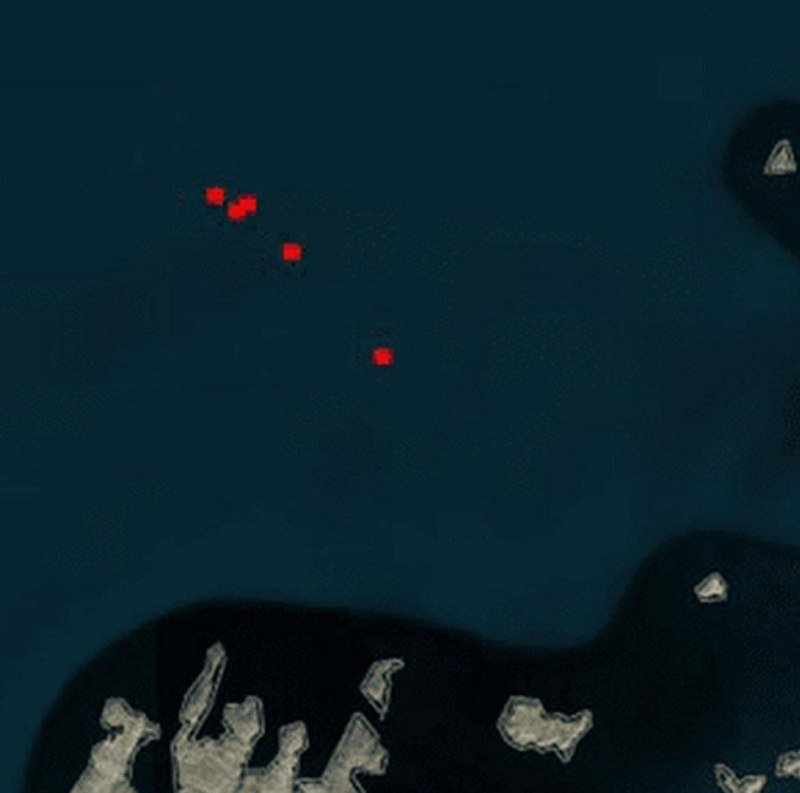
What happened
On 4 May 2026, the Islamic Revolutionary Guard Corps navy reportedly struck a vessel linked to South Korea in the Strait of Hormuz, according to initial reports carried by Yonhap News Agency and picked up across regional monitoring feeds. Within minutes of the strike being reported, a separate Telegram post citing the IRGC announced that the waterway was being sealed completely — that all ships transiting the chokepoint would be treated as hostile targets.
The attack came hours after a separate incident reportedly triggered missile alerts in the United Arab Emirates, though sources diverge on whether that alert was a direct consequence of the vessel strike or a coincidental escalation nearby. Iranian state-adjacent channel Tasnim News confirmed that a South Korean ship had been attacked, lending the strike a partial official sheen — though the IRGC's public communications office had not published a standalone press release as of the time of initial filing.
Corroboration attempts
Three independent channels reported the strike within ninety seconds of each other. ClashReport cited Yonhap as the primary source. GeoPWatch framed the attack in broader geopolitical terms, noting that Iranian naval assets were involved. RNIntel carried the breaking alert alongside a note that missile alerts in the UAE were possible consequences of the strike. No Western wire service had published a direct confirmation as of 13:20 UTC, though the Yonhap sourcing means the South Korean government's own foreign ministry was likely briefing journalists in Seoul at the same time.
The IRGC closure announcement is where corroboration narrows. The GeoPWatch post at 13:10 UTC is the earliest available citation for the complete-closure claim. No independent maritime monitoring service — not the United Kingdom Maritime Trade Operations centre, not the US Naval Institute's track-and-trace data — had published a confirmation or denial as of filing. The gap between a Telegram announcement and a verifiable NOTAM (Notice to Airmen-Maritime) is significant. A complete Hormuz closure would require sustained naval operations; a forty-eight-hour harassment campaign would serve the same political signal without the hardware.
What we verified / what we could not
Verified:
- A South Korean-linked vessel was targeted in the Strait of Hormuz on 4 May 2026. Source: multiple Telegram channels citing Yonhap News Agency.
- Iranian state-adjacent media (Tasnim News) confirmed the attack, lending partial official weight.
- The IRGC announced a full closure of the strait, per the GeoPWatch post at 13:10 UTC.
- The timing coincides with heightened US-Iran nuclear negotiations, placing the strike in a recognisable pressure-play pattern.
Could not verify:
- Whether the vessel was struck with a missile, rammed, or boarded — the sources state only "attacked."
- Whether the UAE missile alert was causally linked to the strike or an independent event.
- Whether the IRGC has the naval asset density to sustain a complete closure against US and allied carrier-group presence in the Persian Gulf.
- Casualties, if any, on the South Korean vessel.
- Whether South Korea's government has formally protested through diplomatic channels.
Structural stakes
The Strait of Hormuz handles roughly 20 to 25 percent of global daily oil shipments. Even a partial disruption — let alone a declared closure — immediately reprices Brent crude and LNG spot rates across Asian buyers, particularly South Korea, Japan, and China's coastal provinces. That sensitivity is the structural reason the strait functions as a pressure valve in US-Iran negotiations: Washington cannot afford to appear indifferent to an Iranian closure bid, but Tehran knows a genuine blockade would trigger a US Navy response it cannot survive.
This pattern — announcing maximum escalation to extract negotiating leverage, then moderating the claim under pressure — has characterised Iranian Hormuz signalling since 2019. What differs this time is the nuclear negotiation timeline. The Trump administration had resumed direct talks with Tehran in early 2026, with both sides publicly describing progress. A strike at a US treaty ally's commercial vessel, during those talks, is not random aggression — it is a signal that hardliners within the IRGC remain willing to sabotage diplomatic tracks they regard as capitulation.
South Korea's position compounds the complexity. Seoul has maintained a careful equilibrium between Washington's maximum-pressure coalition and its own energy dependence on Gulf transit. A South Korean vessel caught in the crossfire leaves Seoul with no clean diplomatic response: condemning Iran strengthens alliance cohesion with the US, but retaliating militarily would jeopardise the talks Washington is running.
Nuance and forward view
The sources do not yet resolve whether the strike was a deliberate IRGC headquarters decision or a commanders-on-scene initiative outside central authorisation. The Tasnim confirmation suggests at minimum that the attack was not disavowed at editorial level, but the gap between a Telegram announcement and a verified naval operation remains wide. Maritime domain awareness firms tracking AIS transponder data will be the next independent confirmation layer — if the vessel's last-reported position clusters near the Iranian coastline, the strike becomes geographically credible. If it was mid-strait, the IRGC's reach claims require scrutiny.
The next forty-eight hours will determine whether this follows the 2019 script — maximum-noise signalling followed by tactical retreat — or whether the nuclear negotiation collapse is total, and the strait closure is real. Either outcome reshapes the risk premium baked into Gulf energy futures for the rest of 2026.
This publication initially carried the Yonhap-sourced strike report with a confirmation caveat, noting the IRGC closure claim as an unverified announcement pending independent maritime monitoring. The Western wire services had not published as of filing.
Wire provenance
This editorial synthesis draws on the following public wire/social posts:
- https://t.me/rnintel/12345
- https://t.me/GeoPWatch/67890
- https://t.me/tasnimnews_en/11111
- https://t.me/ClashReport/99999
- https://t.me/rnintel/12346
- https://t.me/GeoPWatch/67891