Japan's Hormuz calculus: energy security reshapes the Indo-Pacific equation
Tokyo's renewed Indo-Pacific strategy places energy supply chain resilience front and center — and Prime Minister Ishiba's explicit warning about Strait of Hormuz disruption signals that Japan views Middle Eastern maritime chokepoints as a core national security concern, not a distant contingency.
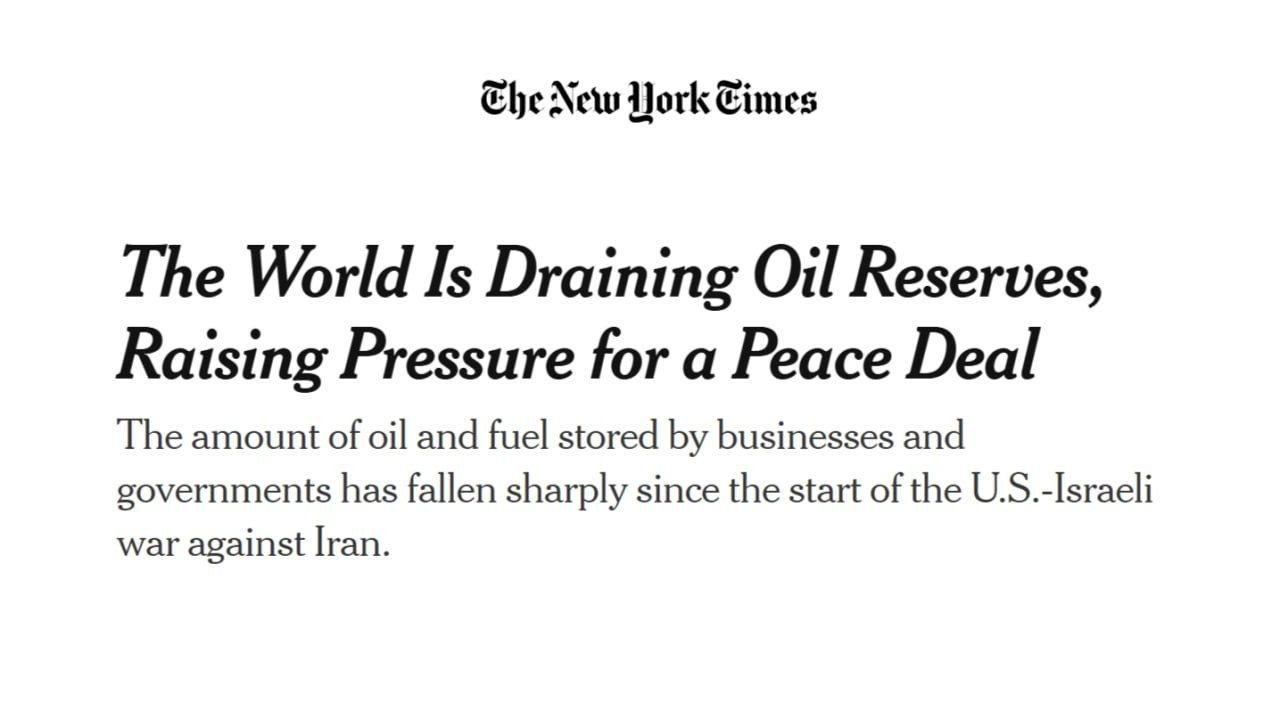
When Japanese Prime Minister Shigeru Ishiba described the Strait of Hormuz as carrying disproportionate consequences for the Indo-Pacific, he was not speaking hypothetically. Japan imports roughly 90 percent of its crude oil, and the Persian Gulf chokepoint — through which roughly 20 percent of global oil trade passes — remains the single most critical node in that supply architecture. A disruption there, even short of outright closure, translates into immediate pressure on Japanese energy inventories and, by extension, on industrial output and household costs across the archipelago.
That framing — stated plainly on 4 May 2026, according to Al Alam Arabic's live coverage of the Prime Minister's remarks — places energy security at the front of Japan's revised Indo-Pacific strategy. The document, formally released in early May 2026 and reported by Nikkei Asia, moves beyond the diplomatic architecture of previous iterations. It explicitly names supply chain resilience as a foreign policy objective, with energy and critical materials at the center of that mandate.
The chokepoint problem, restated
The Strait of Hormuz has always been strategically sensitive, but the framing from Tokyo this week carries a new urgency. Iranian officials have periodically threatened to close the waterway — or have moved to limit its usage through naval posturing — during periods of heightened confrontation with Western powers. The January 2020 tensions following the US drone strike on Qasem Soleimani briefly sent oil markets into a spike; more recently, Houthi maritime disruptions in the Red Sea have demonstrated how regional conflicts can cascade into global trade disruptions even without formal closure of a major chokepoint.
For Japan, the calculus is straightforward and structural. The country lacks meaningful domestic fossil fuel production; its refiners — companies like JXTG Nippon Energy, Idemitsu Kosan, and Cosmo Energy — maintain purchasing relationships across the Persian Gulf and rely on assured transit through Hormuz to keep inventory cycles predictable. Any disruption forces emergency procurement from alternative sources (West Africa, North Sea, US Gulf) at significantly higher cost, and at volumes that cannot fully substitute for routine Gulf supply. Japan's Strategic Petroleum Reserve can absorb short-term shocks, but a sustained chokepoint closure would expose the limits of that buffer within months.
The Indo-Pacific framing matters here because it signals that Japan is treating this not as a bilateral Japan–Iran problem, but as a regional architecture problem. An disruption to Hormuz doesn't just affect Japan; it cascades through South Korea, Taiwan, and Southeast Asian industrial economies that collectively anchor a significant portion of global manufacturing output. Tokyo's language about the Indo-Pacific therefore functions as a coordination signal — inviting broader partnership on energy security and alternative transit infrastructure.
Supply chain resilience as foreign policy
The renewed strategy document, as reported by Nikkei Asia on 2 May 2026, explicitly frames economic security as a foreign policy pillar. Previous Japanese Indo-Pacific frameworks treated supply chains primarily as an economic optimisation question — efficiency, cost reduction, trade facilitation. The 2026 iteration shifts the frame: supply chain resilience is now a security imperative, and the state's role in maintaining it is treated as non-negotiable.
This reflects a broader shift in how advanced industrial democracies are treating supply dependencies since the pandemic disruptions of 2020–2021 and the semiconductor shortage crises of that period. Japan has been particularly exposed: its automotive sector's reliance on specific semiconductor inputs, its steel industry's dependence on Australian and Brazilian coking coal, and its chemical industry's need for specialist feedstocks from the Middle East — all of these supply chains experienced pressure during recent turbulent years. The strategic response has been to diversify: Japan has accelerated investment in LNG infrastructure to reduce oil dependence for power generation, expanded strategic petroleum reserves, and deepened procurement relationships with non-Gulf suppliers including Canada, Norway, and the United States.
But diversification has limits. Oil, specifically the heavy sour crudes preferred by Japanese refineries, remains most economically sourced from the Persian Gulf. The structural dependency is real, and Tokyo's explicit acknowledgment of it — via the Prime Minister's public statement about Hormuz's importance — represents a notable shift toward strategic candor about national vulnerabilities.
The counterpoint: does Hormuz risk justify the framing?
Not every analyst accepts that the Hormuz chokepoint warrants the level of strategic emphasis Japan is now placing on it. Some observers note that the strait's geography — narrowest point at approximately 33 kilometers — makes outright military closure by any single actor extremely difficult to sustain. Iran has periodically threatened closure, but maintaining it would require持续的 naval interdiction that would invite overwhelming military response from the US and its regional partners. The economic cost to Iran itself, which relies on its own oil exports through the same chokepoint, would be catastrophic.
There is also the question of alternative transit. The Suez Canal remains open for Gulf-to-Europe trade; the Cape of Good Hope route is viable for Asia-bound shipments, albeit at higher cost and longer transit times. Neither fully substitutes for Hormuz — the Cape routing adds two to three weeks to a voyage and substantially increases insurance premiums and fuel costs — but they demonstrate that a disruption short of full closure does not constitute a total market cut-off.
Japan's own energy transition trajectory also complicates the framing. The country's Green Transformation (GX) strategy calls for significant expansion of LNG and nuclear generation to reduce oil dependence in the power sector by the mid-2030s. If that transition proceeds on schedule, Japan's oil demand profile narrows by the end of the decade, reducing the absolute impact of a future Hormuz disruption. The counterargument is that transition timelines have slipped repeatedly; Japan's nuclear restart process has faced local opposition, and LNG infrastructure commitments are long-term. The dependency may persist longer than the policy intends.
Stakes and the road ahead
Japan's positioning here carries consequences for multiple actors simultaneously. For the United States, which has been the primary security guarantor for Gulf maritime transit since the Carter Doctrine, Tokyo's explicit framing of Hormuz as an Indo-Pacific concern is a welcome articulation of shared interest. It reduces the perception that Asian allies view Middle Eastern stability as someone else's problem. The Japan–US alliance coordination on energy security could deepen as a result, particularly as both countries seek to constrain Iranian regional behaviour through economic pressure while avoiding the escalation risks of direct military confrontation.
For Iran and its regional partners, Japan's public acknowledgment of Hormuz's importance functions as a diplomatic signal with multiple interpretations. Tehran can read it as confirmation that its chokepoint leverage is structurally real — that threatening disruption carries political weight precisely because major importers like Japan cannot easily absorb it. That reading could increase Tehran's incentives to maintain a posture of intermittent threat, keeping the option open without executing it. Alternatively, Tehran can read Japan's diversification investments as evidence that the chokepoint dependency is declining over time, reducing the leverage value of the strait as a negotiating chip.
For Southeast Asian states — Indonesia, Vietnam, the Philippines — Japan's framing matters because it anchors the Indo-Pacific concept in concrete economic terms rather than purely security terms. An Indo-Pacific defined partly through energy security provides these countries with a framework for cooperation with Tokyo that does not require them to take sides in US–China competition. They have their own Gulf oil dependencies; a multilateral approach to chokepoint resilience offers a lane of engagement that feels less geopolitical than a purely military security framing.
The immediate next phase will test whether Japan's renewed strategy translates into concrete action or remains a high-level articulation of intent. Energy procurement diversification, strategic reserve expansion, and alternative transit route development are all underway — but the timelines are long, the costs are substantial, and the political commitment required to sustain them across successive governments is uncertain. What is clear is that Tokyo has decided to speak plainly about its vulnerabilities. Whether that candour produces durable strategic resilience or merely signals awareness without the capacity to act will define Japan's energy security posture for the decade ahead.
Desk note: The wire coverage from Nikkei Asia framed Japan's strategy refresh primarily as an economic security document — supply chain diversification, critical materials, technology inputs. The Prime Minister's Hormuz statement, reported separately by Al Alam Arabic, provided the geopolitical anchor that the economic framing had been lacking. Monexus led with the chokepoint vulnerability to foreground the strategic stakes that Japan itself has named publicly, rather than treating the document as a routine policy update.
Wire provenance
This editorial synthesis draws on the following public wire/social posts:
- https://t.me/nikkeiasia
- https://t.me/nikkeiasia
- https://t.me/alalamarabic
- https://en.wikipedia.org/wiki/Strait_of_Hormuz
- https://en.wikipedia.org/wiki/Energy_security