The Detention of Russia's Krasmash Chief and What It Tells Us About Wartime Accountability
On 4 May 2026, Russian authorities detained Alexander Gavrilov, General Director of the Krasnoyarsk Machine-Building Plant — known by its Russian acronym Krasmash — one of Russia's largest state-owned defense manufacturers. The announcement came via readovkanews on the Telegram platform at 05:35 UTC. No formal charges were immediately disclosed. No law-enforcement agency issued a press statement with specific allegations. The plant itself issued no public comment within the first twelve hours.
That opacity is the first thing worth noting. When a sitting chief executive of a critical defense firm disappears into custody without a public warrant, the official silence is itself a form of communication. It tells observers — both domestic and foreign — that this is not a routine corruption case being managed through predictable legal channels. Something about this particular detention requires a different kind of handling.
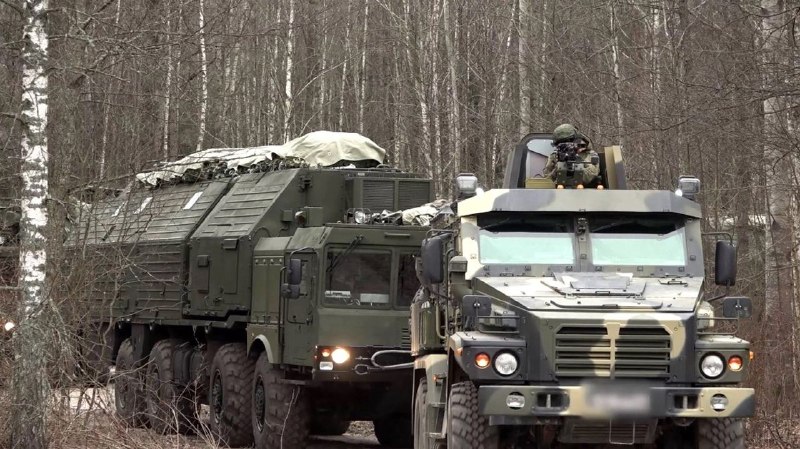
Krasmash is not a peripheral supplier. The Krasnoyarsk plant manufactures ballistic missile components, artillery systems, and rocket motors under contracts directly connected to Russian federal defense procurement. In the shorthand of defense analysts, it sits in the first tier of enterprises that matter to the Russian Ministry of Defence's supply chain. That makes the person running it a significant figure — and makes their sudden removal a significant event.
A Pattern That Spans the Defense Sector
Gavrilov's detention does not occur in a vacuum. Over the past three years, Russian law-enforcement agencies have moved against a series of senior figures in the defense-industrial complex — plant directors, procurement officials, logistics coordinators. The formal justifications have varied: embezzlement, contract fraud, bribery, administrative violations. The practical effect is consistent: executives who fail to meet production benchmarks, or who become entangled in budget disputes, face legal jeopardy that would be unthinkable for their counterparts in Western defense firms operating under peacetime oversight regimes.
The structural logic is worth examining plainly. Wartime states that operate large portions of their industrial base through state-owned enterprises face a persistent tension: the state wants output, the bureaucracy wants documented compliance, and the people running the factories operate in conditions of resource scarcity, supply-chain disruption, and political risk that their nominal superiors in Moscow frequently fail to acknowledge. When output falls short, someone is held accountable. In Russia's current configuration, that accountability flows downward toward the plant floor and the executive office alike — but the mechanisms are asymmetrical. A delayed missile delivery is a criminal matter for the director who failed to produce it, not for the procurement official who failed to source the components.
This is not a system that rewards managerial creativity or tolerates the kind of adaptive short-cutting that private-sector firms in wartime economies sometimes undertake. It is a system that punishes results. Which raises a straightforward question about Gavrilov: what outcome is Moscow trying to produce by taking him into custody?
The Counterpoint: Corruption or Power Struggles?
Several plausible readings compete for primacy. The first and most straightforward — the one that Russian state media will likely converge on if the case proceeds — is straightforward corruption. Defense procurement in Russia has long been a vector for embezzlement, inflated contracts, and kickback schemes. An executive of Krasmash's standing, overseeing contracts worth billions of rubles, presents a large surface area for such allegations. If Gavrilov is eventually charged with financial crimes, it would be consistent with a pattern that foreign observers have documented extensively.
A second reading locates the detention in an internal power struggle — not between Gavrilov and the state, but between competing factions within the state apparatus. Russian law-enforcement agencies are not monolithic. The FSB, the Investigative Committee, and the Prosecutor General's Office each maintain institutional interests that sometimes collide. A high-profile executive might become a pawn in a larger dispute over procurement jurisdiction, contract allocation, or budget transparency that has nothing to do with the executive's personal conduct.
A third reading — harder to source but consistent with observable patterns in authoritarian wartime states — treats the detention as a signal to other defense executives: performance failures will be met with legal consequences, and the protections that attach to seniority are thinner than they appear. This is accountability in the coercive sense: a demonstration that Moscow is watching, that the margin for underperformance is narrowing, and that the political cost of a missed delivery target may now include personal liberty.
The sources currently available do not permit a confident selection among these readings. What is clear is that the initial information environment — a single Telegram dispatch, no official confirmation, no charges named — is characteristic of a state that prefers to control the narrative timing of such events. Moscow has form for this. Precedent suggests that details, when they emerge, will arrive on Moscow's schedule and with whatever framing serves the state's interest in that moment.
What the Silence Tells the Market
Beyond the political analysis, there is an industrial dimension worth noting. Krasmash's contracts are embedded in a supply chain that runs through dozens of sub-contractors, raw-material suppliers, and transport firms. The abrupt removal of a plant director creates operational uncertainty — not just for Krasmash itself, but for every enterprise with financial exposure to the Krasnoyarsk plant's continued function. Those counterparties have no formal channel to seek reassurance. They cannot call investor relations. They cannot file a shareholder inquiry. They can only watch and wait, and update whatever internal risk assessments they maintain about exposure to the Russian defense-industrial base.
For external analysts — defense economists, sanctions-compliance teams, open-source intelligence researchers — the Gavrilov case adds a data point to an emerging picture. The Russian defense sector is not simply grinding forward under sanctions pressure. It is also experiencing internal turbulence: leadership instability, coercive accountability mechanisms, and a legal environment in which executive tenure is contingent on factors that go beyond performance metrics as those are conventionally understood.
That picture has implications for anyone tracking the sustainability of Russian military production over the medium term. A defense-industrial base that holds its executives under perpetual legal threat is a base that will generate conservative decision-making, defensive accounting, and a management culture oriented toward avoiding bad outcomes rather than achieving ambitious ones. In a prolonged conflict, that is a structural liability — and one that Western analysts have underweighted in their assessments of Moscow's long-run industrial capacity.
Forward View: What to Watch
In the immediate term, the critical question is whether formal charges emerge and under what legal framework. Russian law permits extended pre-trial detention in economic-crimes cases; the absence of charges within seventy-two hours would not be anomalous. If charges materialise, their specificity — the amounts alleged, the contractual violations cited, the named co-conspirators — will offer the best available signal about which of the competing readings above is operative.
A second signal will come from Krasmash itself: whether the plant maintains normal production schedules, whether contract deliveries proceed on timeline, and whether a successor acting director is announced. A plant that continues operating normally under an interim chief suggests the detention was personal rather than institutional — targeted at Gavrilov rather than at the enterprise. A plant that slows or halts production suggests something more systemic.
A third signal, further out, will come from any broader pattern: whether other defense-sector executives face similar action in the weeks following Gavrilov's detention, and whether the Russian Ministry of Industry and Trade issues any public guidance about expectations for plant-level performance. The last of these three signals would be the most informative about Moscow's underlying calculus — whether the state is sending a general message about accountability, or whether this is an isolated case with idiosyncratic facts.
What the sources do not yet provide is the justification for the detention itself. Until that information arrives — from official channels, from readovkanews updates, or from independent Russian reporting — the most accurate description of the current situation is the simplest one: a senior defense executive is in state custody, the reasons are undisclosed, and the event sits inside a pattern that analysts of Russia's wartime industrial machine have been documenting for three years.
This publication covered the Gavrilov detention as a defense-sector accountability story. The dominant wire framing led with the corruption-allegation angle, consistent with longstanding Western coverage of Russian state enterprises. Monexus chose instead to foreground the structural pattern of coercive executive accountability in Russia's defense-industrial base, and to flag what the operational silence surrounding the detention implies about Moscow's preferred information management on matters touching the war effort.
Wire provenance
This editorial synthesis draws on the following public wire/social posts:
- https://t.me/readovkanews/8432
- https://en.wikipedia.org/wiki/Krasmash