The ceasefire that isn't: Lebanon's frozen war and the limits of American-brokered agreements
Hezbollah claims Israel has breached the November ceasefire more than 10,000 times. Whatever the precise figure, the gap between what was agreed and what is being enforced points to a structural failure that no amount of diplomatic language can paper over.
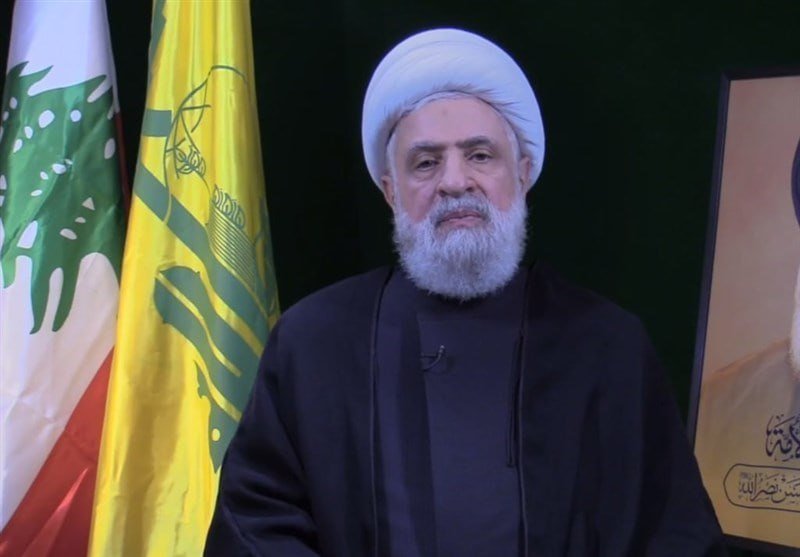
On 4 May 2026, Sheikh Naim Qassem, Hezbollah's secretary-general, delivered a blunt assessment of the ceasefire framework that has nominally governed southern Lebanon since November 2025: Israel, he said, had not implemented a single commitment under the agreement. His count of violations exceeded 10,000. There is no ceasefire, he added — only an ongoing Israeli-American aggression wearing ceasefire language. The statement, posted in Arabic by the Lebanese television channel Al Alam, is the clearest articulation yet of what many in Beirut have been saying quietly for months: the agreement is not holding, and it may never have been built to hold.
A number designed to shock
Ten thousand is a deliberately political figure. It is too large to parse calmly, too round to verify without systematic incident logging, and too alarming to ignore. The ceasefire monitoring mechanism — whether operating through UNIFIL, the Lebanese Armed Forces, or bilateral channels — does not publish a running public tally with that granularity. What is documented in international reporting includes Israeli drone overflights of Lebanese territory, at least one reported ground incursion in early 2026, and regular exchanges of fire in border villages. These are serious. But they do not amount to a figure that can be cross-checked against an independent ledger — and that is the point. The number is not primarily an analytic tool; it is a framing device designed to place the burden of ceasefire failure entirely on one party.
That framing is not unique to Hezbollah. The Lebanese Armed Forces have independently raised concerns about Israeli compliance. The caretaker government in Beirut has made clear, through official statements since late 2025, that it views ongoing Israeli military activity as inconsistent with the agreement's terms. Even accounting for political incentives to amplify violations, the breadth of complaint — coming from a state institution, not just an armed group — suggests the friction is real. The question is not whether something is going wrong. It is whether what is going wrong rises to the level that the international guarantors of the agreement — primarily the United States — are prepared to treat as a breach requiring consequences.
The negotiation question
Qassem's statement addressed not only the violations but the question of how to respond to them. He was explicit: direct negotiations with Israel are "a free concession without fruits" and a service to Prime Minister Benjamin Netanyahu's interest in manufacturing a picture of victory. Hezbollah, he said, supports indirect diplomacy — the channel that produced the maritime agreement of 2022 and the original ceasefire framework of 2025. The preference reflects a calculation that bilateral talks on equal footing with Israel are structurally impossible when Israel holds all the enforcement leverage and the mediator has demonstrable alignment with the stronger party.
This is not a new position. Hezbollah has consistently argued that negotiated outcomes require a level-playing field that American-backed frameworks rarely provide — because the mediating power's leverage over Israel is always less than its leverage over the resistance axis. What is new is the degree to which the argument has hardened as violations accumulate. When indirect diplomacy produced the November 2025 agreement, it was presented as a diplomatic success. When that agreement is visibly failing, the same mechanism is offered as the solution — but the underlying problem remains: the parties disagree on what the agreement actually requires, and there is no arbiter both accept as neutral.
The structural problem
American-brokered agreements in contexts like Lebanon's are built on a common assumption: that diplomatic architecture can substitute for a balance of force. When both parties lack the capacity or willingness to restart full hostilities, the logic goes, they will accept constraints rather than escalate. The ceasefire framework rests on this logic. What it cannot substitute for is genuine enforcement — a party with the credibility and willingness to impose costs when violations occur.
Qassem's framing — that Israel treats the agreement as a screen behind which to continue operations — points to the core structural flaw. When a state with overwhelming military superiority agrees to a ceasefire, its compliance is partly a function of whether it still needs to fight. Israeli political leadership has, according to public statements from multiple regional officials and reporting by Reuters in late 2025, indicated it does not consider the current arrangement to constrain its strategic freedom in southern Lebanon. That is not a diplomatic failure. It is a mismatch between what the agreement says and what the stronger party intends to do.
What comes next
The practical consequences of a collapsing ceasefire are not abstract. Southern Lebanon has a civilian population that has endured multiple rounds of displacement and return. The Lebanese Armed Forces are operating under a caretaker mandate, limiting the state's capacity to respond to security crises independently. A full reactivation of hostilities would overwhelm what remains of the stabilisation framework and likely draw in regional actors whose involvement would transform the conflict's character.
The political question — whether a revised ceasefire arrangement can be negotiated and sustained — may be secondary to a harder structural reality: an agreement that one party treats as an operating constraint and the other treats as a political nuisance is not a ceasefire. It is a pause. Sheikh Qassem's statement on 4 May names that reality plainly, even in the language of a party with its own interests in doing so. The international community's response — or lack of one — will determine whether the pause extends or ends.
This article was written from the Monexus MENA desk. The wire ran the ceasefire violations story as a compliance debate; this piece frames it as a structural failure in international agreement design.
Wire provenance
This editorial synthesis draws on the following public wire/social posts:
- https://t.me/alalamarabic/789456
- https://t.me/alalamarabic/789454
- https://t.me/alalamarabic/789450