Fatal Car-Ramming in Leipzig Leaves Two Dead as Police Question Suspect
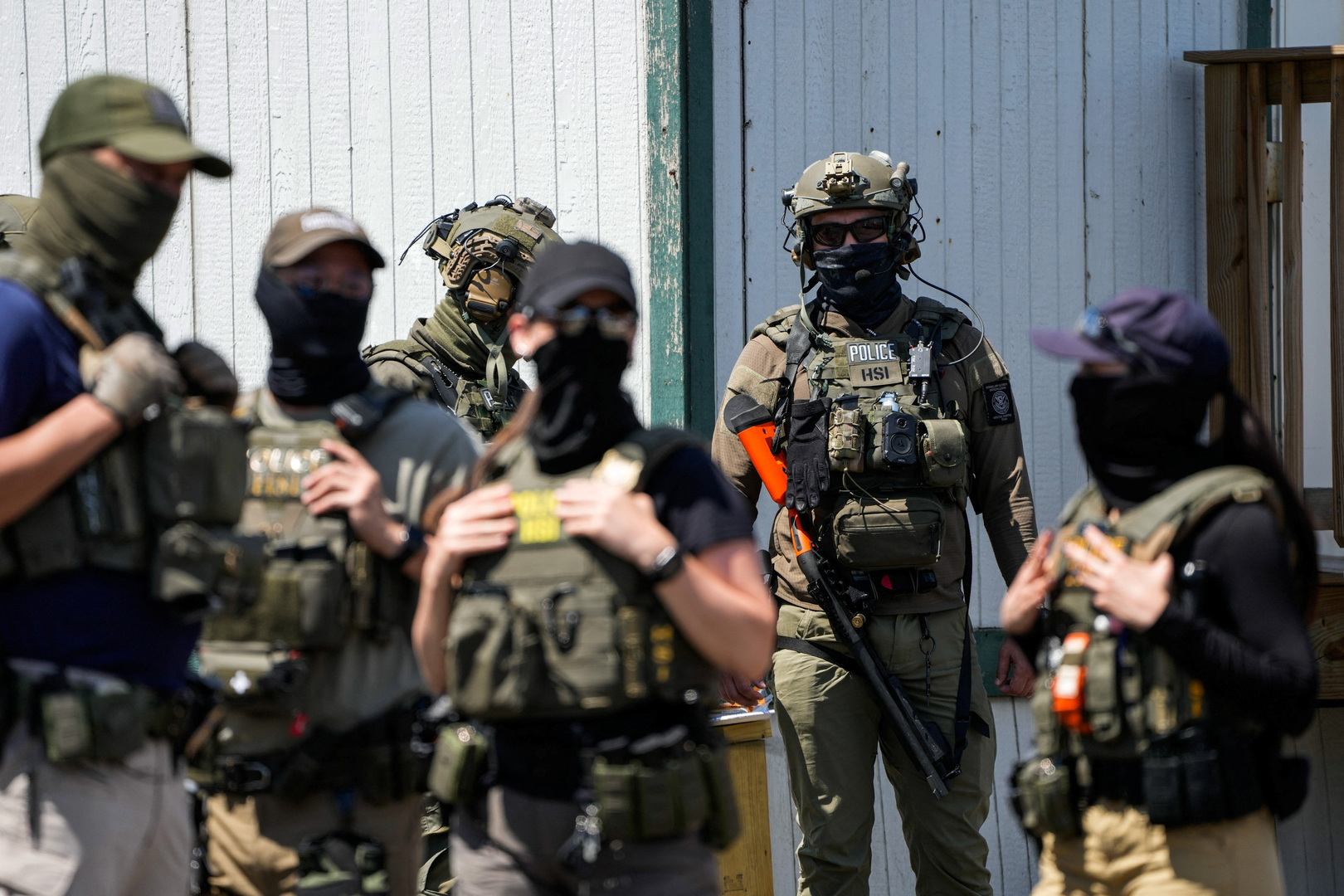
Two people were killed and several injured when a car struck pedestrians in central Leipzig on Monday, 4 May 2026. German police arrested the driver, identifying him as a 33-year-old German citizen, and said there was no ongoing threat to the public. The attack sent shockwaves through a city better known for its Bach festivals and university life than for mass-casualty violence.
The incident underscores how the mass-casualty vehicle attack — pioneered as a terrorist method in the 2010s and now replicated by lone actors across the continent — has become a structural feature of European security planning. Leipzig's immediate response mirrored protocols developed over a decade of counter-terrorism work: perimeter establishment, mass-casualty triage, and suspect detention within minutes. Whether the motive proves political, personal, or something else entirely, the immediate calculus for investigators remains the same: reconstruct the attack sequence, examine the suspect's digital footprint, and determine whether this was an isolated act or part of a broader network.
What happened in Leipzig
Police received emergency calls shortly before 18:00 UTC on 4 May reporting a vehicle had struck multiple pedestrians on a central Leipzig street. Officers arrived within minutes and detained the driver at the scene. Two people died at the site of the attack; several others were taken to hospital with injuries described as varying degrees of severity. By early evening, Leipzig police stated there was no further danger to the public and that the suspect was in custody.
The Reuters wire, citing Leipzig police, confirmed the driver was a 33-year-old German national. Authorities have not released his identity pending formal charges and notification of family members. Al Jazeera's breaking coverage at 18:23 UTC and 17:57 UTC both reported two fatalities with multiple injuries, consistent with the police account.
What remains unclear is the sequence of events leading to the attack. Police have not confirmed whether the driver struck the crowd intentionally, lost control of the vehicle, or acted in a state of medical distress. Forensic investigators were examining the vehicle on Monday evening; CCTV footage from the immediate area was being reviewed as part of the reconstruction effort.
The investigation so far
German prosecutors will decide what charges to bring. The legal options range from involuntary manslaughter to murder, depending on the reconstructed intent. What investigators are working to establish — through witness testimony, CCTV review, and digital evidence — is whether this was a deliberate act targeting civilians or a tragedy resulting from another cause.
The suspect is currently in police custody. Investigators are examining his background, prior contacts, and any digital communications that might illuminate motive. If the attack proves politically motivated, the case will fall under Germany's counter-terrorism framework and attract coordinated attention from federal security services. If the motive is personal or medical, the case will proceed through the standard criminal justice pathway.
Leipzig's police chief briefed reporters briefly on Monday evening, confirming the arrest and the absence of further danger. She declined to speculate on motive, citing the early stage of the investigation. The Jerusalem Post reported the 33-year-old identity and the German citizenship of the suspect on 4 May at 18:07 UTC.
A familiar European security calculus
Vehicle-ramming attacks have become so routine in European security planning that counter-terrorism agencies publish specific guidance for urban environments. The tactic requires no bomb-making expertise, no weapon acquisition, and minimal preparation — a fact that makes it attractive to actors across the ideological spectrum. From the 2016 Berlin Christmas market attack that killed twelve people to incidents in London, Barcelona, and Stockholm, European cities have absorbed repeated lessons about the vulnerability of pedestrianised spaces.
The response architecture has matured accordingly. German police train for rapid cordon establishment, casualty evacuation under secondary-threat conditions, and suspect extraction. Leipzig's emergency services appeared to execute those protocols competently on Monday. The question for investigators now is not the immediate response — that worked — but the upstream signals that might have anticipated an attack.
Whether such signals existed in this case remains to be seen. German authorities have faced criticism in past incidents for failing to connect dots that were visible in retrospect. The investigation will determine whether this suspect had prior contact with security services, prior radicalisation indicators, or known extremist affiliations. None of that is confirmed as of publication.
The road ahead
The formal investigation will take weeks, possibly months. Prosecutors need a clear picture of intent before pressing charges. The forensic examination of the vehicle, the review of CCTV, and the analysis of electronic devices seized from the suspect will generate the evidentiary foundation for any prosecution.
The political response will depend on what emerges. If this is a terrorism case, it will accelerate the debate already active in German and European policy circles about lone-actor threats, online radicalisation, and the limits of pre-emptive security intervention. If the motive proves non-political, it will complicate the security framing — and the public conversation will turn instead to vehicle-access regulations in urban centres.
Leipzig's residents are left with the immediate aftermath: two dead, several injured, a suspect in custody, and a city that did not expect to be the subject of a breaking-news alert on a Monday evening. The fuller picture of what drove this attack will emerge as the investigation progresses.
Leipzig police said on 4 May 2026 that they had arrested the driver and there was no ongoing threat to the public. No motive has been confirmed. This publication will update as the investigation develops.
Wire provenance
This editorial synthesis draws on the following public wire/social posts:
- https://t.me/rnintel
- https://t.me/The_Jerusalem_Post