The Loyalty Script: How Iranian State Media Rewrites Khuzestan's Arab Identity
A Telegram post from Mehr News, Iran's official news agency, offers a window into how Tehran constructs narratives of ethnic loyalty for domestic and diaspora audiences — and what that construction obscures.
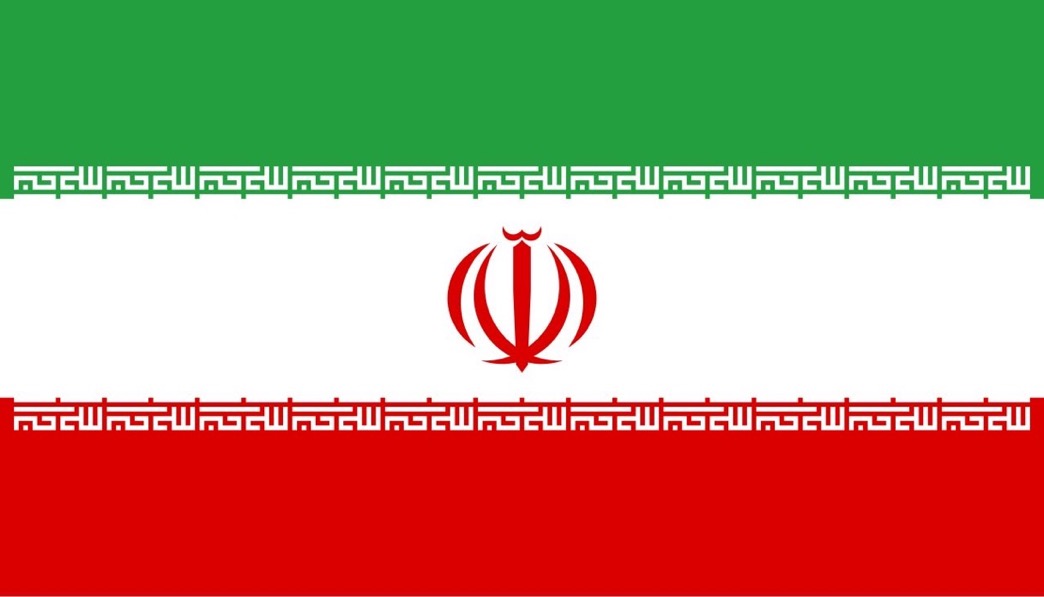
On 4 May 2026, a post appeared on the Telegram channel of Mehr News — Iran's semi-official news agency — featuring a university professor sharing what he described as recollections about Arab residents of Khuzestan province and their devotion to the "Martyr Leader" and allegiance to the current leader of the revolution. The post, accompanied by video footage, followed a familiar template: a credentialed academic lending gravitas to a political message about national unity and revolutionary fidelity.
The content itself is not unusual. Iranian state media has long produced similar material — testimonials, academic endorsements, community leader testimonials — designed to reinforce a particular narrative about ethnic minorities within Iran's borders. What makes this particular post worth examining is not the message itself but what it reveals about the machinery of state-backed cultural messaging: who gets to speak, what gets amplified, and what it all tells us about the gap between official framing and lived reality in one of Iran's most complex provinces.
The Architecture of Official Sentiment
Khuzestan sits in southwestern Iran, bordering Iraq and the Persian Gulf. It is home to Iran's largest Arab population — a community that has historically maintained distinct linguistic, cultural, and in some cases, political identities. The province is also the heart of Iran's oil industry, a fact that shapes every dimension of its relationship with Tehran.
State media framing of Khuzestan's Arab community has followed a predictable arc for decades: expressions of loyalty to the Islamic Republic are showcased; grievances are rarely aired through official channels; and when they do surface, they are typically described as foreign interference or the work of separatist elements rather than legitimate political dissent.
The Mehr News post fits squarely within this tradition. The professor — whose name, institutional affiliation, and academic specialty the post did not immediately specify — offered testimony about the depth of Arab devotion to the revolution. The framing presents loyalty as organic, grassroots, and enduring. What the framing does not do is acknowledge the structural conditions that define Arab life in Khuzestan: economic marginalization despite the province's resource wealth, linguistic restrictions in schools, periodic protests that Iran Human Rights and other monitoring groups have documented across the past decade.
This is not to say the loyalty described in the post is entirely manufactured. Arab communities in Khuzestan are diverse, and political orientations within any population vary. Some residents have supported the Islamic Republic; others have advocated for greater cultural and political rights within Iran's existing system; a minority have sought more fundamental changes. A single testimonial, even one rooted in genuine individual conviction, cannot stand as proxy for an entire community's political orientation.
What the Post Omits
The Mehr News Telegram post makes no reference to the periodic protests that have erupted in Khuzestan since 2019, when Arab communities in cities including Ahvaz and Shadgan took to the streets to demand better economic conditions, an end to discriminatory practices, and recognition of Arab cultural rights. Those protests were met with heavy security responses. The pattern — demonstration, crackdown, official silence — has repeated across different cycles.
Nor does the post engage with the longstanding advocacy of Arab civil society groups, many of them operating from exile, who have documented what they describe as systematic underdevelopment of Khuzestan despite its role as Iran's oil engine. The province has some of the highest unemployment rates in the country. Water contamination and air pollution from oil operations have generated health crises that residents have raised repeatedly.
These are not fringe concerns. They are documented by Iranian and international human rights organizations, and they shape the material context within which any individual's political loyalties — or expressions of loyalty — must be understood. A professor recalling warm memories of community devotion tells us something about how one person experienced Khuzestan. It tells us very little about the province as a whole.
The Diplomatic Layer
The post also arrives at a moment when Tehran's relationship with its Arab populations carries additional weight. Iran has been cultivating closer ties with Arab states across the Gulf, many of which have significant Arab minority populations of their own. Messaging about Arab loyalty within Iran intersects with Tehran's broader diplomatic positioning — a narrative that Arab communities across the region have agency and that their grievances are not necessarily anti-Iranian.
Whether this framing travels effectively beyond domestic consumption is another question. Arab governments in the Gulf have engaged with Iran cautiously over the past several years, driven by shared economic interests and a common interest in regional stability. That engagement has not been predicated on agreement about how ethnic minorities within Iran should be treated. The Mehr News post is calibrated for domestic audiences first; its potential resonance elsewhere is secondary.
The Takeaway for External Audiences
For international readers encountering Iranian state media output, the Mehr News post offers a useful case study in how official narratives operate. The format — academic, testimonial, specific — lends an appearance of grassroots authenticity. The content, however, is produced through a state apparatus with clear political objectives. That does not make every individual expression of loyalty false. It does mean the selection of which voices to amplify, and which silences to maintain, is itself a political act.
Khuzestan will continue to produce both loyalist testimonials and dissent. Iranian state media will continue to publish the former while rarely acknowledging the latter. Readers encountering such material do best by asking what the post does not say — about protests, about economic conditions, about the range of political views within a diverse community — as much as what it does.
The gap between the two is where the real story lives.
This publication compared the Mehr News framing with prior Khuzestan coverage from Iran International, as well as documented human rights reporting on Arab protest cycles in the province.
Wire provenance
This editorial synthesis draws on the following public wire/social posts:
- https://t.me/mehrnews