Merz plays down Berlin-Washington rift as Hormuz blockade puts Europe on edge
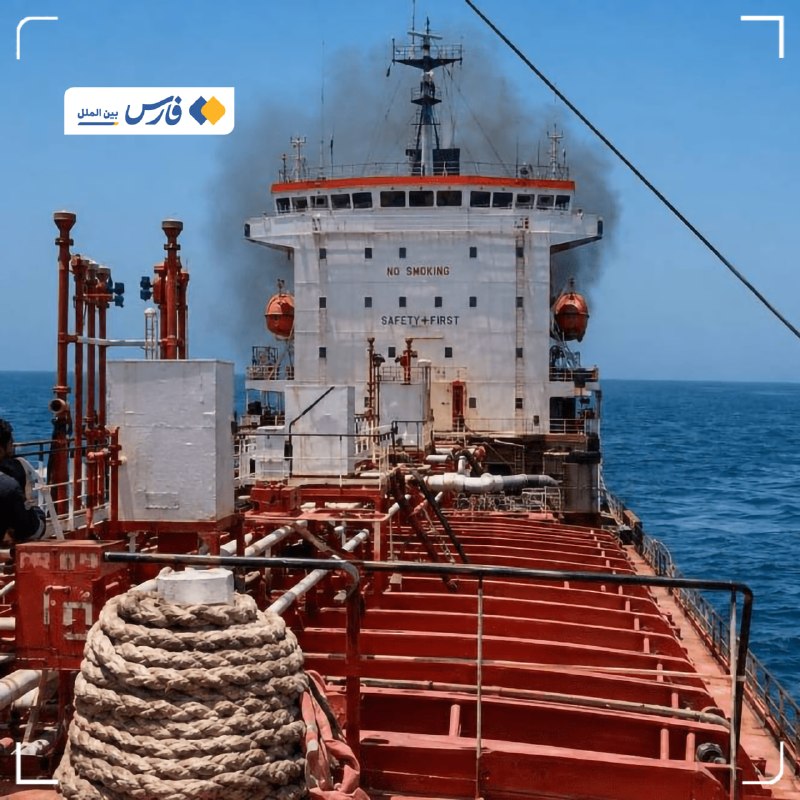
Germany's chancellor Friedrich Merz attempted to defuse a growing diplomatic crisis with Washington on Saturday, insisting that disagreements over Iran's nuclear programme had no bearing on the Trump administration's decision to begin pulling US troops out of Germany. His statement came as markets and allied governments assessed the fallout from a renewed US naval posture in the Strait of Hormuz — a waterway that carries roughly a fifth of the world's daily oil shipments and whose continued openness European capitals cannot take for granted.
Merz, speaking at the chancellery in Berlin, said Germany and the United States shared the same fundamental objective: preventing Iran from acquiring a nuclear weapon. "There is no connection," he told reporters, seeking to close the chapter on a troop withdrawal announcement that had prompted sharp criticism from senior members of his own coalition. The US drawdown, which began this week, affects roughly 10,000 personnel stationed across German bases — the largest single reduction of American forces in Europe since the Cold War.
But in European capitals and in the corridors of NATO's Brussels headquarters, the sequencing was difficult to ignore. The troop decision arrived within days of the United States restoring a maritime presence near the Strait of Hormuz, reviving a posture that had not been sustained at scale since 2019. Intelligence shared with allied governments in recent weeks suggested that Iranian uranium enrichment activity, as flagged by the International Atomic Energy Agency, had contributed to the renewed US posture. Whether the Hormuz naval presence constitutes a genuine blockade or an enforcement posture remains contested — but its effect on oil market pricing has already been registered across European commodity exchanges.
Berlin finds itself in an uncomfortable position. Germany's defence establishment, still grappling with the consequences of a decade of fiscal constraint following the post-Cold War dividend spending, has limited capacity to respond independently to either scenario — a reduced US forward presence or a disruption to Gulf shipping lanes. Merz's government has committed to raising defence spending above the NATO two-percent benchmark, but structural bottlenecks in procurement and personnel mean those commitments will take years to translate into usable capability. For now, Germany remains structurally dependent on American guarantees, which makes any public rift with the Trump administration a liability the chancellor appears reluctant to compound.
The question of a formal meeting between Trump and Merz remained unresolved as of Saturday. Prediction market odds indicated a 49 percent probability that the two leaders would hold a bilateral discussion before the end of May, according to data from Polymarket. A separate market gave a 33 percent probability that the Hormuz blockade would be formally lifted by the end of the month — a figure that reflects genuine uncertainty in financial markets about the trajectory of US Iran policy under the current administration.
The Hormuz equation carries distinct weight for Europe and for China, which depends on the strait for the majority of its crude imports. A sustained disruption would create immediate price pressure for European consumers already navigating elevated energy costs, while simultaneously complicating Beijing's economic stabilisation efforts. That dual exposure makes the strait a venue where great-power signalling intersects with commercial vulnerability — a dynamic that predates the current crisis but has been brought into sharper relief by it.
Trump retains significant leverage in any negotiation with Germany. Tariff threats targeting German automotive exports — a sector that accounts for a substantial share of Germany's manufacturing output — remain active, and the administration has signalled willingness to use export controls on advanced semiconductor technology as a secondary pressure point. For Merz, the political calculus is delicate: any public concession to Washington risks emboldening the far-right opposition in German domestic politics, while any visible rupture risks the appearance of an ally that cannot be relied upon. The most likely outcome, according to European diplomatic analysts, is a managed quiet period — private engagement without public acknowledgement, allowing both sides to claim ground without formal capitulation.
What remains genuinely uncertain is whether the Hormuz posture will escalate. The United States has not issued formal notice of a blockade under international maritime law, and the legal threshold for declaring a naval blockade is distinct from a naval presence. Iranian officials have responded with the expected language of resistance, but internal Iranian decision-making on whether to test the US posture remains opaque. European governments have declined to publicly endorse the US posture, reflecting the political difficulty of aligning with a strategy whose endgame is unclear. The IAEA's next reporting cycle, expected before the end of June, will provide a more concrete basis for assessing whether the Iran question is moving toward a diplomatic resolution or toward a confrontation that forces European governments to choose a side.
For now, Berlin is managing two crises simultaneously, insisting they are unrelated. The assertion may be correct. But the proximity of the two — a troop withdrawal that signals weakening commitment on one flank, and a naval posture that carries energy-supply consequences on the other — has not gone unnoticed in NATO capitals where the durability of the alliance is no longer taken as given.
This publication framed the Merz-Trump tension primarily as a burden-sharing and alliance-management story, rather than as a bilateral personality conflict, reflecting the structural dimensions of the dispute rather than its diplomatic optics.