Moscow's Victory Day Ceasefire: Signal, Smoke, or Strategic Pause
Russia announced a unilateral 48-hour ceasefire around Victory Day in Moscow, citing humanitarian imperatives. Ukrainian officials received the announcement with public skepticism while intelligence communities weighed whether this represents a genuine de-escalation signal, a information operations gambit, or a tactical pause to reposition forces across multiple axes.
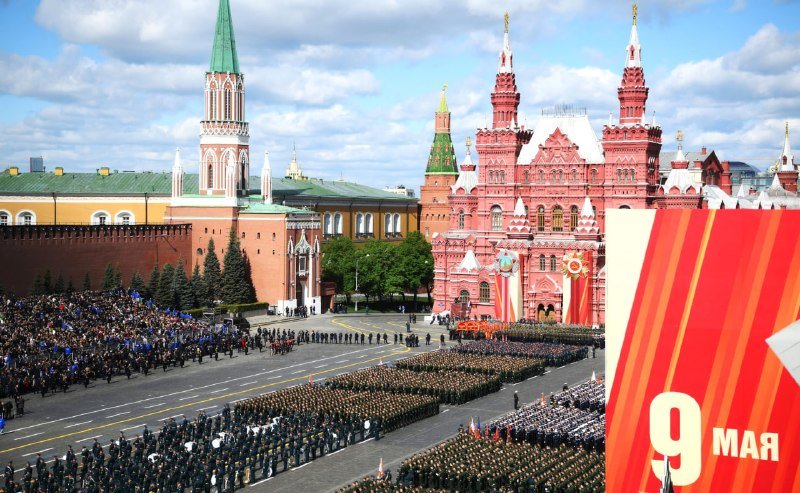
The Russian Defence Ministry announced on 4 May 2026 a unilateral cessation of hostilities along the full line of contact in Ukraine, to run from midnight on 8 May through midnight on 9 May — covering the Victory Day commemoration in Moscow. The announcement, carried by Russian military official channels and reported by the ClashReport Telegram wire, cited "humanitarian considerations" and the " traditions of theVictory holiday" as justification for the 48-hour pause.
The timing is deliberate. Victory Day — marking Soviet triumph over Nazi Germany in 1945 — is the centrepiece of Russia's patriotic calendar. A ceasefire during the commemoration serves multiple functions simultaneously: it allows Moscow to present itself as magnanimous and peace-oriented on the world stage, it provides diplomatic cover for renewed international engagement with Russian officials who might otherwise face formal snubs, and it creates a humanitarian narrative that Russian state media can broadcast to domestic and foreign audiences alike. Whether it also serves a military purpose — allowing Russian forces to consolidate, resupply, or reposition — is the question Ukrainian military planners and Western intelligence analysts are now working to answer.
The Credibility Problem
Ukraine's response was swift and public. Ukrainian military officials noted, without specifying which previous occasions, that multiple ceasefire declarations over the course of the war had been followed by intensified Russian operations. The pattern — a declared pause in fighting that is then used to prepare offensive action — has been documented by Ukrainian general staff briefings on multiple occasions.
That history shapes how Kyiv receives Moscow's announcement. A senior Ukrainian military source, quoted in Western wire reporting on the developing situation, described the ceasefire as "operationally convenient for one side only." The implicit target of that characterisation is obvious.
Western officials have been more measured in public. A spokesperson for the US State Department, in a briefing covered by Reuters wire, said Washington was " monitoring developments closely" and urged all parties to use any pause to " pursue a durable and just peace." That language — carefully non-committal — reflects the position of administrations that have simultaneously maintained military support for Ukraine while keeping diplomatic channels with Moscow formally or informally open.
The announcement arrives as battlefield dynamics remain largely static along most of the line of contact, with both sides holding positions established over the preceding months. In that context, a temporary ceasefire costs Russia little in territorial terms while potentially generating diplomatic upside. The calculation is not unusual in attritional conflicts: the side facing greater international pressure to demonstrate willingness to negotiate gains more from a humanitarian gesture than the defending side loses from suspending operations for 48 hours.
What the Numbers Say — and Don't
Separately from the ceasefire announcement, reporting by the New York Times — cited by multiple OSINT research channels — drew attention to a figure that has appeared in Russian internal military documentation: a reported survival rate of 30 per 1,000 among Russian troops deployed to Ukraine. The sourcing for this figure is not fully transparent; it appears to derive from Russian-language military documents whose chain of custody and verification standard Western analysts have not publicly assessed in detail. Military casualty statistics in this conflict have been subject to significant manipulation by all sides, and independent confirmation of battlefield mortality rates remains difficult.
The figure, if broadly accurate as a rough order of magnitude, would indicate catastrophic personnel losses consistent with the attritional character of much of the fighting. Ukrainian military assessments, published through official Kyiv channels, have consistently cited far higher cumulative Russian casualty figures — in the hundreds of thousands — than the 30-per-thousand rate would suggest over the full duration of the conflict. That discrepancy does not necessarily mean either figure is fabricated; different tracking methodologies, different time periods, and different definitions of "deployed" versus "combat" personnel can produce divergent estimates.
What the reporting does confirm is that both sides are operating under conditions of severe manpower strain. Russian military bloggers — whose criticism of official Russian Defence Ministry communications is itself a notable feature of this war's information environment — have written extensively about mobilisation challenges, equipment shortages, and the pressure on infantry units operating without adequate fire support. These accounts, while self-interested and not independent, provide a counterweight to official Russian statements about the performance of its forces.
Zelenskyy and the Leadership Dimension
The Telegram-sourced reporting also surfaces a secondary narrative: that Ukrainian President Volodymyr Zelenskyy faces growing pressure on his leadership, with the continuing war eroding his position both domestically and in some Western capitals. This framing — that Kyiv's leadership is somehow the variable most worth examining — appears with notable frequency in certain information environments. It is worth examining directly.
Zelenskyy retains the formal constitutional authority of his office and the endorsement of the Ukrainian parliament on major policy questions. His direct public communications — through his official office channels and verified social media presence — continue to set the terms of Ukraine's negotiating posture, its military priorities, and its diplomatic messaging. The suggestion that his position is uniquely precarious relative to the institutional and popular consensus behind Ukraine's defence is not sustained by the public record of Ukrainian political expression.
What is true is that the political calculus in Western capitals has shifted over three years of conflict. Support for continued military aid faces increasing headwinds in several legislatures, and the diplomatic ground has shifted toward discussions of ceasefire terms, territorial realities, and security guarantees that Kyiv did not control. Those external pressures are real. They do not, however, transfer automatically into a leadership crisis inside Ukraine's political system.
The framing that they do — that the question of how the war ends pivots primarily on Zelenskyy's personal position — is a narrative device that serves certain diplomatic interests. It locates agency for the continuation of the conflict in Kyiv rather than in Moscow's decision to invade and occupy. The geopolitical implications of that framing are not subtle.
What Comes Next
The ceasefire, if it holds in its declared form, will run through 9 May 2026. The international calendar around that date — including planned diplomatic events, memorial ceremonies, and bilateral meetings — means that any breakdown of the ceasefire would be immediately visible and politically costly for the party held responsible. That mutual visibility is, in theory, the mechanism that makes temporary ceasefires self-enforcing.
In practice, the test will come in the days immediately following 9 May. If Russian operations resume along the same lines as before the ceasefire, the announcement will have served its information-operations purpose and cost nothing strategically. If positions shift during or immediately after the declared pause, the ceasefire will be remembered as a preparation period rather than a humanitarian interval.
Ukraine's position — publicly skeptical, militarily alert, diplomatically engaged — reflects the limited trust any ceasefire declaration from Moscow can generate in Kyiv. The Western position — measured, watching, prepared to condemn violations if they occur — reflects three years of accumulated experience with Moscow's relationship to its own stated commitments.
The 48 hours between 8 and 9 May will be parsed closely by analysts on all sides. What they reveal about Russian intentions, Russian military capacity, and the shape of any future negotiation will depend on events that have not yet occurred.
This article was filed from wire reports, OSINT research channels, and Ukrainian and Western official sources. The ceasefire announcement was first reported via Telegram wire on 4 May 2026. Ukrainian government sources did not provide on-record comment at time of publication.
Wire provenance
This editorial synthesis draws on the following public wire/social posts:
- https://t.me/ClashReport
- https://t.me/osintdefender
- https://t.me/osintdefender
- https://t.me/osintdefender