Musk’s OpenAI trial exposes the contradiction at the heart of AI’s current moment
In a San Francisco courtroom, Elon Musk is simultaneously arguing that OpenAI has betrayed its nonprofit mission and telling audiences that artificial intelligence will deliver material abundance for all. The tension between those two positions — one cast as a safety advocate, the other as a technological optimist — defines the central ambiguity of this moment in AI development.
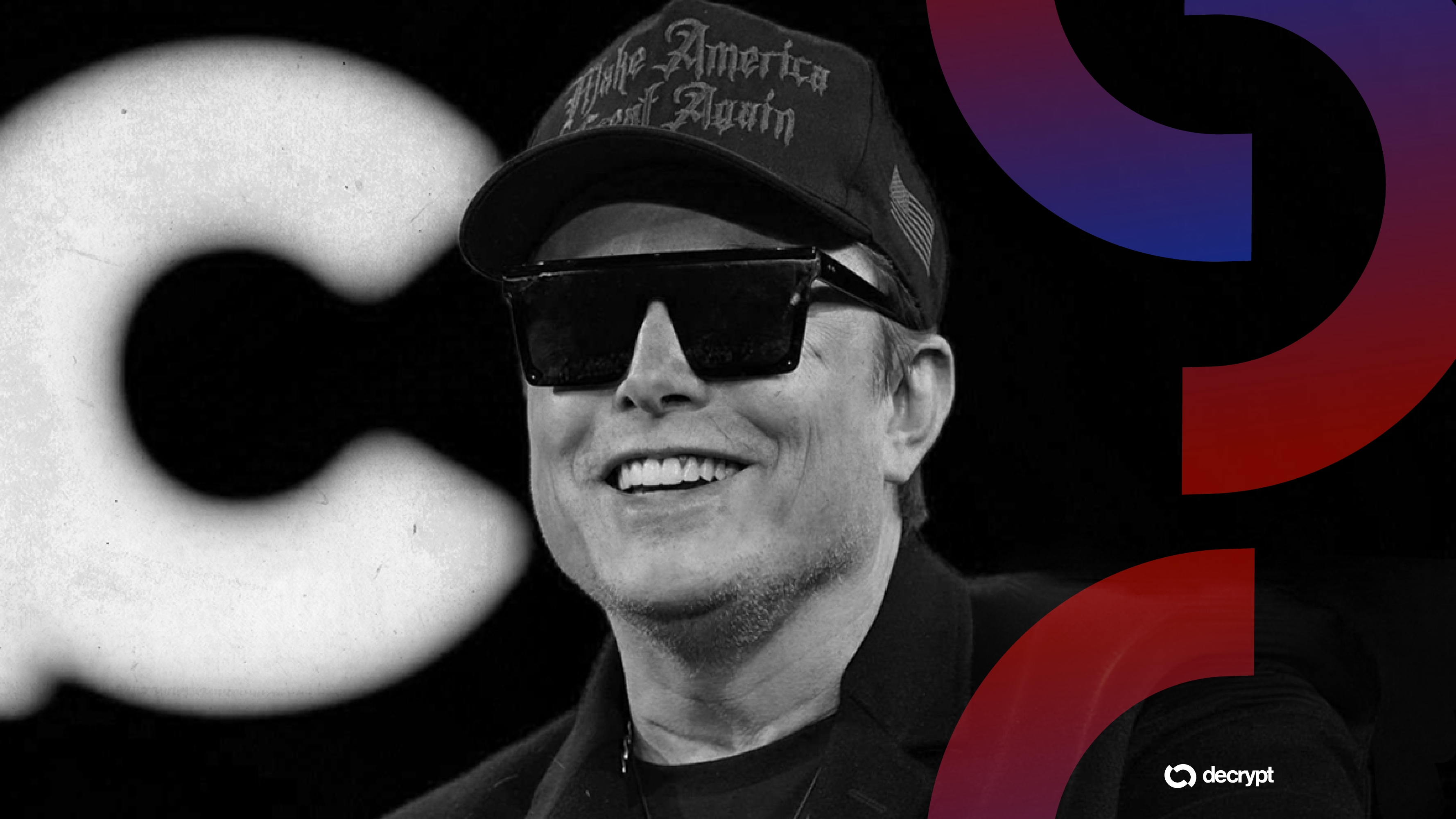
On the morning of 29 April 2026, Elon Musk walked into a San Francisco courtroom to advance a legal argument that hinges on one foundational claim: OpenAI has abandoned its nonprofit mission in pursuit of commercial gain. His sole expert witness in the case is Stuart Russell, a professor of computer science at the University of California, Berkeley and one of the most credentialed figures in the field of artificial intelligence. Russell's testimony signals that Musk is not merely seeking damages or injunctive relief — he is asking a court to weigh competing visions of what advanced AI should become.
Russell has spent more than four decades studying the gap between what AI systems can do and what their designers actually intend them to do. His textbook, first published in 1995 and now in its fourth edition, is considered a foundational text in university computer science programmes worldwide. In 2024, he authored "Prosperity Through Concord," an argument for why governments, not labs, must retain decisive control over the development of artificial general intelligence. He has testified before the United Kingdom's House of Lords and advised the United Nations. He has, across multiple forums, argued that the competitive dynamic between frontier labs constitutes a form of arms race that no single nation-state can govern unilaterally.
In that context, Russell's presence on Musk's side of the v. OpenAI et al. case is not incidental. It signals that the litigation has become a vehicle for a broader argument about the direction of the entire sector. If the court accepts that OpenAI's commercial partnerships and partnership restructuring with Microsoft represent a departure from its founding purpose, it would implicitly validate concerns about institutional capture and the risks of unconstrained capability expansion. Russell's role makes explicit what has been隐隐作痛 — that concerns about advanced AI's trajectory have moved from academic journals into a courtroom with global commercial stakes.
Musk, meanwhile, has been on a parallel track. In posts published across April 2026, he told audiences that artificial intelligence and robotics will mean "everyone can have a penthouse if they want" — framing the output of goods and services in a future economy as "several orders of magnitude higher than today's economy." That is not a cautious claim. It is a utopian forecast embedded in a product announcement, placed alongside SpaceX launches, Neuralink demonstrations, and Tesla autonomy presentations as if the trajectory from current AI capability to universal material abundance were simply a matter of engineering execution and capital allocation.
The contradiction is not trivial. Musk is simultaneously suing an AI laboratory for pursuing commercial interests at the expense of safety, and publishing a vision of AI development in which the commercial reward — a materially abundant society — justifies the deployment velocity and scale of deployment itself. Russell, by contrast, has argued that the competitive pressure between labs is itself the principal hazard: that each additional laboratory that achieves frontier capability adds systemic risk that no single safety protocol can contain.
The Stanford Institute for Human-Centered AI published its annual AI Index on 29 April 2026, the same day Musk's trial was in session. The report noted that private investment in AI companies reached $335.8 billion in 2025 — a figure that dwarfs the combined GDP of several sovereign states. That capital accumulation is not neutral. It reflects a set of assumptions about who captures the returns on advanced AI, what governance structures apply to frontier models, and how quickly capability improvements should be translated into commercial products and national security applications.
Those assumptions are precisely what Russell's testimony and Musk's litigation target — but in opposite directions, depending on which of Musk's public positions one reads. The uncertainty is not semantic. It is structural. A courtroom finding that OpenAI breached its founding charter would constitute, in effect, a judicial intervention into a governance vacuum — the first of its kind. Courts are not designed to set AI safety standards; their reasoning operates in precedent and statute, not in capability metrics or loss-of-control probability estimates. If Musk prevails, the ruling will create legal uncertainty for every foundation model currently in commercial deployment — without providing the clarity that safety-focused researchers say is needed most.
The geopolitical context adds another dimension. Advanced AI capabilities are increasingly framed by major powers as matters of national security comparable to nuclear weapons development. The language of arms race is not metaphorical in policy circles; it describes a genuine competition for first-mover advantage in systems whose governance architecture does not yet exist. China's technology sector has made advanced AI development a stated industrial priority. The European Union's AI Act creates a regional framework that differs substantially from the US approach. The United Nations has held multiple sessions on lethal autonomous weapons systems. None of these processes have produced the kind of binding multilateral agreement that critics of the current trajectory say is essential.
What Russell represents, in this setting, is not a fringe view. He is among the most cited researchers in the field when the question concerns what happens when AI systems become more capable than the institutions governing them. That his testimony is being used in a commercial dispute between one of the world's wealthiest individuals and a laboratory that he once co-founded does not diminish its substance — it complicates the reading of it. Musk has simultaneously positioned himself as a necessary check on AI development, through litigation, and as the architect of its most optimistic deployment scenario, through public communications.
The trial is not yet decided. The stakes extend well beyond the parties named in the filing. What the courtroom will ultimately receive is a set of arguments that reflect a genuine fracture in how the most consequential technology of this generation is understood — by the people building it, by the people regulating it, and by the people whose futures depend on which version of the story turns out to be accurate.
Wire provenance
This editorial synthesis draws on the following public wire/social posts:
- https://x.com/unusual_whales/status/1919018372099891408