Operation Freedom and the Fog of Gulf Escalation
Trump's Operation Freedom posturing claims a decisive blow against Iranian gunboats in the Gulf. The reality on the water — and in the available record — is considerably murkier.
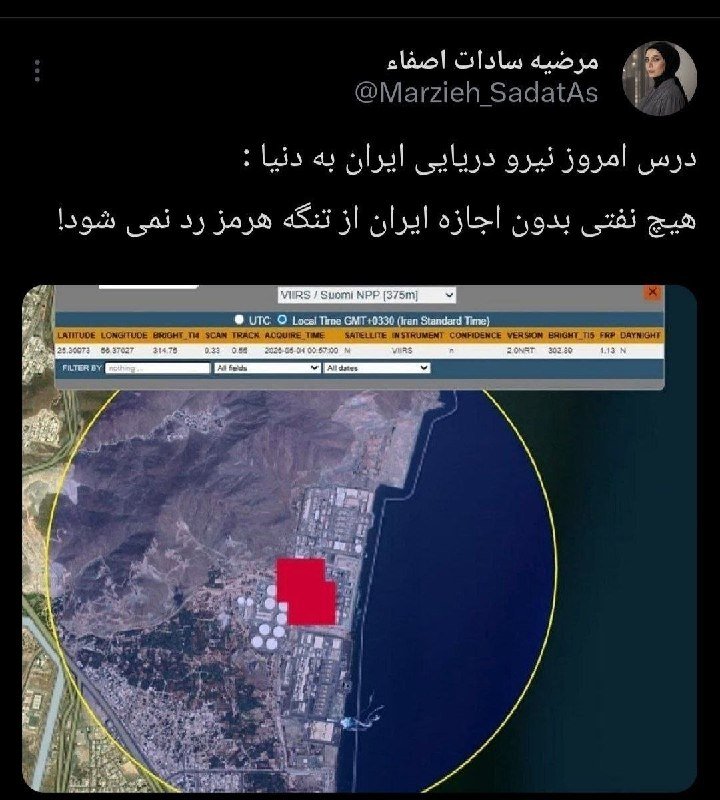
On May 4, 2026, President Donald Trump took to Truth Social and declared that the United States had largely settled the Iranian gunboat problem in the Strait of Hormuz. "We've shot down seven small Boats or, as they like to call them, 'fast' Boats," he wrote. "It's all they have left." The statement landed with the confidence of a man who believes narrative shapes reality as readily as ordnance does. Whether the same confidence survives the news conference scheduled for the following morning — with Secretary of War Pete Hegseth and Chairman of the Joint Chiefs General Dan Caine — remains to be seen. The record currently available is thin, contested, and shot through with the fog that characterises every early phase of a maritime confrontation.
The claim that matters most here is not Trump's rhetorical posture but the operational substance beneath it. CENTCOM, the U.S. Central Command responsible for the Middle East theatre, stated that American forces had sunk six Iranian gunboats attempting to interdict neutral commercial traffic in the Gulf. Iranian state media, specifically the Tasnim News Agency, denied this account — categorically, if predictably. The gap between those two positions is not minor. One version describes a decisive U.S. response to Iranian provocation; the other describes an incident of disputed outcome that Iranian authorities have every institutional incentive to downplay. Without an independent verification mechanism — footage, third-party shipping data, corroborating accounts from neutral vessel operators — the public record offers no basis for preferring either version over the other. That is worth stating plainly, because the temptation in editorialising a moment like this is to smooth over the uncertainty in favour of the most satisfying narrative.
The South Korean Cargo and the Logic of Operation Freedom
The trigger for this confrontation, as Trump presented it on May 4, was Iran's targeting of neutral commercial shipping, including a South Korean cargo vessel navigating the same waters the IRGC Navy has long treated as its operational domain. The reference to "Project Freedom" — the name apparently attached to the U.S. response operation — frames the intervention as a freedom-of-navigation mission, a category the U.S. Navy has employed throughout the post-Cold War period to contest maritime claims by adversaries. That framing is legible to Western audiences and to the commercial shipping industry whose insurers are currently recalculating risk premiums across the Gulf.
Trump's explicit call, published on May 4, for South Korea to "come and join the opening of the Hormuz" elevates the operation from a bilateral American-Iranian flashpoint to something closer to a multilateral enforcement coalition. The strategic logic is transparent: broader participation distributes operational costs, legitimises the action in the eyes of third parties, and constrains Iran's ability to characterise the confrontation as a case of American overreach. Whether Seoul has the appetite for that entanglement — politically, given its exposure to Iranian energy and trade relationships, and operationally, given the谱系 demands of a sustained naval presence in a high-threat environment — is a separate question. The sources do not indicate any South Korean commitment. What is clear is that the invitation has been made publicly, which places pressure on the Moon administration to offer some form of response.
Iran's Position and the Limits of Denial
Tehran's interest in controlling the narrative is obvious. The IRGC Navy's interdiction operations against commercial vessels in the Gulf are not new — they have been a persistent feature of Iran's leverage strategy for years, used to signal displeasure, extract concessions, and remind the international shipping industry that passage through Hormuz is never entirely routine. Iranian state media's denial of the gunboat losses should be read in that context: it is not primarily an informational claim but a political one. Iranian officials have institutional reasons to avoid the appearance of weakness, particularly at a moment when regional dynamics — the evolving Syria situation, Hezbollah's constrained posture, the continuing Yemen quagmire — offer the Islamic Republic both risks and opportunities.
That said, denial and disconfirmation are not the same thing. Tasnim's reporting does not offer a coherent alternative account of what transpired on May 3-4. It simply asserts that the CENTCOM claims are false. Independent observers have noted that the information environment around Gulf maritime incidents is routinely polarised, with each side releasing footage, data, and statements calibrated to its own audience. The result is a public record that is rich in assertion and poor in verifiable fact. Analysts tracking these incidents have long noted that the truth often emerges only weeks or months later, once the immediate political moment has passed and the interested parties have less incentive to manage perceptions.
What the News Conference May Clarify — and What It Won't
The May 5 press conference featuring Hegseth and Caine represents the first structured opportunity for the administration to substantiate its claims. The briefing, if it proceeds as announced on May 4, will presumably address the operational timeline, the rules of engagement, the status of the neutral commercial vessels involved, and the broader strategic intent behind Operation Freedom. Whether it will include independently verifiable evidence — radar tracks, ship identification data, footage from the engagement — remains an open question.
The structural pattern worth noting here is the familiar rhythm of military posturing: an incident generates a presidential statement, the statement generates a briefing, the briefing generates further statements, and the underlying operational facts become progressively more difficult to recover as the political narrative solidifies. This is not a criticism unique to the current administration — it is a feature of how democratic governments handle military confrontations in the information age. The press conference format itself is designed to project institutional authority, not to conduct an independent audit of the claims being made. Journalists in the room will ask pointed questions; the answers will be shaped by classification constraints, operational security concerns, and the administration's calculation of what serves its broader communication strategy.
The Stakes Beyond the Gulf
The confrontation in the Gulf is not merely a localised incident. It sits within a longer trajectory of Iranian maritime pressure, U.S. freedom-of-navigation operations, and the broader contest over the norms governing international straits. The Hormuz chokepoint carries approximately 20-25% of global oil trade — a figure that makes any disruption there a matter of immediate economic consequence well beyond the Gulf itself. If Operation Freedom succeeds in establishing a more secure transit corridor and deters further Iranian interdiction attempts, the commercial and geopolitical payoff is significant. If it escalates — prompting Iranian retaliation against Gulf Arab states, disrupting tanker insurance markets, or drawing further regional actors into the confrontation — the costs compound rapidly and in directions that are difficult to predict.
For South Korea, the stakes are bilateral and structural. Seoul relies on stable energy transit through the Gulf for its industrial economy. It has a longstanding relationship with Washington that inclines it toward alignment on security matters, and an equally longstanding set of interests in Tehran that inclines it toward restraint. The call to join Operation Freedom puts that tension in sharp relief. Whether South Korea's eventual response is material participation, diplomatic support, or a quiet distancing will say something important about the limits of American alliance architecture in the current moment.
What Monexus found worth examining here is not the spectacle of the presidential Truth Social post — that form of communication is by now familiar — but the structural gap between the confidence of the statement and the opacity of the underlying record. Military confrontations require authoritative accounts to be credible, and credibility requires evidence. Until the May 5 briefing delivers something the public record currently lacks, the most honest editorial position is to note the contest of claims, name the interests driving each side, and resist the pull toward premature certainty. The Gulf has seen enough of that already.
Wire provenance
This editorial synthesis draws on the following public wire/social posts:
- https://t.me/BellumActaNews/12345
- https://t.me/Middle_East_Spectator/23456
- https://t.me/DDGeopolitics/34567
- https://t.me/GeoPWatch/45678
- https://twitter.com/Osint613/status/2051354764