Project Freedom: Trump's Hormuz Initiative Without US Warship Escorts, Officials Say
The Trump administration's much-publicised Project Freedom — pitched as a mechanism to keep oil tankers moving through the Strait of Hormuz — currently includes no US naval escorts, according to unnamed officials cited by the Wall Street Journal and CNN.
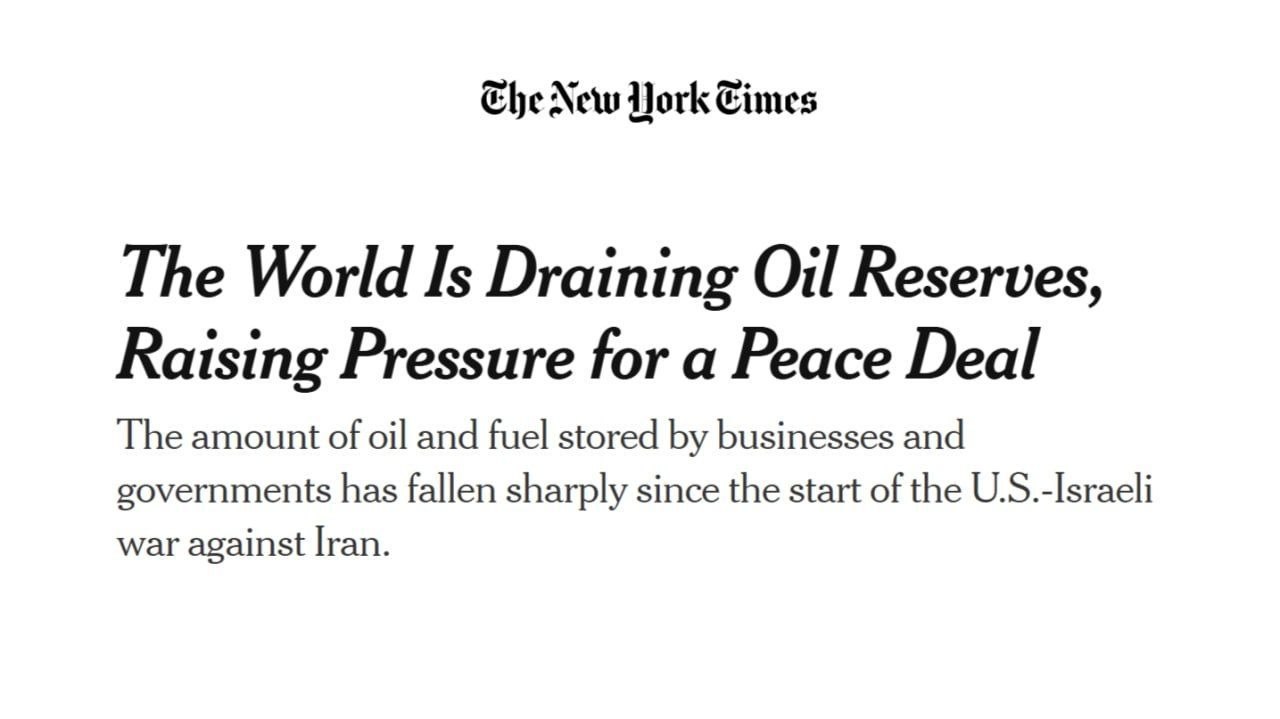
The Trump administration's much-publicised Project Freedom — pitched as a mechanism to keep oil tankers moving through the Strait of Hormuz — currently includes no US naval escorts, according to unnamed officials cited by the Wall Street Journal on 3 May 2026 and confirmed separately by CNN.
The initiative, announced with a stated aim of deterring Iranian interdiction of commercial shipping, is so far configured as a diplomatic and insurance-coordination framework rather than a force-protection operation. Officials speaking to the Wall Street Journal described Project Freedom as a mechanism allowing countries, insurers, and shipping companies to synchronise their navigation through the strait — without committing American warships to escort individual vessels.
What the officials actually said
Two separate reporting lines converge on the same core finding. The Wall Street Journal reported on 3 May, citing officials with direct knowledge of the matter, that the initiative in its current format does not yet include US warships escorting ships through the Strait of Hormuz. CNN separately quoted an American official making the same point more bluntly: the initiative, as things stand, is not important to escort ships crossing the strait.
That framing matters. The phrase "Project Freedom" was announced with rhetoric suggesting a direct American response to Iranian threats against commercial shipping — threats that have included publicly reported attacks on vessels and near-misses in the corridor. But the mechanism being assembled falls short of a naval presence that would physically shield tankers from interdiction. Instead, it leans on intelligence-sharing, flag-state coordination, and the participation of third-country navies to create what officials describe as a deterrent posture without forward-deployed American firepower in the shipping lane itself.
Why the gap between rhetoric and capability matters
The Strait of Hormuz handles roughly a fifth of global oil trade. Any credible deterrence mechanism in that corridor needs to be visible enough that a potential aggressor calculates the cost of action outweighs the gain. Without US warships physically in the lane, the deterrent calculus is more ambiguous — it depends on whether the initiative's participant states are willing to put their own naval assets forward, and whether insurance markets treat coordinated flag-state signalling as sufficient to keep premiums low enough for shippers to continue using the route.
The gap also raises a question about signal versus substance in the administration's signalling. Announcing a freedom-of-navigation initiative with a prominently marketed name, then quietly excluding the warships that would make it meaningful, may serve domestic political optics more than it changes the operational reality of a narrow waterway where Iranian Revolutionary Guard assets operate with relative impunity close to their own coastline.
That said, the absence of a direct naval escort does not make the initiative worthless. Intelligence coordination with regional partners — particularly Gulf states with their own littoral patrol capabilities — can complicate Iranian targeting decisions even without American vessels visible in the convoy lane. The question is whether that secondary-layer deterrence is enough to keep shippers confident, or whether tanker operators begin routing around the strait entirely, adding cost and delay to global supply chains.
The insurance angle
One dimension of Project Freedom that officials highlighted is its role as a coordination point between countries, insurers, and shipping companies. Insurance premiums in the Gulf spiked following Iranian interdiction threats; for shippers, a credible state-backed coordination mechanism that reduces the risk profile — and therefore the premium — is a genuine incentive to stay on course through the strait rather than divert.
Whether that insurance dimension can substitute for a naval shield is precisely the tension the initiative has not resolved. Lloyd's underwriters will price risk based on what they believe the threat environment looks like, not based on the existence of a named framework. If Iranian interdiction attempts continue or escalate, the gap between a diplomatic coordination mechanism and an actual naval escort will become the defining question of the initiative's credibility.
What comes next
The officials cited by the Wall Street Journal noted that the initiative, in its current format, does not yet include naval escorts — the phrasing implying the door is not closed. An expanded role for American warships could follow if Iranian behaviour escalates or if partner nations push for a more robust deterrence posture. That decision would require a further political signal from the administration, likely contingent on whether the current framework produces the shipping-stability outcomes it has promised.
For now, Project Freedom is a coordination promise sitting between a diplomatic signal and an operational commitment. Whether it holds will depend on whether Iranian forces test the limits of a deterrence architecture that currently lacks its most visible deterrent asset.
This desk noted that Western wire coverage of the initiative focused on its deterrent framing. Regional sources, including reporting from Al Alam Arabic, framed the initiative more sceptically, noting that absent US warships the practical deterrent effect was unclear. Both framings are reflected above.
Wire provenance
This editorial synthesis draws on the following public wire/social posts:
- https://t.me/OSINTdefender
- https://t.me/alalamarabic
- https://t.me/alalamarabic
- https://t.me/alalamarabic