Project Freedom: Inside Washington's Cautious Bid to Keep the Strait of Hormuz Open
Hours after a tanker came under fire near the Strait of Hormuz, CENTCOM announced Project Freedom — a US initiative to share safe passage intelligence with commercial vessels. The operation marks a deliberate departure from the gunboat escort model that has defined American responses to Gulf threats for decades.
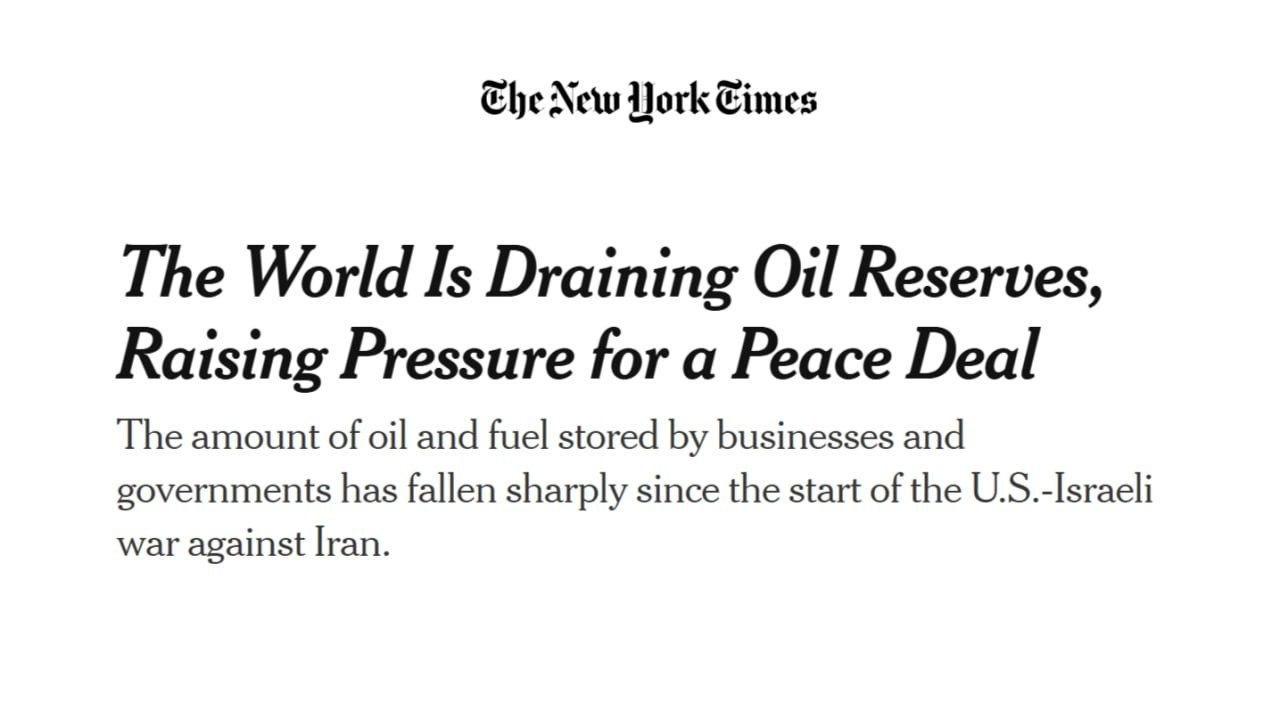
A tanker was struck by multiple projectiles in the Strait of Hormuz in the early hours of May 4, 2026 UTC — just hours before United States Central Command announced a new initiative called Project Freedom. The attack, reported by IntelSlava citing regional monitoring sources, immediately complicated what Washington was presenting as a measured, non-escalatory response to a persistent threat. By dawn in Washington, the narrative had split: a body count on one side of the ledger, and a spreadsheet on the other.
Project Freedom, as described across multiple reports drawing on Wall Street Journal and Axios sourcing, does not include US naval escorts for commercial vessels. That distinction matters. The initiative instead tasks the Pentagon with coordinating with shipping companies, flag-state governments, and marine insurers to provide real-time intelligence on which transit lanes are clear of Iranian naval mines. Ships will receive safe passage data; they will not receive destroyer cover. One US official, speaking to CNN, put it plainly: the operation is not designed as an escort mission for commercial vessels in the region.
The nuance is not accidental. It reflects a deliberate calibration that senior Biden-era officials had privately discussed and that the current administration appears to be operationalizing — the recognition that any US Navy presence in the Strait that reads as gunboat protection for oil traffic hands Tehran a potent grievance to deploy against international shipping lanes, while simultaneously validating Iranian propaganda that the United States has effectively occupied Gulf waters for the benefit of Western energy markets.
The Attack That Set the Table
The tanker incident on May 4 arrived against a backdrop of steadily escalating Iranian naval activity in the Gulf approaches. According to OSINT monitoring sources, Iranian forces have seeded portions of the shipping channel with mines — the same tactic Tehran employed during the Tanker Wars of the 1980s, when the Islamic Republic sought to strangle Iraq's Gulf oil exports and ended up threatening the global economy more broadly. The difference in 2026 is that the mining operations appear more targeted, calibrated to deny specific lanes rather than to close the strait entirely.
The vessel struck in the May 4 incident was struck by several projectiles, according to IntelSlava's reporting, which cited monitoring of regional channels. Whether the attack involved small craft, coastal batteries, or aerial assets was not specified in the available sourcing. What is clear is that the timing — a matter of hours before the US announcement — suggests either coincidence or a deliberate signal from Iranian-aligned forces that the threat environment in the strait remains acute.
US officials familiar with the intelligence assessments have told Axios that Iranian mine-laying operations have created genuinely hazardous conditions for commercial traffic, particularly in the narrow channel near the Iranian coast where vessels must slow to navigate. The mines are not theoretical; they are documented. The question Washington had to answer was not whether to respond, but how to respond without converting a maritime security problem into a wider military confrontation.
Why Not an Escort Mission
The escort model has a surface logic: if mines threaten ships, send ships to protect them. US destroyers have provided convoy cover in the Gulf before, most recently during the peak of Iranian rhetoric following the US withdrawal from the Joint Comprehensive Plan of Action in 2018. But that model carries costs that a warship-heavy presence paper cannot capture.
The first cost is diplomatic. The Strait of Hormuz is a chokepoint through which roughly a fifth of global oil trade passes — a figure that makes it one of the most economically sensitive waterways on earth. Any permanent US naval escort operation in the strait reads, in Tehran's framing, as a blockade of Iranian territorial waters under cover of protecting third-party traffic. Iran has consistently argued that the presence of US warships in the Gulf is itself the destabilizing factor. An overt escort program hands that argument institutional proof.
The second cost is operational. A convoy escort model commits US naval assets to a continuous presence in a confined, mine-threatened waterway where a single casualty could force a broader kinetic response. The political pressure that a killed American sailor would place on any administration — Democratic or Republican — would be near-absolute. The calculus in Washington appears to have been that accepting the limitations of an intelligence-sharing model is preferable to accepting the escalatory potential of a direct escort model.
The Wall Street Journal, citing officials familiar with the planning, reported that Project Freedom in its current format does not yet include US Navy escorts — a formulation that has left open the question of whether that capability could be deployed if conditions deteriorate. The initiative is best understood as a floor, not a ceiling.
The Insurance Architecture
The most revealing detail in the sourcing is the involvement of marine insurance companies in Project Freedom's operational design. The Wall Street Journal and Axios both reported that the initiative relies on coordination with shipping firms and their insurers to make real-time routing decisions based on US-provided intelligence. This is not a military operation in any traditional sense. It is a market mechanism with a intelligence subsidy attached.
The mechanics work roughly as follows: if Lloyd's underwriters and their Gulf affiliates are assured that US naval intelligence is actively tracking mine locations and sharing updated lane information, they can continue insuring transits at manageable premiums. If that intelligence flow were interrupted, or if an insured vessel were struck in a lane the US had designated as safe, the liability exposure would be catastrophic — and premiums for Gulf transits would spike in ways that would effectively close the strait to a significant portion of commercial traffic even without any Iranian action.
In other words, the initiative externalizes the cost of deterrence onto private sector balance sheets. The US provides information; private capital bears the risk; the shipping companies decide whether the economics of transit make sense. This is not a sign of American weakness. It is, if anything, a sophisticated recognition that the economic structure of Gulf shipping already functions as a deterrent — that the market has priced in Iranian risk in ways that make the strait's continued operation partly a function of whether that risk is credibly managed rather than directly countered.
Stakes and Unresolved Questions
The immediate stakes are economic: any disruption to Hormuz transits reverberates through oil markets within hours and through industrial energy costs across Asia within weeks. Japan, South Korea, and several Southeast Asian economies are structurally dependent on Gulf crude that must pass through the strait. A sustained closure — whether through Iranian mining, US escort commitments, or insurance-driven withdrawal of commercial traffic — would be felt far beyond the Gulf.
The longer-term stakes are political. Project Freedom signals that Washington is willing to manage the Gulf threat through information dominance and market pressure rather than through direct military commitment. Whether that posture deters Tehran or invites further probing depends on how Iranian decision-makers read American resolve — a calculation that the tanker attack hours before the announcement does nothing to simplify.
What remains unclear from the available sourcing is whether the intelligence-sharing arrangement is already operational or remains a diplomatic proposal, whether participating shipping companies have publicly committed, and how the US intends to verify that Iranian mine locations have been accurately mapped. The sources do not specify the timeline for Project Freedom's activation. They also do not describe the command-and-control arrangements: if a vessel ignores US safe passage guidance and strikes a mine, what is the US liability and what is the political fallout? Those questions sit outside the sourcing envelope for this piece.
The broader structural question — whether the information-sharing model can substitute for credible forward deterrence over the long run — is one that the next several weeks of Hormuz traffic will begin to answer. What is clear is that Washington has chosen a posture that is legible, deniable enough to avoid Tehran's sharpest grievances, and economically levered rather than militarily direct. Whether that choice reflects strategic sophistication or strategic timidity will depend on what happens the next time a tanker comes under fire in the narrow water between Iran and Oman.
This article was filed from Gulf-adjacent wire sources on May 4, 2026. Monexus led with the tanker attack, which received more prominent placement in regional outlets, and foregrounded the insurance architecture in our framing — a structural dimension that received less attention in the initial wire framing, which focused on the military dimensions of the CENTCOM announcement.
Wire provenance
This editorial synthesis draws on the following public wire/social posts:
- https://t.me/IntelSlava/78941
- https://t.me/Middle_East_Spectator/45612
- https://t.me/Middle_East_Spectator/45608
- https://t.me/wfwitness/23441
- https://t.me/osintlive/18923
- https://t.me/osintlive/18927
- https://t.me/rnintel/34556
- https://t.me/TSN_ua/28991