Project Freedom: Inside Trump's Hormuz Gambit and Iran's Warning
The Trump administration has announced a naval escort mission into the world's most contested waterway, triggering an explicit Iranian threat. The episode reveals the thin line between deterrence and confrontation in the Gulf.
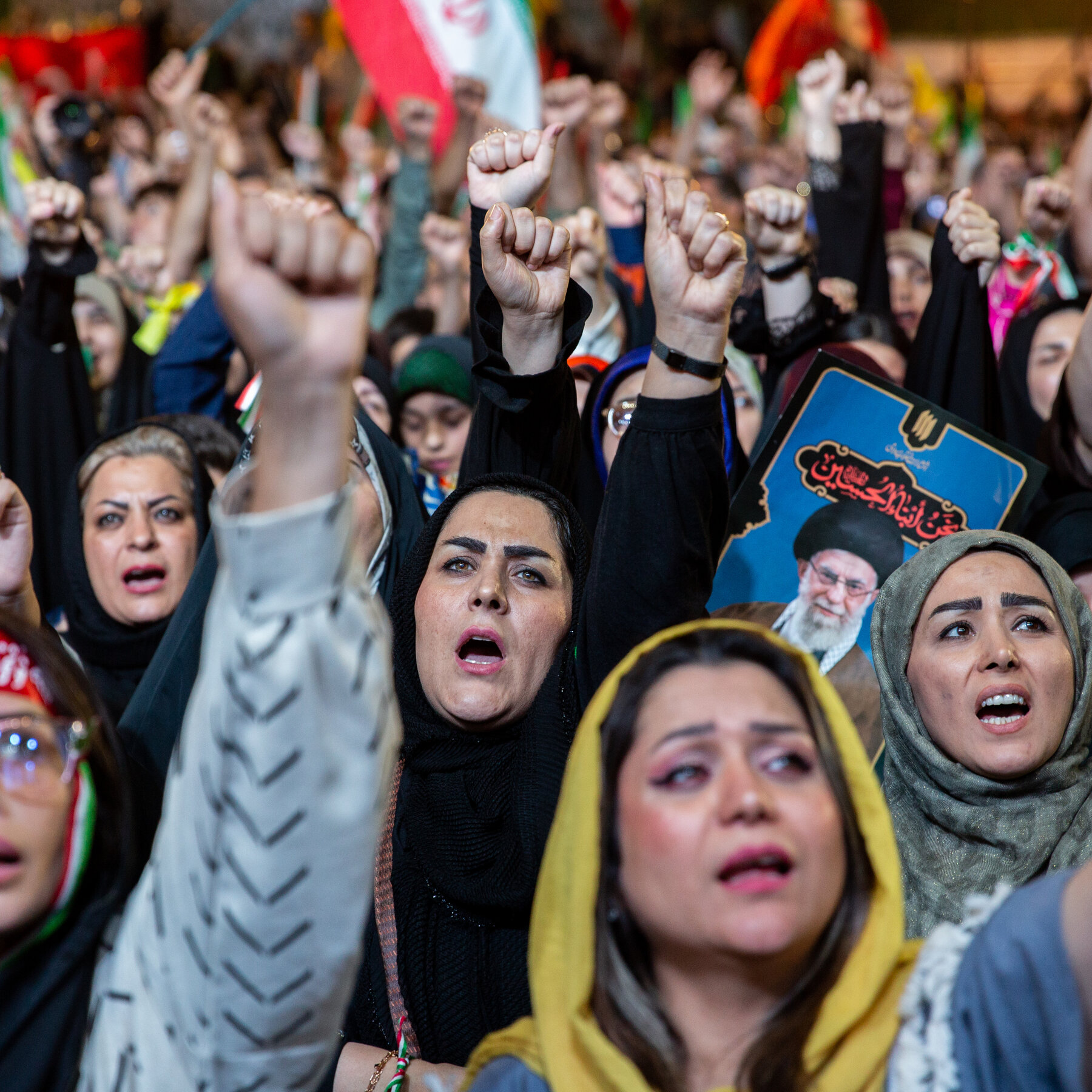
The announcement came through a late-night post on 3 May 2026, as is now customary for the most consequential foreign-policy disclosures of the second Trump administration. The United States would launch what it called Project Freedom, a naval mission to escort stranded vessels out of the Strait of Hormuz. Within hours, Tehran's response arrived with characteristic bluntness: any American warship entering the Strait would be treated as a target. The escalation was swift, declarative, and carried the hallmarks of a crisis that both sides appear to be managing through public messaging rather than back-channel communication.
The Strait of Hormuz is a fourteen-by-thirty-mile waterway between Oman and Iran through which roughly a fifth of the world's oil shipments pass. It is, by any measure, the most strategically sensitive maritime corridor on earth, and it sits at the edge of Iranian territorial waters. The combination of those two facts is what makes Project Freedom, whatever its operational scope, a fundamentally different kind of signal than a routine naval patrol.
What makes this moment structurally distinctive is the timing and the optics. Trump announced the mission as stranded ships — merchant vessels caught in some combination of insurance constraints, regional tension, and possibly coordinated Iranian harassment — had become a live diplomatic problem. The framing from Washington positioned the operation as humanitarian: getting vessels and crews out of harm's way. Tehran's response framed it as an act of aggression: a foreign power bringing warships into a strait Iran considers part of its sphere of influence, dressed up as a civilian rescue mission. Both framings contain enough truth to be dangerous.
What Project Freedom Actually Is — and What It Isn't
The official description from the White House, as reported across wire services on 3 May 2026, describes a mission to escort trapped ships out of the Strait. The sources do not specify how many vessels are stranded, for how long, or under what precise legal or operational circumstances they came to be immobilized. What is clear is that the announcement was made on a Saturday evening, effective immediately, with operations set to begin the following day.
The United States Navy's presence in the Gulf is permanent and well-documented. What is new is the declared intent to use that presence in a specifically escort-and-extraction role — moving non-military vessels through an active maritime dispute. The operational difference is significant. Routine presence is deterrence; active escort is confrontation, or at minimum, a visible challenge to whoever is perceived as responsible for the stranded-vessel problem.
The administration has not publicly disclosed the rules of engagement governing Project Freedom. Whether American warships accompanying civilian vessels would respond to Iranian interdiction attempts, or what threshold of Iranian action would trigger a defensive response, remains unspecified in the public record. That ambiguity is, in the nature of such announcements, probably intentional. It signals willingness to escalate without defining the red line that would trigger it.
Iran's Warning in Context
Iranian state media and official spokespeople delivered the response on 4 May 2026, the same day CGTN was carrying live coverage of the situation. The language was unambiguous: any American vessel entering the Strait would be attacked. That is not bluster to be dismissed out of hand — it is a specific, named threat against a specific category of vessel, issued by a state that has demonstrated both the capability and the willingness to use force in its territorial waters and approaches.
Iran's position on the Strait is not a post-revolutionary invention. The 2019 Hormuz Entanglement episode — when Iranian forces seized a British-flagged oil tanker, the Stena Impero, in retaliation for the Royal Marines' seizure of an Iranian vessel near Gibraltar — demonstrated that Tehran will move decisively when it perceives an imbalance of胁迫. The Islamic Revolutionary Guard Corps Navy operates a layered interdiction capability in the Strait, including fast patrol boats, mines, and anti-ship missiles. That capability is not theoretical.
The stranded-ship problem, from Tehran's perspective, is either a pretext or a genuine crisis — the distinction matters less than the fact that Washington has chosen to respond with military escorts rather than diplomatic or legal mechanisms. Iranian officials have consistently argued that the presence of foreign military vessels in the Gulf is itself destabilizing, and that American policy is designed to maintain an economic and security architecture that serves US interests at the expense of regional states. Whether one accepts that framing or not, it is the frame through which Tehran is processing Project Freedom, and it is a coherent one.
The Structural Logic of Hormuz
The Strait of Hormuz sits at the intersection of several structural pressures that make it permanently volatile. It is the only maritime exit from the Persian Gulf for supertankers too large to use alternative routes through Egypt's Suez Canal or the proposed (but not yet operational) Oman Oil Terminal. Any disruption — whether from military action, accident, or political pressure — propagates immediately into global energy pricing. That economic leverage is what gives Iran its asymmetric significance: the country does not need to sink American warships to cause a crisis; it merely needs to threaten navigation.
This structural reality is what has historically kept the Hormuz calculus relatively stable. The United States has maintained a continuous naval presence in the Gulf not primarily to deter Iranian aggression but to keep the shipping lanes open and to reassure allies — Saudi Arabia, the UAE, Kuwait — who depend on oil export revenues and who view Iranian naval capabilities as a threat. Iran has pushed back against that presence without attempting to physically close the Strait, because doing so would invite a devastating American response and because the threat of closure is more valuable than closure itself.
Project Freedom disrupts that equilibrium in a specific way. By announcing a mission to actively escort vessels out of the Strait, Washington is not merely maintaining presence — it is declaring operational intent to circumvent what it apparently perceives as Iranian obstruction of merchant traffic. That is a qualitative shift from deterrence to active challenge. The question is whether Tehran reads it that way, and whether it responds with proportional restraint or with the kind of forceful demonstration that turns a diplomatic crisis into a military one.
What Remains Uncertain
The public record as of 4 May 2026 contains several significant gaps. The number and identity of the stranded vessels has not been independently confirmed. The specific Iranian action or legal claim that caused the ships to become immobilized has not been specified in Western wire reporting. The rules of engagement for Project Freedom remain undisclosed. The degree to which allied navies — particularly those of regional partners with equities in the Strait — have been consulted or will participate is unclear.
Iranian state media's framing and the CGTN live coverage provide the official Iranian position clearly. Whether the warning reflects a consensus decision within Tehran's leadership or a signal from a more hawkish faction within the security apparatus is not discernible from the sources available to this publication. The gap between a public threat and an operational decision to carry it out is where the actual risk lies, and that gap cannot be reliably measured from the outside.
The administration has not articulated what outcome it is seeking beyond the immediate extraction of the stranded vessels. Whether Project Freedom is a one-time operation or the opening move in a sustained policy of challenging Iranian maritime claims in the Strait remains an open question that the available sources do not resolve.
The Stakes
If the mission proceeds as announced and Iranian forces do not interdict it, the immediate crisis de-escalates and the stranded crews are extracted. Washington can claim a successful assertion of the principle of free passage. Tehran absorbs a strategic setback without a fight, and the calculation about American willingness to use force shifts incrementally in a direction that could encourage further pressure.
If Iranian forces interdict the escorted vessels or fire on an American warship, the escalation ladder moves very fast. The United States has significant naval firepower in the Gulf, and the regime-change calculus that applies to land wars does not apply to naval engagements. Iran has significant coastal defense capabilities but would be materially outmatched in a direct exchange. The rational actor calculation suggests Tehran would not provoke that exchange — but the available sources do not confirm that the decision-making calculus governing this specific moment is purely rational.
The global energy market will price in whatever happens with unusual speed. Oil traders watching the Strait of Hormuz from Singapore to London to New York do not have the luxury of waiting for diplomatic clarification. A credible Iranian threat to engage American naval vessels in the Strait would move markets immediately, regardless of the eventual operational outcome.
Allies in the Gulf — the UAE, Saudi Arabia, Kuwait — are watching closely. They have equities in keeping the Strait open, but they also have equities in not being caught in the crossfire of a US-Iran confrontation that they did not request and cannot control. Whether those allied capitals are being consulted, or whether Project Freedom was decided in Washington alone, is not visible in the current source record.
What is visible is a president who announces high-stakes military operations in late-night posts, a Tehran that responds with explicit threats within hours, and a strait that carries roughly twenty percent of the world's oil in ships that cannot easily be rerouted. The combination is familiar in its broad outlines and distinctive in its specific configuration. Whether it resolves as a diplomatic incident or something more consequential will depend on decisions not yet made and signals not yet sent.
This publication's wire feed prioritized CGTN's live coverage and Middle East Eye's reporting of the Iranian response over initial wire framing that led with the administration's announcement. The sequencing matters: the warning prefigured the mission, not the reverse.
Wire provenance
This editorial synthesis draws on the following public wire/social posts:
- https://t.me/cgtnofficial
- https://t.me/TheCanaryUK