The Prop Economy: How Sports Betting Became the NBA's Real Story
Sportsbooks have turned NBA player props into a second media layer that does more to shape how fans experience the game than the league's own broadcast arm. The 2026 playoffs expose that dynamic with unusual clarity.
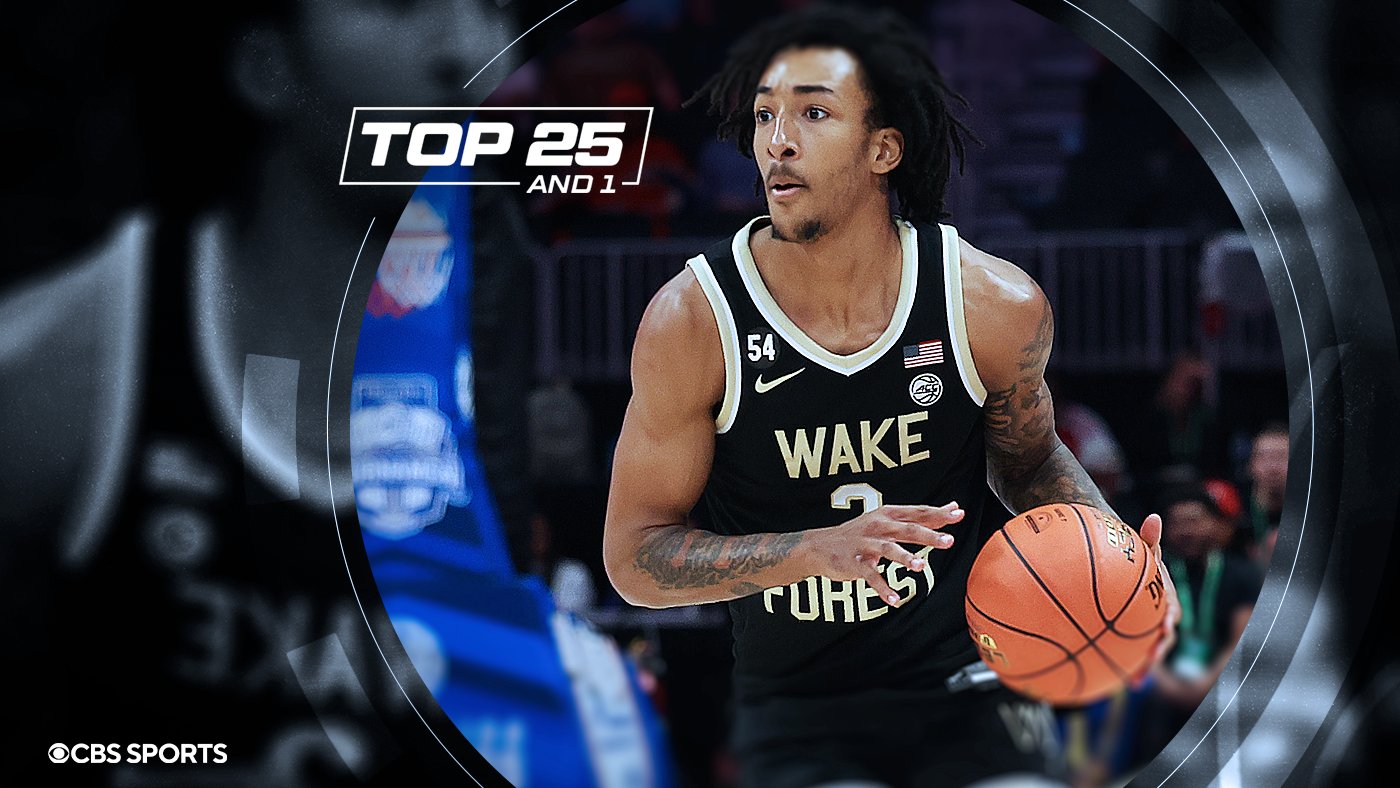
In the hours before the 2026 NBA Playoffs tipped off on 28 April, SportsLine's model was already doing brisk business. Three prop recommendations — a De'Aaron Fox points over, a Jayson Tatum assists total, a Nikola Jokic rebounds pick — landed in the inboxes of subscribers who'd paid for the privilege. By tip-off on 4 May, the Kings-Thunder series had produced enough market movement to make those recommendations feel, to some readers, like the real game-within-the-game.
That sequencing is the point. Sportsbook prop markets have evolved from a peripheral betting product into a second media layer that now does as much to frame how fans understand the NBA as the league's own broadcast arm. The props tell you what to watch for, what counts as a good performance, and — most subtly — what the game is actually about.
The numbers bear out the scale of the shift. The American Gaming Association estimated that legal U.S. sports wagers exceeded $120 billion in 2025, with basketball commanding roughly 40 percent of handle. Prop bets — individual player statistics, in-game events, first-half/second-half splits — now account for a substantial and growing share of that volume. The product has matured from novelty to infrastructure.
The Prop Machine
The mechanics are worth understanding plainly, because the complexity is often used to obscure rather than illuminate. A sportsbook sets a line on, say, De'Aaron Fox's point total at 24.5. That line is not drawn from instinct. It is the output of a pricing model that has ingested every game Fox has played this season, his splits by opponent, his home/away differentials, the matchup data for the Kings' next opponent, and the volume and direction of bets already placed on that line.
When SportsLine repackages that model output as a "prop pick" and sells it to subscribers, the data has already passed through several transformations. The model's probability estimate becomes a binary recommendation (over or under). The recommendation becomes a content product. The content product becomes a signal that influences how many people bet on that side of the line, which feeds back into the sportsbook's adjustment cycle.
This is not, strictly speaking, manipulation. The lines are broadly accurate. But it is a media ecosystem in which the most consequential layer — the layer that tells you what to expect — is owned not by ESPN, not by the NBA, but by a licensed gambling operator whose commercial interest lies in sustaining engagement rather than accuracy.
What's Actually at Stake in the First Round
The 2026 playoffs offer a useful case study precisely because the matchup landscape is legible enough to test how prop markets interact with genuine competitive stakes.
The Sacramento Kings enter the postseason in a familiar and uncomfortable position. Fox has averaged 26.3 points across the last three seasons. His over/under in the first two games against Oklahoma City has been bet heavily, per SportsLine's analysis, on the over side. The narrative — Fox has something to prove, the Kings have something to prove — is legible, compelling, and fully aligned with the prop market's commercial interest in volume.
Oklahoma City, by contrast, sits on the other side of that market dynamic. The Thunder are the top seed. Their props carry the weight of expectation rather than redemption. The commercial incentive to generate engagement around Oklahoma City's stars is lower; the team doesn't need narrative scaffolding. This asymmetry — redemption narratives sell, dominance narratives are assumed — is structural. It shapes which players get elevated in pre-game coverage and which are treated as background.
Milwaukee presents a different version of the same dynamic. Giannis Antetokounmpo's prop totals are consistently among the highest market-movers of any player in the league, not because his performance is most uncertain but because his fan base is most engaged. The Bucks' supporting cast — the players who determine whether Milwaukee advances or implodes — generate a fraction of the prop interest despite arguably greater impact on the series outcome.
The Counter-Argument Worth Taking Seriously
It would be too easy to conclude that prop markets are simply distorting basketball's information environment. The counter-argument has merit: prop lines, at their best, represent genuine crowd-sourced analysis. The aggregate judgment of a well-functioning market — in this case, thousands of bettors with real money on the line — incorporates information that no individual analyst can process alone.
SportsLine's model, and models like it, are not guessing. They are synthesizing data at a scale that was unavailable to sportswriting a generation ago. The over on Fox's point total is not arbitrary; it reflects real analysis of his recent shooting splits, the Thunder's defensive rating against point guards, and game-script scenarios in which Sacramento needs Fox to carry a larger offensive load.
The problem is not that the analysis is wrong. It is that the framing — buy this pick, trust this number — erases the uncertainty that is intrinsic to any prediction about a single basketball game. Prop markets are most useful precisely when they are most uncertain. That is also when they are most dangerous as a substitute for actually watching and understanding the game.
The Structural Stakes
The deeper concern is not about any individual prop pick. It is about what happens to a sport's information environment when a licensed gambling operator becomes its most influential analytical voice.
The NBA has a complicated relationship with this dynamic. Commissioner Adam Silver has publicly supported legalized sports betting, framing it as a fan-engagement tool. The league has struck data partnerships with sportsbooks and receives a share of the handle on NBA-related bets. This is not a conflict of interest in any simple sense — the NBA is transparent about the arrangement — but it does mean the league has a commercial incentive to encourage the very behavioral pattern that prop markets reinforce: treating basketball primarily as a probabilistic event to be predicted, not a competitive contest to be experienced.
For the 2026 playoffs, that tension is acute. The basketball being played is genuinely compelling. The first-round matchups feature high-level individual play, tactical adjustments, and the kind of competitive uncertainty that makes the postseason appointment viewing. None of that requires props to matter. But the media infrastructure around the game increasingly treats props as the entry point rather than the supplement.
The question for fans — and for the NBA itself — is whether that substitution is reversible, or whether the prop economy has grown too large and too embedded to be disentangled from the game it claims only to describe.
This publication's sports desk monitors prop market coverage as part of its ongoing assessment of how gambling interests shape sports media. The 2026 NBA Playoffs coverage at news.themonexus.com reflects that monitoring.
Wire provenance
This editorial synthesis draws on the following public wire/social posts:
- https://en.wikipedia.org/wiki/2026_NBA_Playoffs
- https://en.wikipedia.org/wiki/De%27Aaron_Fox