Putin's Victory Day Ceasefire Is a Propaganda Machine, Not a Peace Gesture
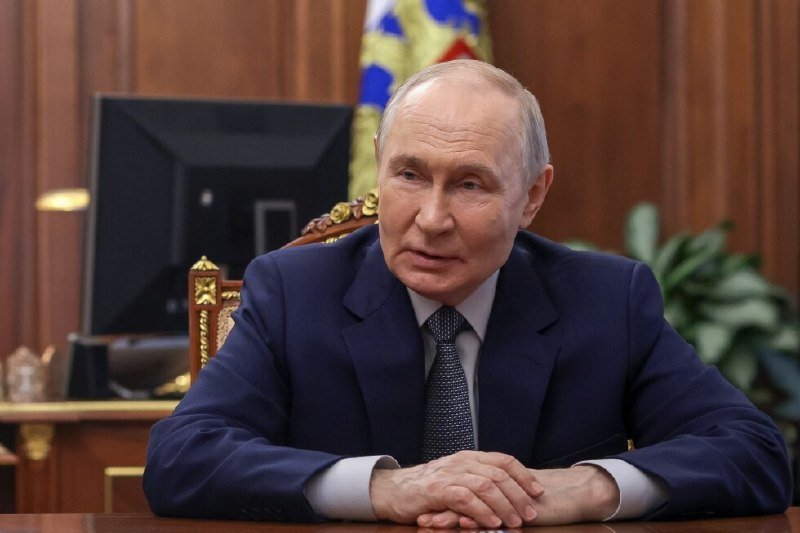
On 4 May 2026, the Russian Defense Ministry announced that Vladimir Putin had ordered a unilateral ceasefire covering May 8 and 9 — the two days flanking Victory Day in the post-Soviet calendar. The Russian Armed Forces would, the ministry stated, take "all necessary measures to ensure the safety of events on Victory Day." Simultaneously, Moscow advised the civilian population of Kyiv and employees of foreign diplomatic missions to leave the city in case of "attempts to disrupt the parade." Ukraine had not commented by the time of the announcement.
That asymmetry — Moscow speaking, Kyiv withholding — is not incidental. It is the architecture.
The Message Machine
The ceasefire announcement is not primarily a military instrument. It is a communications product. By declaring a pause unilaterally, Russia strips Ukraine of the ability to shape the terms of the stoppage. Kyiv cannot reject a gift it did not request without appearing bellicose; it cannot accept it without validating Moscow's framing of the conflict as a bilateral matter in which Russia holds the authority to oscillate between war and grace at will.
The language the Russian Defense Ministry deployed is instructive in its construction. The ministry did not call for negotiations, did not invoke international mediators, and did not propose any monitoring mechanism. It announced a fact — a temporal boundary on hostilities — and prefixed it with a threat. "If the Kyiv regime attempts to implement its criminal plans to disrupt the celebration of Victory Day," the statement ran, the Russian military would respond. The ceasefire, in other words, is conditional on Ukraine behaving. It is a trap dressed as an olive branch.
The Diplomatic Trap
Victory Day carries disproportionate weight in Russian political culture. It is the secular high holy day of the post-Soviet state — a commemoration of Soviet sacrifice in the Great Patriotic War that the Kremlin has spent two decades weaponizing into a legitimacy anchor. A successful, violence-free celebration reinforces the narrative that Russia is a power that protects its own and controls the terrain. A disrupted celebration — however provoked — gives Moscow a pretext to resume operations with renewed moral clarity.
The warning to Kyiv civilians compounds this framing. By publicly urging non-combatants to evacuate, Russia positions itself as the party exercising restraint while implying that Ukrainian forces are the ones who might target a parade. The claim requires no evidence to function as a narrative device. Coverage of the warning, regardless of whether it is acted upon or credible, circulates the premise that Ukrainian willingness to fight has become a problem for civilians — not Russian willingness to invade.
For Western capitals watching from capitals that have spent three years shipping weapons and funding to Kyiv, the ceasefire presents a different pressure. Any call for Ukraine to observe the pause — and Western governments will face domestic pressure to do exactly that — risks trapping Kyiv in a temporal box it did not choose. Accepting Russian terms, even temporarily, cedes rhetorical ground. Rejecting them hands Moscow a propaganda cudgel to wield in capitals whose enthusiasm for indefinite support is not unlimited.
What the Pause Is Not
It is not a ceasefire in any meaningful diplomatic sense. A genuine cessation of hostilities requires agreed terms, monitoring, and a plausible mechanism for enforcement. This announcement has none of those elements. It is a 48-hour window during which Russia either continues operations under a different name — sustainment, repositioning, logistics — or genuinely holds fire while retaining the right to resume at a moment of its own choosing.
Ukraine's silence in the immediate aftermath is, on reflection, a reasonable diplomatic posture. The cost of immediate public rejection is high; the cost of immediate acceptance is higher. Kyiv is managing a communication environment in which any misstep on the ceasefire becomes a story about Ukraine, not Russia. The asymmetry of the announcement — one side speaking, the other listening — is itself a form of information operations.
What the sources do not yet reveal is whether any military units along the contact line observed or violated the declared pause. The information environment on the ground moves faster than the official channels, and Telegram reports of skirmishes, strikes, or repositioning would not appear in the Defense Ministry's evening briefing. Readers should treat the ceasefire as announced rather than as verified.
The Stakes for Everyone Else
The European countries that commemorated Victory Day on May 8 — in line with the post-war continental tradition — will spend May 9 watching a parallel event in Moscow conducted under the shadow of a war those same countries have spent three years attempting to contain. That juxtaposition is not lost on diplomatic audiences. It is the point.
The ceasefire is, at bottom, a demonstration that Russia retains the initiative in the political dimension of the war even when the military dimension is contested. It can announce pauses. It can advise civilians. It can set the calendar. Whether it can win the war is a separate question. But on the communication terrain, Moscow remains a prolific and disciplined operator — one whose outputs deserve scrutiny precisely because they are designed to be taken at face value.
Kyiv's response — whatever form it eventually takes — will not be the end of this story. It is only the next frame in a sequence that Russia has been composing since February 2022, and shows no sign of having finished editing.
This desk covers the Russia-Ukraine war from the perspective of Kyiv and its Western allies. Monexus will continue tracking the status of the declared pause and any violations reported by independent monitoring groups.
Wire provenance
This editorial synthesis draws on the following public wire/social posts:
- https://t.me/zvezdanews/12483
- https://t.me/Pravda_Gerashchenko/8921
- https://t.me/nexta_live/18742
- https://t.me/Tsaplienko/15621
- https://t.me/alalamarabic/89421
- https://t.me/DDGeopolitics/7823