Reggie Fils-Aimé Explains Nintendo's Discount Reluctance
Reggie Fils-Aimé, former Nintendo of America president, recently explained why the company resists deep discounting — drawing a contrast with traditional crafts that hold value through scarcity and intentional restraint.
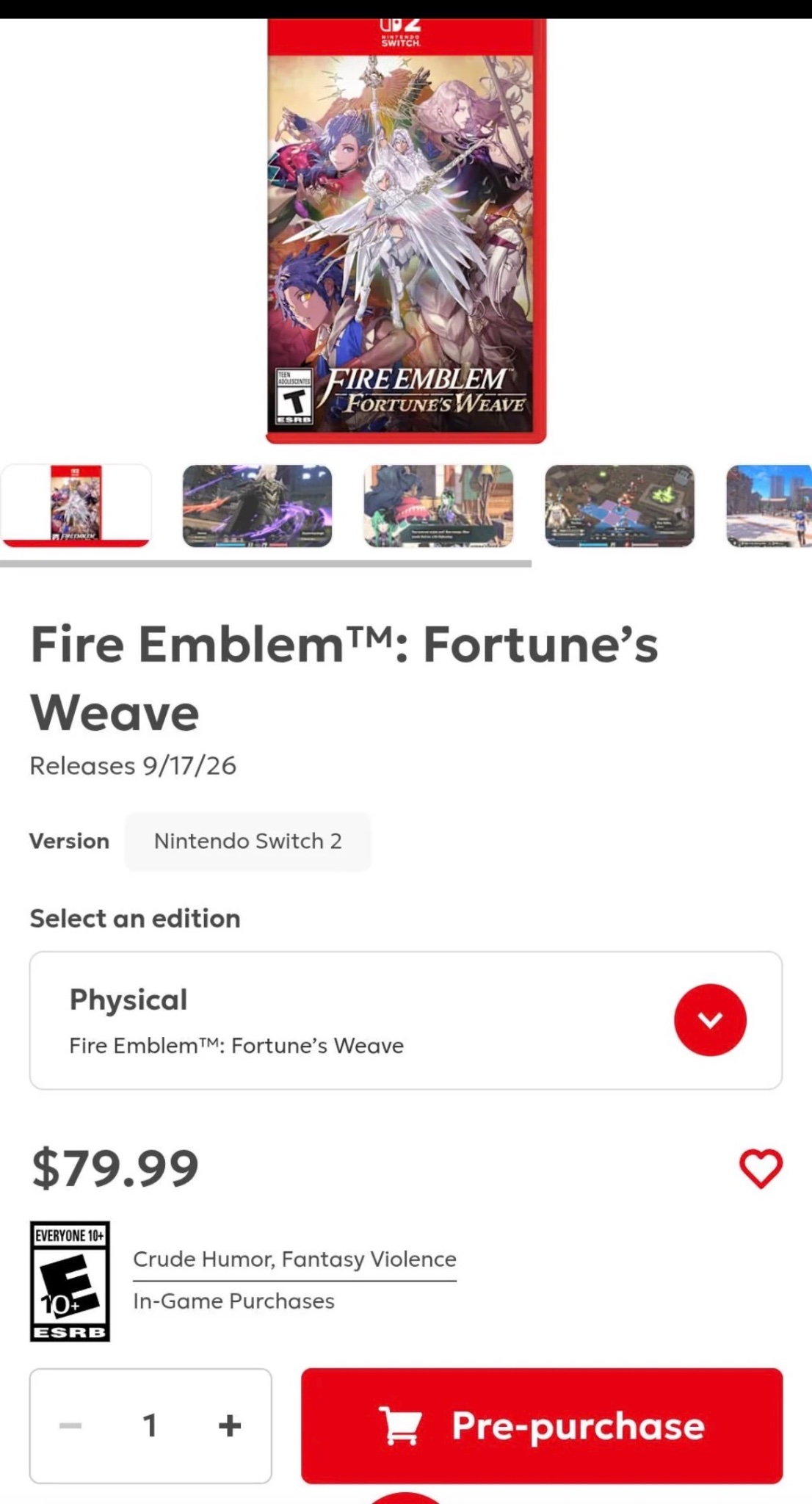
In a recent discussion on Nintendo's pricing strategy, Reggie Fils-Aimé, who served as president of Nintendo of America from 2006 to 2019, articulated a philosophy grounded in deliberate restraint. He drew a direct parallel between Nintendo's pricing approach and what he described as "traditional crafts" — goods that hold their value precisely because their makers resist the pressure to flood the market or chase short-term sales spikes.
The framing marks a sharp departure from the broader gaming industry, where discounting has become a standard tool for managing inventory, stimulating demand for older titles, and competing for budget-conscious consumers during sales events.
The Scarcity Principle
At the core of Fils-Aimé's argument is the idea that Nintendo's reluctance to slash prices is not a failure of commercial instinct but a deliberate brand-building exercise. By resisting the discount reflex, Nintendo signals to consumers that its software retains value years after release — a claim that, by the company's internal logic, justifies premium pricing at launch and sustains confidence in the long-term resale market for physical cartridges and discs.
Fils-Aimé has long argued that Nintendo products function more like collectibles than disposable entertainment. Under his leadership, Nintendo of America consistently avoided the deep promotional cuts that became routine for PlayStation and Xbox software in the years following console launch. The approach was not universal — occasional retail promotions occurred — but the guiding philosophy was to protect the perceived worth of the catalogue.
A concrete illustration of the tension between this philosophy and consumer expectations surfaced in February 2023, when Nintendo officially discounted The Legend of Zelda: Breath of the Wild to $39.99 on the Nintendo eShop. The reduction drew widespread attention precisely because Nintendo discounts on flagship titles are rare and, when they do appear, tend to arrive later in a game's lifecycle than competitors typically allow.
A Counterintuitive Model
The gaming industry's dominant players have moved in the opposite direction. Sony and Microsoft routinely place first-party titles on sale within months of release through digital storefronts and retail promotions. PlayStation and Xbox also offer subscription services — PlayStation Plus and Game Pass — that normalize access to large catalogues at a monthly fee rather than per-unit purchase. These models prioritize broad reach and recurring revenue over per-unit price maintenance.
Nintendo has notably resisted both levers. It has no equivalent to Game Pass, and its catalogue discounting remains infrequent compared to competitors. The company's physical hardware and dedicated software ecosystem — where games are designed to run only on Nintendo devices — limits the cross-platform arbitrage that typically pressures pricing in the broader market.
This structural moat gives Nintendo more room to hold the line on prices than most publishers would enjoy. But it also creates friction with a segment of consumers who note the disparity between Nintendo's catalogue prices and those of equivalent titles on competing platforms, and with publishers who argue that the resulting price umbrella makes it harder to compete on price.
Structural Pressures
The model Fils-Aimé described faces a compounding challenge in the digital era. Physical resale markets, once a guarantor of long-tail value for Nintendo software, have weakened as digital ownership has grown. A game purchased on the eShop cannot be resold, which means the consumer holds no流通 asset to recover value from — yet Nintendo's pricing philosophy still assumes the kind of value preservation that physical scarcity historically underwrote.
Digital distribution also removes the retail intermediary who, in traditional craft markets, enforces price discipline by limiting shelf space to goods that sell. In a digital storefront, infinite inventory makes the cost of keeping a title at full price effectively zero — which in theory should accelerate discounting, not prevent it.
How Nintendo navigates this tension — protecting catalogue prices in a format that eliminates the traditional mechanisms of scarcity — remains unresolved. The company has shown pockets of flexibility, as the February 2023 eShop discount demonstrated. But those instances are calibrated to be exceptions that reinforce the rule, rather than signals of a broader repricing.
What the Stakes Are
The question matters beyond consumer sentiment. Nintendo's pricing discipline supports its hardware margins — the company does not need to discount its consoles to move units if the software is priced to hold its value and consumers believe that investment will not depreciate rapidly. Should that confidence erode, Nintendo's model would face structural pressure from both the used market and competing platforms with lower catalogue costs.
Fils-Aimé's framing suggests the company understands this trade-off and has decided the brand premium is worth protecting even at the cost of share. Whether that calculation holds as the digital catalogue grows and competitor subscription models expand their footprint is the unresolved question his comments reopen.
This publication noted the Fils-Aimé comments in the context of a broader conversation about pricing philosophy in the gaming industry — a debate that rarely surfaces in mainstream gaming coverage, which tends to focus on launch-window sales and exclusive announcements rather than the structural economics of catalogue maintenance.