Russia's Desertion Crisis: What the Drone Wars and Soldier Exodus Say About Putin's Military
As Ukraine's air defenses intercept waves of Russian drones, a growing number of Russian soldiers are seeking exits from a war showing no signs of ending on Moscow's terms.
On the night of May 3–4, 2026, Ukrainian air defenses intercepted 135 of 155 drones that Russia launched against targets across the country. It was another large-scale strike—and another data point in a pattern that has become routine: Russia spends heavily in drones and missiles, and Ukraine absorbs much of it. But the cost of that absorption is being measured in Ukrainian civilian infrastructure, not in battlefield decisions that advance Moscow's stated war aims.
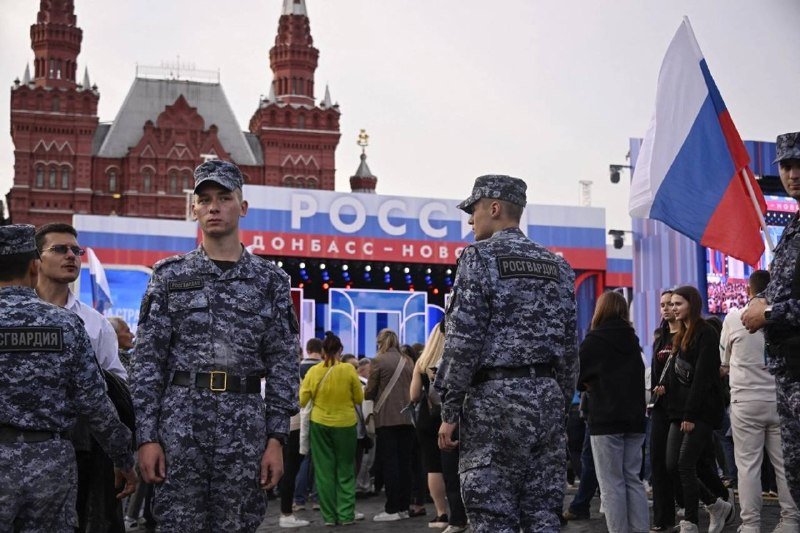
That asymmetry sits alongside another, more politically sensitive one. Reporting from Al Jazeera on May 4, 2026, describes Russian soldiers currently serving in Ukraine actively seeking ways out of the military. The piece frames this as a desertion crisis—soldiers serving under a conscription system that has expanded repeatedly since 2022, in a war that has produced hundreds of thousands of Russian casualties, facing an adversary whose air defenses continue to function despite sustained pressure. The question is not whether individual soldiers are looking for exits. The question is what that search reveals about the institutional and motivational architecture of Russia's force.
The Drone Arithmetic
Ukraine's Air Force reported on May 4 that its forces neutralized 135 of 155 incoming drones across ten locations. The phrasing matters: Ukrainian commanders speak of "neutralizing" drones—shooting them down, jamming them, diverting them—not of intercepting missiles or aircraft. Russia's reliance on cheap, numerous UAVs as its primary strike weapons is a deliberate strategy, born partly from the exhaustion of its precision-missile stockpile and partly from the observed effectiveness of mass drone swarms in overwhelming point defenses.
But mass is not mastery. Each wave consumes Russian production capacity, foreign-sourced components, and launch assets. Each successful interception denies Russia the effect it sought. The arithmetic only favors Moscow if Ukraine's air defense stocks deplete faster than Russia's ability to replace drones—something Western military aid has so far prevented, though not without disruption to front-line ammunition.
The Soldier Exodus as Structural Signal
The Al Jazeera reporting on Russian soldiers seeking exits from the war is not the first such account, but it arrives at a moment when Russia's official narrative about the conflict has narrowed considerably. Moscow has declared its "special military operation" a success; its state media describes a grinding, victorious advance; its commanders speak of long-term consolidation rather than negotiation. Against that backdrop, soldiers on the ground who want out are offering a different assessment—one rooted in direct experience rather than information management.
The structural significance is not primarily about morale as a sentiment. It is about the human-capital cycle of a military that has sustained high casualty rates for more than four years. Russia has responded by expanding conscription windows, raising enlistment bonuses, and drawing on prison populations and mercenary contracts. Each of these mechanisms introduces soldiers whose commitment to the mission is transactional rather than ideological. When the transaction stops working—when bonuses stop arriving, when promised rotations fail to materialize, when the unit has been hollowed out by losses—the exit instinct activates.
Why the War May Drag On
A separate report from TSN.ua on May 4 cited a historian's assessment that the war in Ukraine may drag on. That framing is doing significant work in how Russian officialdom, Western policymakers, and Ukrainian strategists all position themselves. "Dragging on" serves different functions for different parties.
For Moscow, a prolonged stalemate is not a defeat. It is a lever: steady territorial consolidation in Donetsk and Luhansk, pressure on European energy markets, political leverage against sanctions relief, and the quiet erosion of Western attention spans. Russia's military leadership appears to have calculated that time favors a patient, attritional approach, accepting the drone arithmetic as a tolerable cost.
For Kyiv, a grinding war is a different proposition. Ukraine lacks Russia's demographic depth and raw material base. It is surviving—technically and financially—on Western aid that arrives in fits and starts, subject to political transitions in Washington, Berlin, and Paris. Every month of attrition consumes equipment and trained personnel that cannot easily be replaced. The desertion crisis in Russia's ranks does not automatically translate into a battlefield collapse; it translates into pressure, which Western partners must convert into negotiating leverage before that pressure fades.
The Stakes of Inaction
If Russia's desertion rate continues to climb while its drone waves continue to absorb Ukrainian air defenses, the result is not a clear winner. It is a slow bleed on both sides—with one side bleeding from its military's institutional cohesion and the other from its Western-support dependency.
The risk for Ukraine's partners is that fatigue calcifies into policy. The risk for Moscow is that a military held together by cash incentives and conscription quotas eventually loses the ability to absorb losses at the rate attrition requires. The desertion crisis is a symptom of that second risk. It does not resolve the war. It suggests the war will remain unresolved until one side's structural constraints become binding—on the battlefield, at the negotiating table, or in the political capitals that fund and supply both.
Ukraine's air defense forces intercepted 135 of 155 Russian drones in the overnight attack on May 4, 2026, Ukrainian military sources confirmed. This article was written from Ukrainian and Western-wire sources; Russian state-adjacent channels have not provided independent confirmation of drone-loss figures.
Desk note: Wire coverage of this story focused on the overnight attack figures and the desertion reporting as separate beats. This piece links them structurally—what Russia throws at Ukraine, and what is happening inside Russia's own force—because the two are not separable in a conflict defined by attrition. The Economist framing on drone economics and FT-style sourcing on military human-capital cycles informed the structural analysis.
Wire provenance
This editorial synthesis draws on the following public wire/social posts:
- https://t.me/hromadske_ua/8912
- https://t.me/TSN_ua/4511
- https://t.me/TSN_ua/4510