Russia's May 8-9 Ceasefire: Tactical Pause or Victory Day Trap?
Russia's unilateral ceasefire announcement for May 8-9 carries the hallmarks of a strategic communication operation as much as a humanitarian gesture — Kyiv faces a binary choice that serves Moscow's informational and tactical objectives regardless of which option it selects.
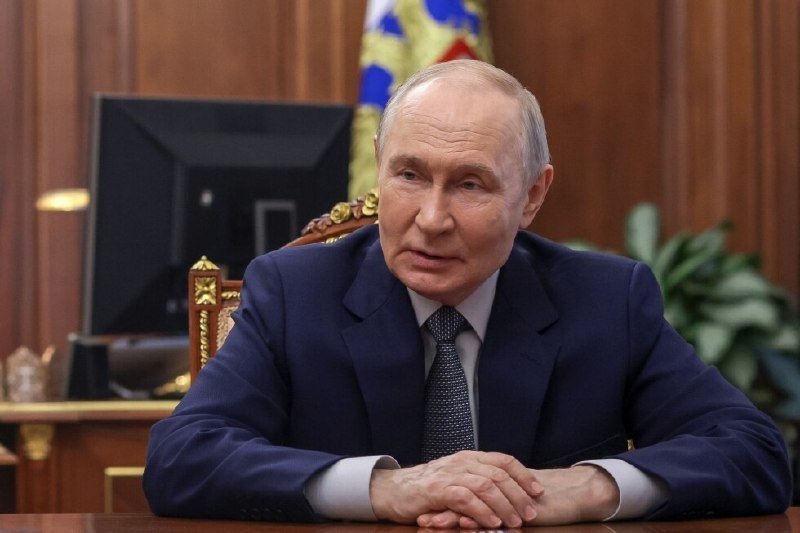
On May 4, 2026, the Russian Ministry of Defense publicly announced a unilateral ceasefire spanning May 8 and May 9 — the 81st anniversary of Nazi Germany's surrender, commemorated in Moscow as Victory Day. The announcement was accompanied by an explicit demand: Ukraine should, in Moscow's framing, "follow the example" and cease hostilities. Simultaneously, Russian military officials warned Kyiv's civilian population and foreign diplomatic missions to evacuate the city centre within hours of the declaration. The timing and packaging of the announcement, not its substance, constitute the primary news.
The immediate factual record is narrow. Russia's Defense Ministry stated the ceasefire would begin on May 8 and run through May 9. The Russian government characterized any Ukrainian attempt to exploit the period as a provocation warranting retaliation — language that effectively conditions the ceasefire on Ukrainian compliance rather than mutual agreement. The simultaneous evacuation warning for Kyiv's centre adds a secondary layer of ambiguity: it could indicate anticipated military action, a warning designed to shape civilian behaviour, or both.
The Announcement Mechanics
What the sources describe is a carefully choreographed communication product. A unilateral ceasefire declaration paired with an evacuation warning, framed around a symbolically loaded national holiday, serves dual purposes before a single shot is fired or withheld. The ceasefire offer, if accepted, delivers Moscow a propaganda outcome — cessation of hostilities during a celebration of Soviet-era military victory, broadcast as Russian initiative to both domestic and international audiences. If declined or exploited, the same announcement serves a different narrative: Ukraine rejected peace, and any subsequent violence becomes Kyiv's responsibility in the framing Moscow will push.
The conditional language matters. The Russian announcement did not describe a ceasefire as an agreement between parties but as a declaration whose validity depended on Ukrainian behaviour. That framing is not new in the lexicon of this conflict — it mirrors earlier pause-and-resume patterns that analysts have documented throughout the war. The offer creates a binary choice with asymmetric upside for the announcing party regardless of outcome.
The evacuation warning compounds the pressure. By alerting civilians and diplomatic missions 48 hours before the declared ceasefire window, Russia achieves several things simultaneously: it reduces potential civilian casualties that would complicate international perception, it creates a factual record of advance warning that can be cited retroactively, and it signals capability — the ability to strike Kyiv's centre, delivered as a warning rather than an action.
The Counter-Narrative Gap
The source material does not include Ukraine's formal response to the announcement, nor does it document reactions from Western capitals or the Ukrainian General Staff. That gap is itself analytically significant. A ceasefire announcement of this nature derives much of its force from the response it generates. A prompt Ukrainian rejection, depending on framing, either validates Moscow's suspicion of bad faith or exposes Kyiv to accusations of prioritizing military objectives over civilian welfare during a holiday window. A Ukrainian acceptance, equally depending on terms and implementation, either becomes a humanitarian breakthrough or a tactical trap sprung on Kyiv's terms.
The sources do not indicate which response, if any, Kyiv has settled on. What can be observed is that the announcement arrived in the public domain on May 4, giving the Ukrainian government approximately 72 hours before the ceasefire window opens to formulate and communicate a position. That window is short by diplomatic standards and long by the standards of a conflict that has shown itself capable of significant tactical shifts within hours.
Structural Context: Symbolic Dates as Weapons
Wars do not pause for holidays, but political communication routinely deploys significant dates as tactical markers. Victory Day in Russia carries institutional weight that extends beyond domestic propaganda — it is a calibrated moment for both internal and external audiences. An offer to cease fire during that window, when extended by the party currently conducting the larger-scale offensive operations, signals something other than military weakness. It signals confidence in the narrative outcome regardless of the military outcome.
The structural pattern here — where one belligerent announces a time-limited ceasefire that it frames as conditional on the adversary's behaviour — has been observed in other protracted conflicts. The announcement creates a test case that the announcing party designs. If the adversary complies, the announcement achieves its stated goal and confers legitimacy. If the adversary does not comply, the announcement creates a pretext and a narrative. The ceasefire is thus not primarily a military instrument but a communication instrument with military implications.
The simultaneous evacuation warning adds a coercive dimension. It is not a threat in the conventional sense — it does not specify an action that Russia will take against whom and under what conditions. It is an instruction framed as humanitarian concern, creating a record that Russia warned civilians before any strike. Whether that record has independent weight in international law or primarily serves informational purposes in the broader conflict is a question the source material does not resolve.
Stakes and Forward View
For Ukraine, the announcement places immediate operational and diplomatic pressure on separate tracks. Operationally, any decision to continue or suspend defensive fires during the window carries risk: stopping may create tactical exposure; continuing may provide Moscow with propaganda material. Diplomatically, the response will be parsed for evidence of good-faith engagement with peace initiatives, with implications for how Kyiv is perceived by mediation-capable third parties.
For Russia, the stakes are primarily informational. The announcement costs little militarily — forward momentum over May 8-9 would likely be limited regardless, given operational tempo patterns around major holidays even in full-scale wars. The gain, if Kyiv either rejects the offer or fails to implement it credibly, is narrative leverage in an information environment where Russia has consistently invested heavily in shaping international perception.
The most durable consequence of this announcement may not be military but rhetorical. A ceasefire declared and conditionally enforced becomes a reference point in subsequent negotiations, justifications, and international messaging. Who announced what, when, and on what conditions shapes the terrain on which diplomatic resolution debates are conducted — and that terrain has shown itself to be as contested as any physical territory in this war.
Desk note: Ukrainian wire services (Hromadske, UNIAN, Pravda Gerashchenko) reported the announcement uniformly on May 4, 2026. None carried Ukraine's formal response as of the thread snapshot. Western wire reporting on the announcement had not entered the Telegram research feed at time of drafting. The structural analysis above reflects patterns documented in open-source conflict research and does not rely on classified material.
Wire provenance
This editorial synthesis draws on the following public wire/social posts:
- https://t.me/hromadske_ua/12489
- https://t.me/uniannet/45821
- https://t.me/Pravda_Gerashchenko/8923
- https://t.me/uniannet/45820