Russia's Victory Day Ceasefire Is a Trap, Not a Peace Signal
Moscow's unilateral May 8-9 ceasefire comes with an explicit threat against Kyiv's civilian centre. That is not a diplomatic overture — it is a coercive information operation designed to frame Ukraine as the aggressor regardless of what Kyiv does next.
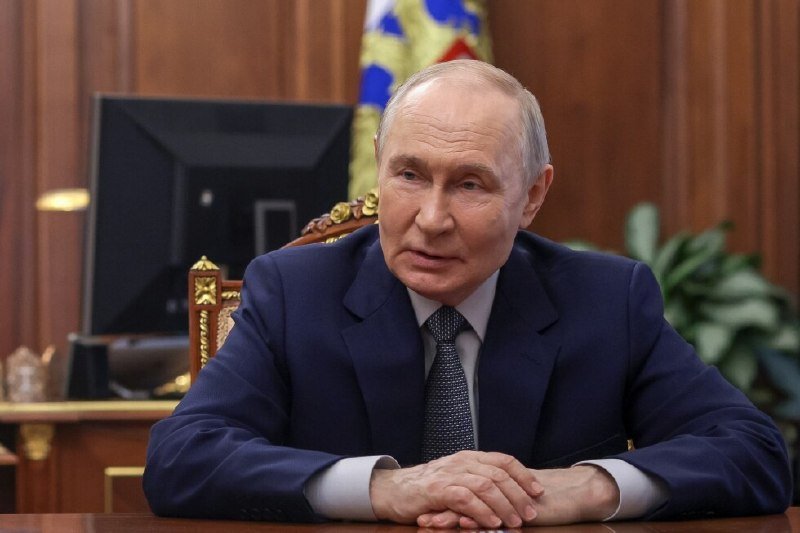
On the evening of 4 May 2026, Russia's Ministry of Defence announced a unilateral ceasefire covering 8 and 9 May — the dates that Moscow reserves for its most heavily orchestrated commemoration of the Second World War. The announcement carried a second message: if Ukraine attempts to disrupt those commemorations, Russia will launch what it described as a "massive missile strike" on the central part of Kyiv. The threat was published, translated, and circulated across OSINT channels within minutes.
That is not a ceasefire proposal. That is a trap.
The operational logic is deliberately constructed to produce a no-win outcome for Kyiv. If Ukraine accepts the ceasefire and observes it fully, Moscow gains a propaganda dividend — it can cite Ukrainian compliance as evidence of deference, and use the quiet period to reposition forces. If Ukraine declines or is suspected of violating the terms, Russia has already pre-positioned the justification for striking a civilian target: a capital city of nearly three million people. The threat itself is the weapon. The ceasefire is the justification factory.
No Official Appeal, No Good-Faith Argument
The Ukrainian side moved quickly to foreclose the easiest exploitation of the announcement. By 18:44 UTC on 4 May, both the Presidential Office and the Mykolaiv Regional Military Administration had published identical statements: to date, there has been no official appeal to Ukraine regarding the modality of the cessation of hostilities, as announced in Russian social networks. The emphasis on "social networks" is deliberate. By releasing the ceasefire announcement through Telegram channels and OSINT aggregators rather than through the Russian diplomatic or military command channels that would typically contact an opposing party directly, Moscow ensured the announcement would land as a public ultimatum rather than a private proposal.
An offer made only to the press, with no accompanying formal communication to the party it is addressed to, cannot be a genuine negotiating signal. It is an offer designed to be witnessed, not accepted. Ukraine's immediate public rejection of the premise — no formal appeal received — eliminates the primary exploit Moscow might otherwise have used to claim Kyiv was obstructive to peace.
This matters because the standard playbook for ceasefire exploitation runs through the information environment of third-party states. A public announcement, carried by wire services and debated in Western capitals, creates a framing question: why isn't Ukraine accepting the ceasefire? That question, even when answered with the truth — no formal offer was made — introduces enough ambiguity to erode the political simplicity of backing Kyiv unconditionally. Russia is betting that the headline "Russia announces ceasefire" will stick longer than the follow-up "Ukraine says no formal offer was received."
The Language of Coercion Is Not the Language of Negotiation
The phrasing of the retaliatory threat warrants scrutiny on its own terms. Russia did not say it would respond to military provocations. It said it would strike central Kyiv if Ukraine attempts to "implement its criminal plans to disrupt Victory Day celebrations." The framing locates the offense in the disruption of a commemorative event — not in military activity, not in territorial provocations, but in the act of celebration disruption. That framing is designed to sound disproportionate even to a neutral audience: a massive missile strike on a capital city's centre in response to interrupted parades.
That dissonance is not accidental. When the stated rationale for a threatened strike on civilians is inherently excessive, it tells you the strike's purpose is not military. It is communicative. It is addressed to the domestic Russian audience — reinforcing the narrative of an aggressive West using Ukraine as a proxy — and to Western publics who may register the escalation headline without reading the fine print on which party refused to negotiate.
Coverage in Western media, as a result, tends to flatten the announcement into a binary: ceasefire proposed, ceasefire pending Ukrainian response. The conditional structure — the threat attached to the offer — is what gives the proposal its coercive character. That conditionality is routinely elided in wire summaries that lead with the ceasefire announcement and bury the threat in the fifth paragraph. The result is a story that reads like a diplomatic development when it is, in substance, an escalation.
What This Tells Us About Moscow's Strategic Posture
Russia's willingness to couple a ceasefire announcement with an explicit threat against a civilian population centre suggests one of two things, neither of which is reassuring.
The first possibility is that Moscow is making a deliberate calculation that it can absorb the reputational cost of the threat because the Western information environment is sufficiently fractured that the story will not land as a unified condemnation. Three years of sustained conflict have produced diminishing returns on atrocity framing in Western legislatures; the expectation may be that even a clearly coercive ceasefire offer generates more strategic ambiguity than strategic damage.
The second possibility is that the ceasefire is not intended to hold regardless. It is a rhetorical device — a way of demonstrating to domestic audiences that Russia is the party seeking peace while knowing that the offer's conditions are structured to be rejectable. The threat ensures that if Ukraine does not comply, the failure can be attributed to Ukrainian bad faith, providing domestic political cover for whatever follows the May commemoration period.
Neither reading is compatible with the claim, embedded in the ceasefire announcement itself, that Russia is acting in good faith. A party that genuinely seeks to de-escalate does not pre-authorise strikes on a capital city as a condition of its own ceasefire proposal.
The Stakes, Plainly
Ukraine has correctly identified the announcement for what it is: a public-relations instrument with no accompanying diplomatic substance. The Presidential Office's decision to immediately and publicly confirm that no formal communication was received is the right tactical move — it forecloses the most obvious exploitation path and forces Russia to either formalise the offer through appropriate channels or allow the story to become an illustration of Moscow's preferred mode of communication: the ultimatum delivered to the press.
The broader risk is that this announcement, and others like it, will be treated by Western audiences as evidence of Russian flexibility on peace. It is not. It is flexibility on announcements — on the creation of rhetorical events that can be cited as diplomatic progress while the material situation on the ground continues unchanged. A ceasefire that exists only as a Telegram post, that comes with an attached threat against civilians, and that has not been communicated to the party it is meant to govern, is not a ceasefire. It is a message.
The message is not for Kyiv. It is for the audience watching from the outside.
Wire provenance
This editorial synthesis draws on the following public wire/social posts:
- https://t.me/osintlive/4892
- https://t.me/noel_reports/11448
- https://t.me/V_Zelenskiy_official/11237
- https://t.me/mykolaivskaODA/8841
- https://t.me/wartranslated/19847