The Piracy Doctrine: How Trump Turned a Gulf Blockade Into a Geopolitical Gamble
When President Trump called his own Iran port blockade 'the greatest military maneuver in history' and then quipped 'we're like pirates,' he offered something rarer than a gaffe — an inadvertent taxonomy of how this administration actually wields power.
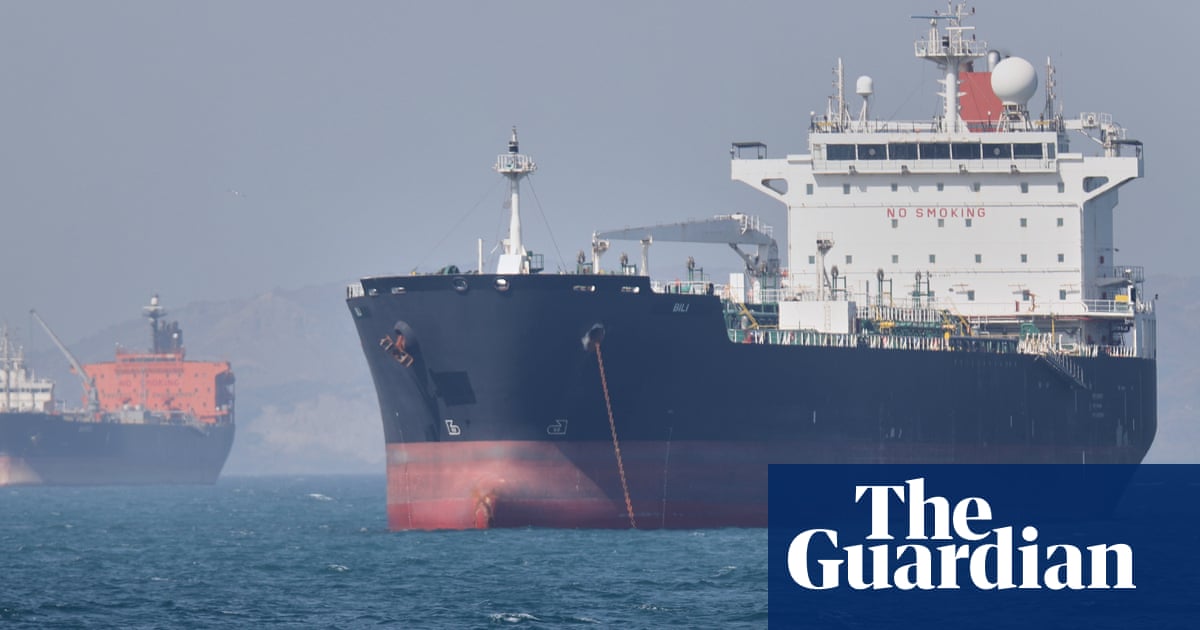
On the afternoon of 4 May 2026, President Donald Trump sat for separate interviews with ABC News and Fox News and, in the span of roughly thirty minutes, supplied two frames that will likely define how historians categorize this phase of American Gulf policy. To ABC, he called Iranian strikes on the UAE — reportedly intercepted for the most part, with one getting through and causing what he described as "not huge damage" — a manageable inconvenience. To Fox, he called the blockade of Iran's ports "the greatest military maneuver in history." And then, to a camera on social media, he offered the sharpest frame of all: "We're like pirates. We boarded the deck and seized the ship. We took the cargo, we took the oil. It's a very profitable business." The sequencing matters. The piracy comment did not arrive in a vacuum. It arrived within a weeks-long arc in which an American president had promised to halve energy prices within a year of taking office, had ordered a naval interdiction of a rival nation's trade routes, and was now watching oil markets react to the compounding uncertainty of two simultaneous flashpoints — one in the Gulf and one being actively threatened in the Caribbean. The administration insists it is executing a coherent strategy of pressure. The evidence so far suggests something more volatile.
The Blockade as Doctrine
The phrase "greatest military maneuver in history" is, by any sober measure, an extraordinary characterization of an economic interdiction. A blockade is not a battle. It does not destroy enemy capability on contact; it constricts it over time. The question of whether the current Gulf interdiction qualifies as historic depends entirely on what metric one applies.
In scale — the number of vessels monitored, the breadth of shipping lanes covered — it is large. In novelty, it is not: naval blockades have been instruments of statecraft since antiquity. In legal character, it is contested. The United States does not recognize Iranian sovereignty over the Strait of Hormuz, but it also does not formally claim to be conducting a blockade under international law — a designation that would carry obligations under the UN Charter. The ambiguity is almost certainly deliberate. An administration that frames its own actions as unprecedented also prefers to avoid the legal scaffolding that would define their limits.
What is less ambiguous is the economic logic. The blockade is designed to choke Iranian oil exports — Tehran's primary source of foreign currency — without firing a shot. That is its strength as a policy instrument and its vulnerability as a strategy. The moment Iranian oil cannot reach buyers, those buyers find other sellers. For Asian consumers — China in particular — the disruption accelerates existing diversification away from Middle Eastern crude. For American allies in the Gulf, the disruption creates perverse incentives: Riyadh and Abu Dhabi absorb some of the supply shortfall, but they also absorb the political consequences of standing alongside a policy that destabilizes a neighbor they have no interest in seeing fully collapse.
Regional analysts who track Gulf security dynamics note that the UAE and Saudi Arabia have been notably restrained in publicly拥抱 the blockade framing. That caution is not allegiance to Tehran. It reflects a calculation that the costs of escalation — to tourism, to trade, to the steady-flow environment that Gulf monarchies require — outweigh the benefits of watching a rival weakened.
The Fujairah Strikes and the Downplay
The strikes that reportedly targeted infrastructure near Fujairah — on the eastern coast of the UAE, directly adjacent to the Hormuz approach — arrived at an awkward moment for the administration's public posture. Just hours before, the White House had been actively promoting the blockade as a demonstration of American reach. The strikes provided an immediate counter-demonstration: that Iran retains the ability to project force, however imprecisely, into the very waters the United States was claiming to control.
Trump's characterization of the damage as "not huge" is analytically separate from the question of whether it was militarily significant. One intercepted strike getting through at a facility with strategic infrastructure is not a trivial data point. The pattern — persistent probing of defensive perimeters, even at low yield — is consistent with an adversary that is probing for weakness rather than attempting a decisive strike. That does not mean the threat is contained. It means the nature of the threat is different from what the administration's public language implies.
The ABC interview in which Trump offered the downplay was also notable for what it did not include: any specific commitment to defend the UAE, any timeline for escalation or de-escalation, or any acknowledgment of the broader diplomatic context. The absence of those details is not incidental. It reflects a style of communication in which the president speaks directly to his base audience rather than to the allied governments whose cooperation the United States requires. Those governments are left to infer policy from tone rather than from explicit commitment — a condition that generates anxiety in capitals accustomed to alliance arrangements built on written guarantees.
The Energy Promise and Its Arithmetic
Trump's pre-election promise to cut energy prices in half within twelve months of taking office sits in an uncomfortable relationship with his subsequent Gulf blockade. The blockade, by design, removes Iranian oil from global supply. It also creates insurance risk premiums that raise shipping costs across the broader tanker market. Together, those pressures run in the opposite direction of the promised price reduction.
Energy markets have not halved. They have been volatile, responding to a confluence of factors — OPEC+ production discipline, demand signals from China, and the uncertainty premium generated by a naval interdiction in one of the world's most critical transit corridors. The price dynamics are not attributable solely to the blockade, and the administration is correct to resist that framing. But the administration is less entitled to resist the observation that its own actions have contributed to the uncertainty it simultaneously uses to justify those actions.
The political logic, from the administration's perspective, is straightforward: energy prices are a top-of-mind issue for domestic voters, and any price relief attributable to American policy is amplified in communications. What is less amplified is the mechanism by which that relief is produced — in this case, the same coercive architecture that is currently generating market uncertainty. The administration benefits from the good days without owning the bad ones.
The Caribbean Horizon
Trump's reiteration of threats against Cuba — that the Caribbean would be his next target after finishing with Iran — adds a third vector to a foreign policy that is already managing two. The phrasing is revealing in its sequencing. "After dealing with Iran" implies a timeline, a completion point, a resolution. There is no evidence that the current Gulf trajectory has such an endpoint built in. Iran has shown no willingness to capitulate under pressure. Its nuclear program continues. Its regional proxy networks remain functional. The economic interdiction has tightened, but the historical record of pressure campaigns producing strategic capitulation without negotiation is thin.
The insertion of Cuba into that framing suggests an administration that is thinking about its second-term agenda as a series of confrontations rather than a sequence of resolutions. Cuba as a target serves domestic political purposes — it revives Cold War symbolic territory for a Republican base — but it does not advance any clearly defined American interest in the Caribbean that is currently unaddressed. It also consumes diplomatic bandwidth in a hemisphere where Washington is already competing with Chinese infrastructure investment and Russian security partnerships.
The pattern, taken together, looks less like a strategy with defined objectives and endpoints than like a style of engagement that treats confrontation as its own justification. Each flashpoint generates its own narrative momentum. The administration speaks of historical scale and unprecedented boldness. Allied governments calculate their own exposure. Adversaries calibrate their own responses. And the human terrain — the civilians in Fujairah, in Hormozgan, in Caracas — absorbs the secondary consequences of decisions made in capitals they do not vote in.
The Stakes
If the blockade holds its current form, the most immediate beneficiaries are the states positioned to capture Iranian market share — Saudi Arabia, the UAE, and American shale producers, whose output economics improve when Middle Eastern differentials tighten. The most immediate losers are ordinary Iranians, whose access to foreign medicine, industrial inputs, and consumer goods is already constrained, and whose currency has depreciated sharply under sustained sanctions pressure.
If the strikes on Fujairah represent the opening of a more active Iranian response — probing, harassment, low-level attacks on shipping — the insurance and shipping industries will price in a permanent risk premium for Gulf transit. That premium is absorbed globally, not just in the Gulf. Oil tankers reroute. Transit times lengthen. Costs rise. The consumer at the pump in Ohio or Bavaria pays a fraction of the bill for a confrontation they had no role in choosing.
The longer the confrontation extends without resolution, the more the regional architecture shifts toward a posture in which the Gulf is a zone of managed competition rather than reliable transit. That shift advantages those who do not depend on Gulf stability — Russia, which benefits from oil price volatility, and China, which accelerates its own alternative-energy and diversification programs. It disadvantages those who built their prosperity on the assumption of an open Hormuz: the Gulf monarchies, and by extension the American alliance system they anchor.
The administration frames its approach as strength. The evidence for that framing depends entirely on what one defines as the objective. If the objective is to demonstrate American willingness to use coercive economic power, the record is clear: this administration has used it aggressively. If the objective is to produce a negotiated outcome on terms favorable to the United States and its allies, the record is incomplete at best. The gap between those two framings — between demonstrating willingness and producing results — is where the next chapter of this story will be written.
This publication's framing diverges from the wire services in one critical respect: most outlets have treated the "pirates" comment as a gaffe requiring context. This article argues it is better understood as an inadvertent precision — a moment at which the operative logic of the policy was named aloud, in the language its architect actually prefers.
Wire provenance
This editorial synthesis draws on the following public wire/social posts:
- https://t.me/rnintel/12458
- https://t.me/witnessforfuture/12432
- https://t.me/englishabuali/12438
- https://t.me/englishabuali/12440