The Tosca's Long Voyage Home: Seizure, Hostage Diplomacy, and the Fracturing of Gulf Shipping Norms
Twenty-two sailors spent weeks aboard a detained Iranian bulk carrier after their vessel was seized by US forces. Now, as the crew is transferred to Pakistan for repatriation, the episode exposes the escalating weaponization of maritime commerce in contested waters.
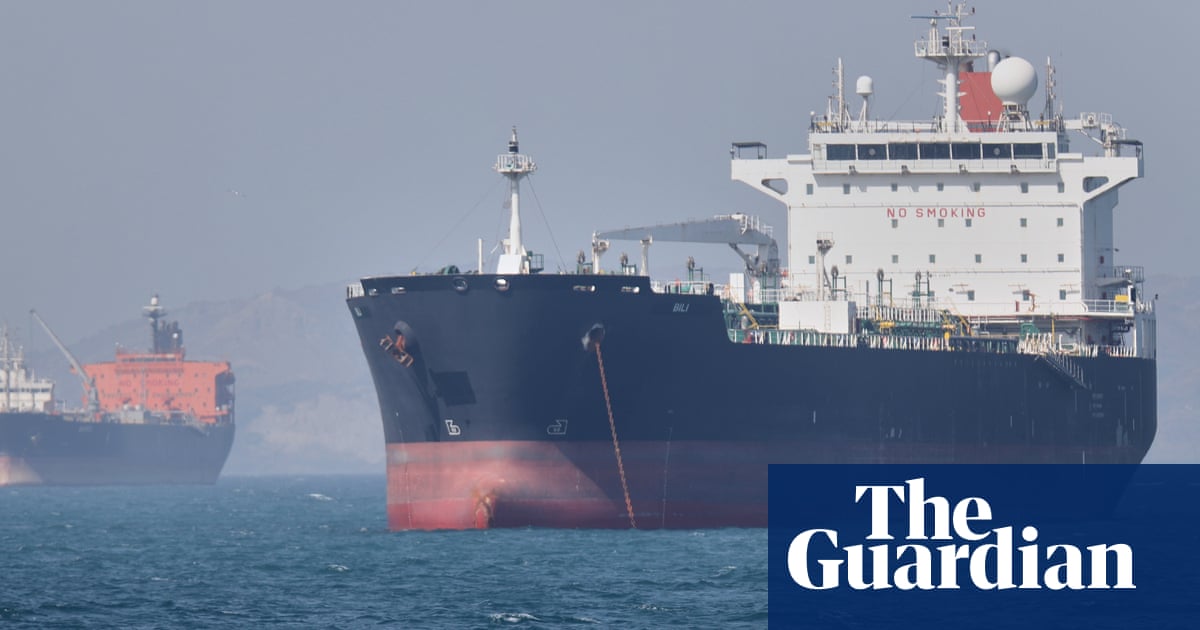
In the early hours of a May morning still thick with uncertainty, twenty-two men who had signed on to move cargo across open water learned that their employer — the Islamic Republic of Iran Shipping Lines — had become a pawn in someone else's geopolitical contest. The bulk carrier Tosca, a vessel they had crewed without incident for years, was seized by US naval forces somewhere in the Gulf of Oman. What followed was not a straightforward interdiction operation, the kind the US Navy conducts routinely under counter narcotics mandates. What followed was weeks of captivity aboard their own ship, a vessel turned floating prison, as diplomatic back-channels — and competing interpretations of international shipping law — worked silently in the background while families in Bandar Abbas waited for word.
The Tosca's crew is now heading home. American military officials, speaking to the New York York Times and confirmed through CENTCOM's own communications, indicated in early May 2026 that the sailors would be transferred to Pakistani territory and flown back to Iran. The ship itself, according to CENTCOM's accounting, is being readied for handover. The operation is framed by Washington as a lawful counter-narcotics interdiction. Tehran calls it what it is: state-sanctioned hostage-taking of civilians, an act that flouts maritime norms and centuries of commercial shipping practice.
Both those framings contain partial truth. Neither tells the whole story. And the difference matters enormously — for the twenty-two men who have lived through it and for the broader architecture of Gulf shipping that every such episode quietly erodes.
The Seizure: What the Record Shows
The factual skeleton of the incident is still being assembled from official statements and wire reporting, but the outline is clear. US naval forces operating in the Gulf of Oman intercepted the Tosca, a vessel flagged under the Islamic Republic of Iran Shipping Lines fleet. The seizure was conducted under a counter narcotics framework — the kind of interdiction authority that allows US warships to board vessels suspected of carrying illegal narcotics without requiring the flag state's consent. But here the cargo was not cocaine or methamphetamine. Iranian shipping lines operate under a thicket of US and international sanctions, and the legal theory advanced by Washington treats that designation as sufficient grounds for detention.
The crew — twenty-two Iranian nationals according to FARS News Agency's reporting — was held aboard the vessel throughout the detention period. No criminal charges have been reported. No port of safe harbor was identified in the immediate aftermath. The ship sat in international waters under what US Central Command described as controlled custody, a phrase that for sailors aboard means no disembarkation, no consular access, no timeline. Iranian state media, citing what it termed credible accounts from the families, described conditions aboard the detained vessel in terms that carried the weight of genuine distress: men unable to contact home, food supplies stretched, morale deteriorating over weeks of enforced limbo.
Washington's Version: Interdiction or Detention?
The US account has not wavered in its framing. The seizure was lawful. The vessel was flagged to an entity — IRISL — that sits beneath layers of US sanctions designations, itself a target under authorities that trace back to executive orders on weapons of mass destruction proliferation and support for designated terrorist organizations. Under these frameworks, US forces operating in international waters can interdict, board, and detain vessels connected to sanctioned parties. That authority, the administration has argued, is no different in kind from counter-piracy operations or counter-narcotics boardings.
The counter-narcotics label is where the Tehran-aligned press has concentrated its fire. Iranian state media, including Mehr News and Tasnim News Agency, has made the characterization central to its coverage: this was not a drug bust. The Tosca was a bulk carrier transporting legitimate — if sanctioned — commercial goods. The cargo, whatever its nature, was not contraband under any international treaty. The seizure was not targeted at a contraband payload but at the flag state and the company that owned the vessel. PressTV, the English-language arm of Iranian state broadcasting, characterized the operation as a deliberate act of hostage-taking, a formulation Tehran has used in its diplomatic protests.
What complicates any clean verdict is the ambiguity in US interdiction law itself. The Maritime Security and Fisheries Enforcement Act and related statutes do permit the US Navy to board vessels flagged to states designated as sponsors of terrorism without advance authorization from the flag state. Iran sits on that list. Whether that statutory authority extends to holding crew members for weeks without charges or consular notification — that question has not been tested in any international tribunal that the public record can identify. The US military official cited by the New York Times described the outcome — crew transfer to Pakistan for return to Iran — as imminent, suggesting that whatever legal architecture justified the seizure was deemed sufficient to cover the detention period but not durable enough to withstand the diplomatic pressure that followed.
The Diplomatic Pressure: What Brought the Crew Home
The thread connecting the seizure to the release runs through Iranian state communications, back-channel diplomacy, and the particular dynamics of a period in which the US and Iran have been engaged in indirect nuclear talks mediated by Oman and the UAE. Tehran made the Tosca's crew a specific demand: immediate release and repatriation. The Iranian Foreign Ministry, according to Mehr News, issued formal diplomatic protests through the Swiss protecting power — the intermediary channel the US and Iran maintain in the absence of formal diplomatic relations. Iranian state media published the names and photographs of the detained sailors, a tactic designed to generate domestic pressure and international attention simultaneously.
The timing of the release announcement — early May 2026 — coincides with a phase in which the nuclear talks, dormant for months, have shown flickers of renewed contact. Whether the Tosca's release was a direct concession in that context, a parallel track, or simply coincidental cannot be determined from the public record. What is clear is that twenty-two men who had been held incommunicado at sea are now en route to Karachi, and from there to Tehran. The ship remains in US custody pending what CENTCOM described as a "controlled transfer" — language that suggests the handover is underway but not yet complete.
A Structural Pattern: The Weaponization of Maritime Commerce
The Tosca episode sits inside a longer arc. US naval interdiction of Iranian commercial vessels has happened before — ships boarded under sanctions designations, crews detained, vessels seized and in some cases stripped of their cargo or sunk. The frequency of these operations has not been constant. They tend to cluster around periods of heightened tension in the nuclear talks, around phases in which the US is applying maximum pressure, and around moments when the Trump administration's "policy of peace through strength" framing requires a visible demonstration of enforcement. The targeting of IRISL vessels is particularly pointed: the shipping line sits at the intersection of commercial logistics and the Islamic Revolutionary Guard Corps' economic footprint, making it a designation target that can be defended on both counter-terrorism and counter-proliferation grounds.
What is relatively new is the duration of the Tosca's detention and the specificity of the Iranian response. Earlier interdictions — a pattern documented by regional shipping monitors and by reporting from Middle East Eye and The Cradle over the past several years — often concluded within days. The cargo was seized, the vessel was sometimes released, the crew was not necessarily held. The Tosca's detention for weeks, with the crew held aboard under conditions that Iranian state media framed as humanitarian crisis, marked an escalation. It forced the issue into a diplomatic lane that the IRISL designations were originally designed to avoid — the direct confrontation with crew welfare that transforms a sanctions enforcement action into a consular incident.
For commercial shipping more broadly, the episode reinforces a quiet and growing anxiety in the industry. Gulf navigators — shipowners, insurers, flag registries, classification societies — have long operated under the understood risk that Iranian-flagged vessels are targets. But the norm that commercial sailors are civilians first, and that their detention without charges constitutes a distinct category of violation, has been a working assumption that these events now strain. Iranian state media has been explicit in framing the crew's treatment as a breach of the Geneva Conventions' protections for civilians in transit — a characterization that, whatever its legal merit, places the episode in a frame that complicates Washington's desired narrative of lawful enforcement.
The Stakes and What Comes Next
The twenty-two sailors returning to Iran will carry with them accounts that Iranian state media will amplify and that Tehran will cite in its next round of diplomatic protests. For the families who waited without communication for weeks, the homecoming will be a relief without resolution — a question answered about survival, but not about what the detention means for the men who experienced it. For IRISL, the seizure is a commercial loss — the vessel is a capital asset frozen in legal ambiguity — but also a political resource, another data point in the case Tehran is building about the arbitrariness of US sanctions enforcement in international waters.
For the broader Gulf shipping lane — among the world's most consequential commercial chokepoints, carrying roughly a fifth of global oil output and enormous volumes of non-oil trade — the structural stakes are harder to quantify and more durable. Every seizure adds to the calculus insurers and shipowners make when routing cargo. Flag states with less legal leverage than Iran — Guinea-Bissau, Sierra Leone, the smaller Panamanian registries — are already caught in the undertow of sanctions-related boardings. The norm that a vessel's flag determines its legal status, and that civilians aboard commercial ships enjoy protected civilian status in transit, is not a treaty abstraction. It is the operating assumption that makes maritime commerce across contested waters tractable for the tens of thousands of sailors who crew the world fleet. When that norm is visibly violated and the violation is met with a quiet release rather than a legal reckoning, the damage is not dramatic. It is cumulative.
The Tosca is heading home. The ship may follow. But the question the episode leaves — about the limits of maritime interdiction authority, the civilian cost of sanctions enforcement, and the durability of shipping norms under sustained pressure — is not heading anywhere.
This publication's coverage of the Tosca incident led with CENTCOM's confirmed statement on crew transfer, a framing that aligned with the wire consensus. Iranian state media framing — 'hostage-taking' — appeared in the counterpoint section as Tehran's stated position. Western wire outlets described the operation as a counter-narcotics interdiction consistent with US naval authorities. We have not independently verified the specific legal instrument under which the vessel was seized, a gap the sources do not resolve.
Wire provenance
This editorial synthesis draws on the following public wire/social posts:
- https://t.me/farsna
- https://t.me/FarsNewsInt
- https://t.me/mehrnews
- https://t.me/tasnimnews_en
- https://t.me/JahanTasnim
- https://en.wikipedia.org/wiki/Maritime_Security_and_Fisheries_Enforcement_Act
- https://en.wikipedia.org/wiki/Islamic_Republic_of_Iran_Shipping_Lines
- https://en.wikipedia.org/wiki/Geneva_Conventions