Trump's Hormuz Blockade Is a Dollar Weapon — and the Fed Is Paying the Price
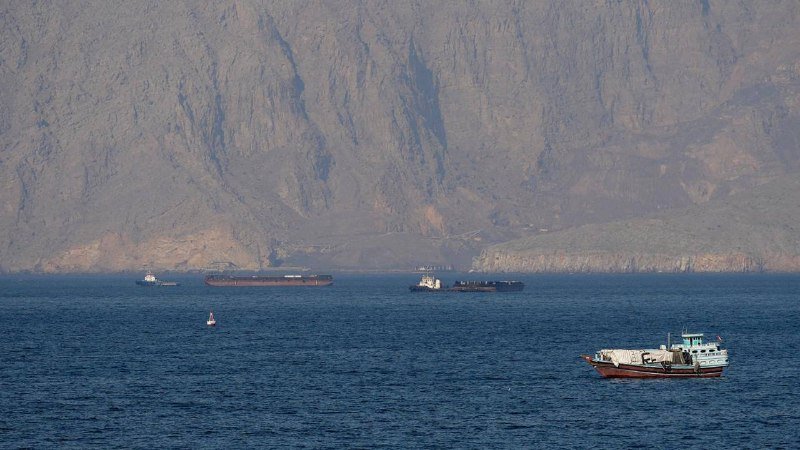
The word "friendly" is doing heavy lifting. On 2 May 2026, President Trump described the US naval blockade of Iran's maritime approaches as "a very friendly blockade" — language that simultaneously acknowledged the escalating confrontation with Tehran and left the door open to a diplomatic exit. The Federal Reserve, meanwhile, is not finding the situation friendly at all.
Neel Kashkari, president of the Federal Reserve Bank of Minneapolis, told Reuters on 3 May 2026 that the Iran conflict is constraining the central bank's ability to give forward guidance on interest rates. The blockade — Washington's chosen instrument of coercive pressure — is not merely a military posture. It is a financial architecture. And it is placing the Fed in an increasingly uncomfortable position as the economic consequences ripple outward.
The Dollar Weapon Nobody Named
A naval blockade operates on two levels simultaneously. The visible layer is the warships: the operational control of the Strait of Hormuz, through which roughly a fifth of the world's oil flows. The invisible layer is the financial pressure it exerts on Tehran's ability to function as a modern economy.
The mechanism is not subtle. Blocking Iranian oil exports — and threatening secondary sanctions against any third country that continues purchasing from Tehran — effectively removes Iran from the global energy结算 system. Without access to dollar-clearing infrastructure, Iranian traders cannot reliably settle oil contracts. Without reliable oil revenues, the Iranian state loses its primary source of hard currency. Without hard currency, it cannot service external debts or import essentials.
This is economic strangulation by design. The blockade makes that strangulation more effective by physically limiting Iran's ability to route exports through alternative channels. Kashkari's acknowledgment that this conflict limits Fed rate guidance is a quiet admission that the instrument is working — but that its success has a cost measured in market volatility, energy price premiums, and diminished central bank flexibility.
"Friendly" Blockade: The Language Trap
The administration has framed the blockade as coercive pressure short of war, a distinction it clearly considers commercially and diplomatically useful. Calling it "friendly" is not accidental. It performs two functions simultaneously.
First, it acknowledges the severity — a blockade is an act of war under international law — while sanitising the human and economic consequences. Iranian civilians and businesses face fuel shortages, currency collapse, and restricted access to imported goods. Calling the instrument "friendly" makes those consequences easier to paper over.
Second, it leaves diplomatic room. A "friendly" blockade can be lifted without the administration having to characterise the move as a climbdown. It is, in effect, a pressure tactic with a built-in off-ramp: the language itself is the face-saving mechanism.
Trump's further statement on 2 May 2026 — that Iran has "not yet paid a big enough price" for its actions — signals that the administration is not yet prepared to take that off-ramp. The blockade will hold. The pressure will intensify. The Fed's room to manoeuvre will narrow further.
$8.6 Billion in Emergency Arms — The Regional Dimension
The fast-tracking of $8.6 billion in emergency arms sales to Middle East allies, announced on 2 May 2026, adds another layer to the financial architecture around the blockade. These are not routine defence contracts. Emergency arms sale authorities bypass the standard congressional review process; the speed and scale signal that the administration is deepening its regional security commitments in parallel with the coercive campaign against Iran.
The sales are not, on their face, directly connected to the blockade. But the strategic logic is coherent. Washington is simultaneously tightening economic pressure on Tehran and expanding the offensive capabilities of regional allies — Saudi Arabia, the UAE, and Israel among them. This creates a cascading military balance that incentivises Tehran to escalate in kind, or to make concessions before the pressure becomes unbearable.
The arms sales also deepen dependencies. Countries that receive advanced US weapon systems become structurally invested in the US security architecture, which reinforces dollar-denominated defence relationships and extends the financial reach of the US regulatory system further into the Gulf.
Lifting the Blockade — 33% and Counting
Polymarket traders placed 33% odds on the blockade being lifted by the end of May 2026 — a figure that is neither trivial nor confident. It reflects genuine uncertainty about whether Tehran will capitulate under economic pressure, or whether the administration will declare victory and step back from the posture once enough concessions are extracted.
That uncertainty is itself informative. A sustained blockade that persists indefinitely without a negotiated resolution does not resolve the situation — it freezes it. Iran absorbs pain, builds internal resentment, and waits for a change in US political dynamics. The administration, meanwhile, must manage the ongoing economic costs: elevated oil prices, market jitters, and a Fed unable to provide the clean rate signal that might otherwise absorb some of the inflationary pressure created by energy supply disruption.
Trump's framing — that Iran has not yet paid enough — suggests the administration believes the pressure campaign is still in its productive phase. That assessment could prove correct. It could also produce a regime in Tehran with nothing left to lose, or a decision inside the Oval Office that the domestic political cost of sustained elevated gasoline prices has become untenable.
The Fed's New Constraint
What the thread data reveals, taken together, is a structural shift in how Washington conducts coercive pressure. The blockade is an instrument that works — but its effectiveness generates consequences that are distributed across the global economy, not concentrated on Tehran alone. The Federal Reserve, whose mandate is domestic, now finds itself managing fallout from a geopolitical choice made in the Gulf.
Kashkari's framing — that the Iran war limits rate guidance — is understated. The central bank is not simply unable to give forward guidance; it is being forced to respond to a financial environment partly shaped by the executive branch's own choices. The blockade delivers strategic pressure on Iran. It also delivers oil-price spikes and dollar-demand premiums that the Fed must absorb.
The administration is, in effect, running a financial instrument test. The blockade works as a pressure tactic. The question is whether the political system will hold the line long enough for it to produce a resolution — or whether the domestic economic feedback, channelled through the Fed's constrained posture, will eventually argue for a deal that the blockade was designed to make unnecessary.
The next few weeks will answer that question. The Polymarket odds suggest no settled consensus exists. That itself is the most honest signal available.
— Desk note: The wire framed Kashkari's comments primarily as a monetary policy story. This piece recasts the blockade itself — not the conflict, but the specific instrument of economic strangulation — as the structuring variable. The reporting from Reuters was used as the primary institutional anchor; the Polymarket data supplied the forward probability frame absent from the official communications.
Wire provenance
This editorial synthesis draws on the following public wire/social posts:
- http://reut.rs/4tOAcbJ