Trump's Ceasefire Contradiction: Why Washington Won't Say Iran Violated the Agreement
The Trump administration is describing Iranian missile strikes against U.S. warships and the UAE as militarily insignificant while simultaneously refusing to call them ceasefire violations — a rhetorical dodge that reveals the limits of the April agreement.
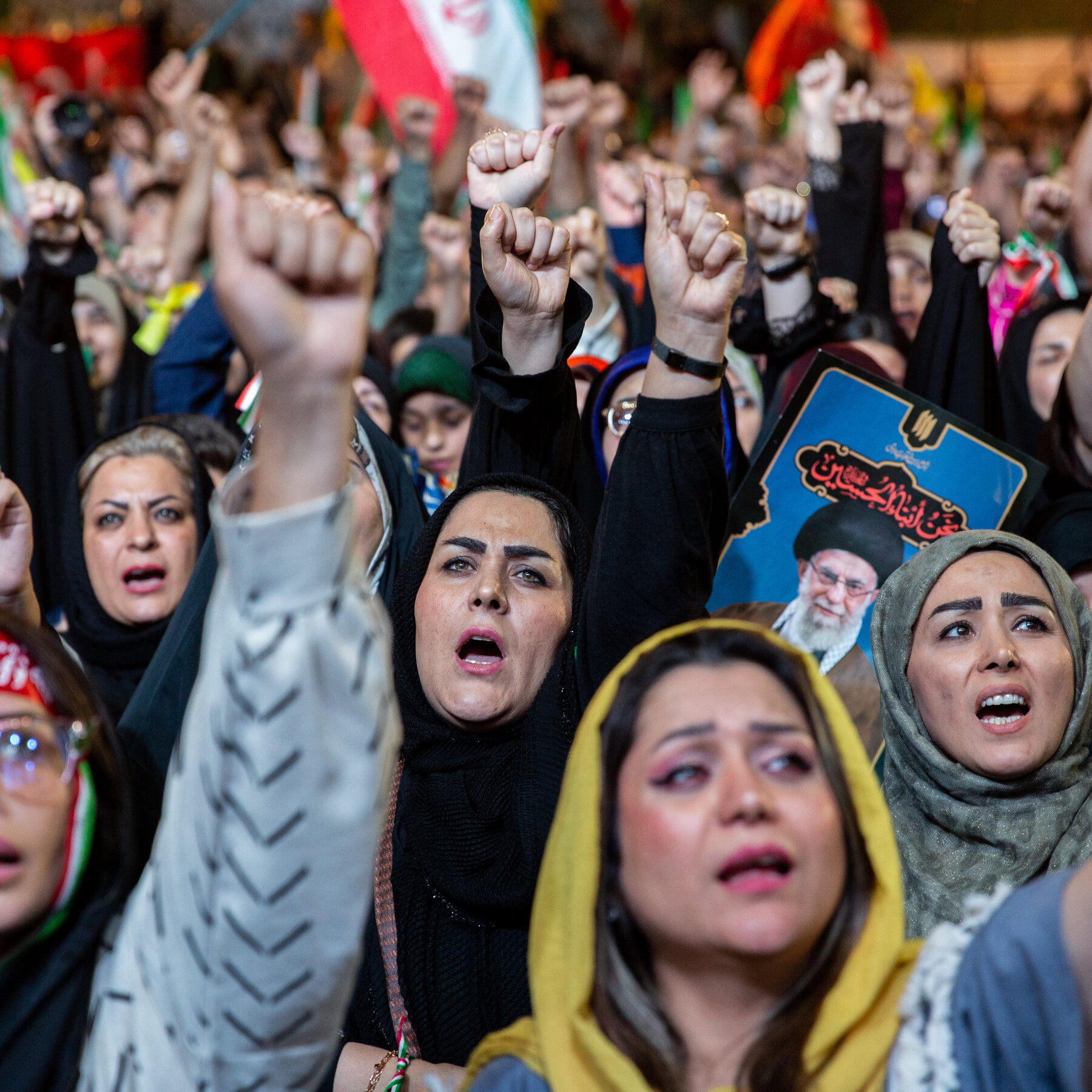
On the morning of 4 May 2026, as Iranian missiles crossed into Emirati airspace, U.S. President Donald Trump offered a characteristically blunt assessment — and a revealing one. Addressing reporters from the White House, he described the strikes as militarily trivial: "Iran hasn't violated the ceasefire, they only shot a few missiles most of which were shot down." Within hours, Emirati authorities had ordered schools across the country to suspend in-person learning from 5 through 8 May. The gap between Washington's official characterisation and the on-the-ground reality in the Gulf captures something important about the state of the U.S.-Iran détente brokered weeks earlier.
The contradiction is not incidental. It is structural. The administration appears unwilling to formally declare Iran in breach of an agreement it invested significant political capital to negotiate, even as Iranian fire is landing near American assets and closing schools in a major Arab capital. That reluctance tells its own story about what the ceasefire was always meant to accomplish — and what it was not.
What the Strikes Actually Looked Like
The attacks on 4 May targeted U.S. warships operating in or near the Gulf, according to reporting carried by multiple regional monitoring channels. Iranian state-linked sources did not dispute that launches occurred but framed them as responses to perceived provocations by American and allied naval presences in the region. The strikes on the United Arab Emirates involved surface-to-surface munitions that triggered Emirati civil defence protocols, including the emergency switch to remote instruction for hundreds of thousands of students.
That Iranian missiles struck the UAE — a country with formal diplomatic relations with Tehran, shared coastline, and no direct combat role in prior hostilities — complicates the administration's framing. This was not a tit-for-tat exchange between combatants on a defined front line. It was a strike that landed inside the territory of a third party, one that has hosted American forces and maintains a cautious but cooperative relationship with Washington. The Emirati response, in ordering school closures, signalled that the authorities took the threat seriously regardless of what terminology the White House chose to apply.
Trump, pressed on whether the strikes constituted a ceasefire violation, declined to say so directly. "President Trump did not want to say whether Iran violated the ceasefire with its attacks today on the United Arab Emirates and U.S. warships," one intelligence-adjacent monitoring channel reported. That reluctance to apply the V-word is notable. It is not the language of an administration that believes its counterpart has crossed a line it drew itself.
The Strategic Geometry of 'Not a Violation'
The ceasefire agreement, negotiated through Omani and Swiss intermediaries during April, was built around a de-escalation architecture that exchanged limited sanctions relief for Iran's agreement to halt enrichment above 3.67 percent and to constrain the reach of its regional proxy networks. The deal was always more fragile than its architects let on. Its enforcement mechanism relied heavily on self-reporting and intelligence sharing — structures that function only when both parties maintain a genuine interest in their preservation.
By declining to call the strikes a violation, the Trump administration achieves several things at once. It preserves the diplomatic architecture it needs for other reasons — most immediately, the broader conversation with Beijing that Trump has flagged as his next major foreign policy engagement. It avoids triggering the re-imposition of lifted sanctions that Iran would cite as grounds for withdrawal. And it buys time, which is itself a strategic resource in a negotiation that the White House appears to want extended rather than concluded.
The oil dimension is inseparable from this calculation. Trump pointed on 4 May to what he described as previous miscalculations about energy prices — the expectation that oil would reach 300 dollars per barrel, versus the current benchmark of roughly 100 dollars. A rupture of the ceasefire would likely push prices sharply higher, complicating an administration that has sought to present itself as the architect of energy stability rather than its casualty. Calling the strikes something other than a violation is, in this light, also an economic statement.
The China Variable
The same press appearance that produced Trump's ceasefire comments also featured his preview of a coming encounter with Chinese President Xi Jinping. "I am going to see President Xi and I will say, 'I am leading!'" Trump said. "We have very friendly competition." The framing — competitive but cooperative, with American primacy declared rather than negotiated — is a familiar one from his first term. What has changed is the context.
China is Iran's largest trading partner and a critical backstop for the sanctions-evasion architecture that has kept Tehran's economy functional through years of American maximum pressure. A U.S.-China negotiation conducted under the shadow of a collapsed Iran ceasefire looks very different from one conducted with the region technically at peace. Beijing has demonstrated, across multiple rounds of UN sanctions debates, that it is willing to use its position as a veto-wielding Security Council member to protect Iranian interests from the most severe international measures. Whether it would extend that protection to a partner that had demonstrably broken a bilateral deal is a different question — one the Chinese leadership will answer partly based on how Washington frames the events of 4 May.
The administration's unwillingness to say "violation" may therefore also be a message to Beijing: the architecture holds, the deal is intact, and the conversation about trade, technology, and strategic competition can proceed on that assumption. Whether that message is credible, given missiles in the Gulf and schools closed in Abu Dhabi, is a separate matter.
The Domestic Picture
Also on 4 May, Trump returned to a visual theme he has used repeatedly since taking office: contrast with his predecessors. Posting images comparing his own record to those of recent administrations, he reinforced the argument that his approach to Iran — direct, transactional, sceptical of long-term diplomatic entanglements — is the correct one. The ceasefire, in this framing, is a product of his personal negotiating style, not a legacy inherited from the Obama-era deal or the Biden-era gradual reopening.
The problem with that framing is the same one that attaches to any personal-deal diplomacy: it is only as durable as the personal relationship sustaining it. The ceasefire works while both parties have reasons to maintain it. When those reasons erode — as they did on 4 May — the architecture has less institutional resilience than a multilateral agreement with built-in compliance mechanisms would provide. No amount of presidential Instagram posts changes that arithmetic.
What Remains Unresolved
The sources do not establish with certainty what Iranian strategic intent was behind the 4 May strikes. Whether they represent a genuine test of Washington's red lines, a domestic signalling exercise ahead of Iranian parliamentary considerations, or a miscalculation born of ambiguous ceasefire language is not yet clear from the available reporting. What is clear is the asymmetry between the severity of the attacks — school closures, warships targeted, a Gulf ally menaced — and the administration's insistence that nothing consequential has occurred.
That asymmetry cannot hold indefinitely. Either the ceasefire means something specific, with consequences for breach, or it means nothing specific, and both parties are operating in a grey zone that will eventually produce a more serious rupture. The White House appears to have chosen the grey zone, at least for now. Whether Tehran reads that choice as weakness, as pragmatism, or as the ordinary friction of imperfect enforcement will determine what happens next.
This publication's thread coverage of the UAE school closures and the Emirati civil defence response has been carried in parallel with wire reporting. The tone of Emirati official communications has been notably more direct about the threat than the language employed by the White House.
Wire provenance
This editorial synthesis draws on the following public wire/social posts:
- https://t.me/ClashReport/4821
- https://t.me/ClashReport/4820
- https://t.me/rnintel/3340
- https://t.me/Middle_East_Spectator/1102
- https://t.me/wfwitness/8811
- https://x.com/sprinterpress/status/1919453822014562333