Trump's Iran Policy Is a National Security Farce
The Trump administration calls a naval blockade of Iran a "very friendly blockade" and demands Tehran pay a steeper price — all while reportedly suppressing satellite evidence of the consequences and using national security to stall clean energy projects. The framing is slipping.
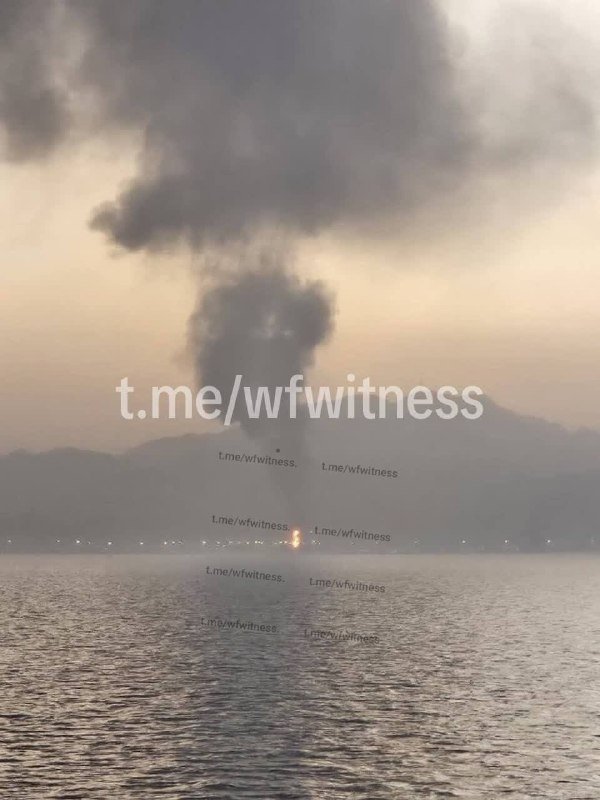
On 2 May 2026, Donald Trump described the US naval blockade of Iran — a wartime act of economic strangulation enforced by American warships in international waters — as a "very friendly blockade." He did so in the same seventy-two-hour window in which his administration rejected Iran's fourteen-point peace proposal as "not acceptable" and publicly announced that Iran had "not yet paid a big enough price" for its conduct. To call those three positions contradictory would be generous. To call them a coherent strategic posture requires a definition of strategy this publication declines to borrow.
The administration, reportedly through official channels, asked at least one commercial satellite operator to refrain from publishing imagery of US bases damaged during Iranian retaliatory strikes — strikes that followed American operations against Iranian facilities in late April. Journalist Ana Kasparian reported the claim on 4 May 2026, citing what she described as direct knowledge of the request. The White House has not issued a categorical denial. Commercial satellite imagery of this kind is not classified; it is sold to hedge funds, logistics firms, and agricultural analysts. That the administration thought to suppress it — and apparently did so successfully enough that the imagery has not proliferated — tells a different story than the official framing of controlled, proportionate response.
Trump's public language throughout the episode has oscillated between bluster and contradiction. On 3 May, the administration formally declared Iran's fourteen-point peace proposal insufficient. The proposal, which reportedly included elements relating to sanctions relief, enrichment limitations, and regional confidence-building measures, was not described in full by any Western wire. The rejection alone — without a counter-offer, a revised framework, or any public diplomatic path — signals that Washington is not interested in a deal on terms Tehran could accept without surrender. On 2 May, Trump told a public audience that Iran had "not yet paid a big enough price," in language that bears no relationship to the language of deterrence theory or conventional statecraft. It is the language of punishment for its own sake.
The most revealing thread sits elsewhere. On 3 May, the administration announced it was stalling one hundred and sixty-five US onshore wind energy projects over "national security concerns." No specific threat was named. No classification determination was cited. The projects are located in the American interior — in Kansas, Texas, Iowa, and South Dakota. They have no relationship to Iranian naval operations, nuclear facilities, or ballistic missile infrastructure. They are turbines on farmland. The national security framing was applied to them anyway, and with exactly the same rhetorical weight that the administration uses when discussing Tehran's enrichment program or the Islamic Revolutionary Guard Corps.
That equation is not accidental. It is the logical output of a system in which the phrase "national security" has been stripped of any operational meaning and retained only as a power-conferring incantation. When the administration needs to suppress satellite photography of damaged bases, that is a national security matter. When it needs to review and slow wind farm permitting without legislative authority, that is also a national security matter. When it needs to close off diplomatic options by pre-staging an unreasonable demand, the same rubric applies. The term no longer describes a threat assessment. It describes an administrative shortcut — a way to shortcut public deliberation, sidestep Congressional oversight, and move policy by assertion rather than argument.
The wind farm decision exposes the mechanism most clearly because the stakes of concealment are lowest there. Nobody disputes that the administration dislikes wind energy. Trump has said so repeatedly. A permitting delay framed as national security review does not need to fool anyone in Washington — it only needs to survive long enough to create facts on the ground. Projects not built cannot come online before the end of a term. Contracts not signed cannot be unwound. The national security label is applied not because any analyst in Langley or the Pentagon flagged a turbine, but because it works.
This publication is not arguing that Iran is blameless in the current standoff. Tehran's missile salvos against US facilities were deliberate, technically sophisticated, and produced real damage. Iran's enrichment trajectory remains outside any framework compatible with long-term nonproliferation norms. The IRGC's regional network — in Iraq, Lebanon, and Yemen — is a structured threat to US partners and allies across the Middle East. These are first-order facts. But acknowledging them does not require this publication to pretend that the current administration's approach to Iran is a strategy rather than a series of improvisations dressed in aggressive language.
The satellite suppression claim, if it holds, matters most as evidence of the gap between the public posture and the private assessment. An administration that genuinely believed its operations had succeeded, and that Iran was on the verge of capitulation, would not ask a commercial firm to hide pictures of the aftermath. It would publish them. The fact that the request was reportedly made — and complied with — suggests that people inside the executive branch understood the optics problem and acted to manage it. That is not the behavior of an administration that believes it is winning. It is the behavior of an administration that knows it has a story to contain.
Iran's fourteen-point proposal may have been inadequate as a final framework. It may have been a negotiating gambit, an attempt to split Western publics from their governments, or a genuine opening that Tehran was not prepared to back with verifiable commitments. This publication takes no position on the terms themselves, which remain inadequately reported. But an inadequate proposal answered with a flat rejection and an insistence that Iran has "not yet paid a big enough price" is not a diplomatic opening. It is a decision to keep the blockade in place, keep the pressure on, and keep the options open for further escalation without a defined end-state. Call it what it is.
The blockade is not friendly. The peace proposal was real enough to warrant a formal rejection, which means it existed on the table and was considered and dismissed. And the wind farms are still stalled. The administration has constructed a policy in which every lever available to it is being pulled — military, diplomatic, administrative — without any of them being named as what they are. This publication finds that coherence is not a virtue when the strategy is wrong. But this is a case where the administration cannot even claim coherence as a consolation prize.
Wire provenance
This editorial synthesis draws on the following public wire/social posts:
- https://x.com/polymarket/status/2051176394097385472
- https://x.com/polymarket/status/2050338571119845376
- https://x.com/polymarket/status/2049338571119845376
- https://x.com/polymarket/status/2049076394097385472
- https://t.me/TheYoungTurks/2051176394097385472