Trump says Iran 'one way or another' will not have nuclear weapon, claims enriched uranium buried in rubble
President Trump said on 4 May 2026 that Iran would not be allowed a nuclear weapon 'one way or another,' adding that Iran's enriched uranium was 'buried under the rubble' following an American operation. An IRGC political deputy responded that escalation would cost America more than Iran.
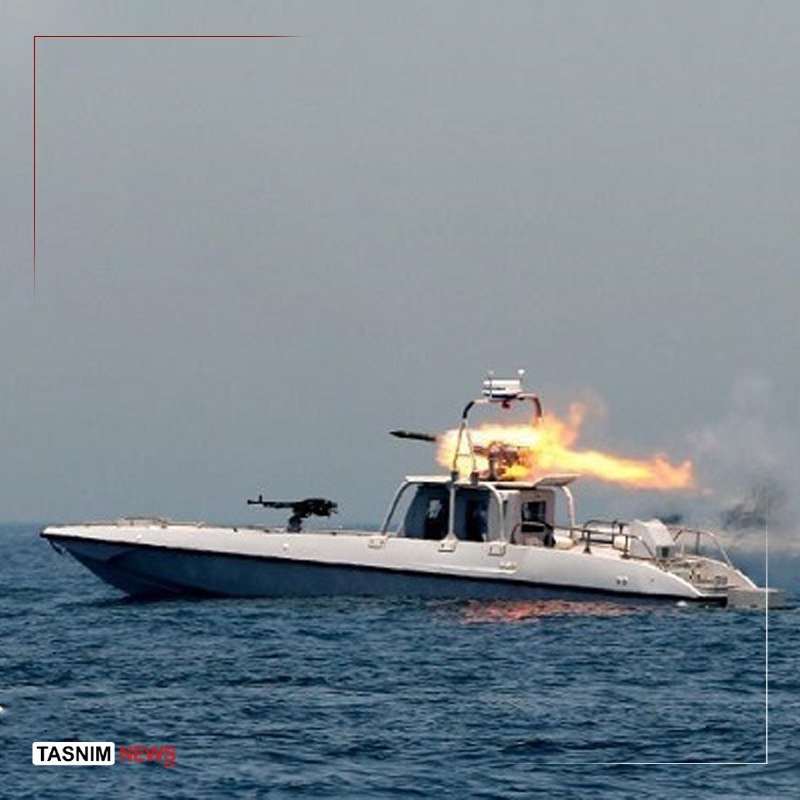
President Donald Trump said on 4 May 2026 that Iran would not be allowed to possess a nuclear weapon "one way or another," and separately claimed that Iran's enriched uranium stock was now "buried under the rubble" following an American operation — language that Iranian state-linked sources amplified and framed as confirmation of a strike. The claims could not be independently corroborated by Monexus from Western wire sources at time of publication.
Trump, speaking to reporters at the White House, stated: "I will say that, one way or the other, we have one thing. They will never have a nuclear weapon." Within hours, accounts on Telegram affiliated with Iranian state media — including Tasnim News and Jahan Tasnim — ran the same quote alongside a paraphrased version that attributed a fuller claim to Trump: that enriched uranium left from Iran's programme was buried under rubble after what was described as an American operation. Tasnim, an outlet close to the IRGC, carried the characterisation as a direct assertion from "the head of the American terrorist state."
Sardar Javani, the political deputy of Iran's Islamic Revolutionary Guard Corps, responded in remarks carried by Tasnim on the same evening. "The damages of the escalation of confrontation between America and Iran will be more for America," Javani said, adding that the United States would "try its best and use all its power and use the entire country" in any conflict. The framing in Iranian state-adjacent channels presented Javani's statement as a direct rebuttal to Trump's remarks, rather than a response to any specific military action.
A sharper turn in rhetoric
The language Trump used marks a notable departure from the more transactional posture he struck during his first term and in the early months of his second, when administration officials repeatedly left open the possibility of a renewed diplomatic track with Tehran. "One way or another" carries an implicit military ultimatum — a phrase more commonly associated with the George W. Bush administration's pre-invasion framing on Iraq than with recent White House posture on Iran.
The claim that Iranian enriched uranium is now "buried under rubble" is more difficult to assess. Whether Trump was describing an operation that has already taken place, a strike he was announcing in real time, or a rhetorical framing of the state of Iran's programme was not clarified in the statements as transmitted. Iranian state media presented the buried-uranium claim as confirmation of an American attack; no independent confirmation from Western governments, international inspectors, or commercial satellite imagery was available to Monexus at time of publication.
Tehran's response and the question of verification
The IRGC's Javani, in his remarks, framed the escalation as a net loss for the United States — a position that diverges from the mainstream assessment of regional analysts, who generally evaluate Iran's military infrastructure as more vulnerable to precision strikes than American assets in the theatre. The claim that "America will try its best and use all its power" reads as both a warning and a concession: it acknowledges the scale of a potential American response while simultaneously arguing that scale works against Washington.
It is worth noting that the primary sourcing for both Trump's claims and the Iranian counter-response comes from Iranian state-linked channels. The characterisation of Trump's statements as confirmation of a strike, and the framing of America as a "terrorist state," reflect the editorial posture of those outlets. Independent verification — from the IAEA, from commercial intelligence firms, or from Western government statements — had not materialised as of 23:46 UTC on 4 May 2026.
The structural context: a deal that died, a programme that didn't
Whatever the status of any strike, the underlying tension is rooted in a deal that the Trump administration effectively dismantled. The original Joint Comprehensive Plan of Action, negotiated under Barack Obama and retained by Joe Biden for eight years, constrained Iran's enrichment to 3.67 percent and reduced its stockpile through a combination of redesign, ship-based storage, and monitoring. The Trump administration's withdrawal in 2018 — and its reimposition of sweeping sanctions — ended the monitoring architecture. Iran's enrichment rate climbed. Its stockpile grew. The IAEA, which had maintained near-real-time access under the JCPOA, found itself operating with far fewer levers.
That is the structural fact sitting beneath Tuesday's exchange. A deal that was designed to keep Iran at least eighteen months from a weapon — the "breakout time" metric that Western officials used to justify the agreement — is gone. The alternative monitoring framework is weaker. And the political will in Washington for a renewed agreement has, at various points, been either absent or subordinated to other priorities in the bilateral relationship.
Stakes and what comes next
The immediate stakes are military: whether Tuesday's exchange represents the opening salvo of a new American campaign against Iranian nuclear sites, or rhetorical pressure designed to extract concessions ahead of a renewed negotiation. Trump's language, taken at face value, does not distinguish between those two outcomes — which may be the point.
The regional stakes are broader. Any strike on Iranian nuclear infrastructure risks triggering responses from Iranian proxies across Iraq, Syria, Yemen, and Lebanon — a cascade that regional capitals, including Riyadh and Ankara, have quietly signalled they want to avoid. The oil-market implications of a sustained confrontation with Iran have been a persistent background concern for Gulf Cooperation Council states, whose budgets are more sensitive to supply disruption than they were in 2019.
On the Iranian side, the Javani framing — that escalation hurts America more — may be intended for domestic political consumption as much as external deterrence. Navigating between defiance and pragmatism is a familiar tightrope for Tehran. The next move is almost certainly Washington's to make.
This article draws on reporting from Tasnim News, Jahan Tasnim, and the wfwitness Telegram channel. Monexus was unable to independently corroborate the characterisation of an American operation from Western or IAEA sources at time of publication.
Wire provenance
This editorial synthesis draws on the following public wire/social posts:
- https://t.me/wfwitness
- https://t.me/JahanTasnim
- https://t.me/tasnimnews_en
- https://t.me/tasnimnews_en