Trump Tells Iran to Stand Down in Strait of Hormuz or Face Annihilation
President Trump warned Iran on May 4, 2026 that any attack on U.S. vessels escorting ships through the Strait of Hormuz would result in the Islamic Republic being wiped from the face of the earth, while simultaneously claiming Tehran had grown more pliable in ongoing nuclear negotiations.
In a Fox News interview broadcast on May 4, 2026, President Donald Trump issued what amounted to an existential ultimatum to Tehran: any Iranian attack on American ships conducting freedom of navigation operations in the Strait of Hormuz would result in the Islamic Republic being, in his words, "wiped off the face of the earth" and "blown off the face of the earth." The remarks came as U.S. military assets in the region remained in a state of visible reinforcement, and as the administration simultaneously claimed Iran had grown more flexible in the ongoing peace negotiations that have absorbed months of diplomatic energy.
The juxtaposition was striking. On one hand, a maximalist military threat delivered in television-ready language. On the other, an assertion that the same adversary is now "more malleable than they were in the past" and "more flexible in the peace negotiations." The administration has offered no public accounting of what specific concessions Iran has made to warrant that characterisation, and no independent verification of the claim has emerged from other capitals or international mediators.
The Hormuz Chokepoint and Its Strategic Weight
The Strait of Hormuz is among the most consequential waterways on earth. Roughly 21 million barrels of oil pass through it daily, accounting for about 20 percent of global oil consumption. Any significant disruption to transit would reverberate across energy markets within hours. The United States has long maintained a naval presence in the Persian Gulf designed partly to keep that flow unmolested. What changed in this latest exchange was the explicitness of the threat attached to any interference.
Trump told Fox News that American ships were "guiding vessels through the Strait of Hormuz" — phrasing that suggests a more active escort operation than routine freedom of navigation patrols. If the U.S. is now positioning itself as an escort service for commercial vessels, that constitutes an operational escalation that changes the calculus for any Iranian response. The difference between a warship transiting international waters and a warship actively shielding a flagged vessel is meaningful under international law and under the rules of engagement that govern naval confrontations.
The sources do not specify whether this escort posture is new, what specific vessels are being escorted, or which flag states those vessels fly. What is clear is that the administration has chosen to frame the Hormuz situation not as a passive right of passage but as an active American security commitment with consequences attached.
Negotiations and the Problem of Simultaneous Pressure
The administration has pursued a dual-track approach toward Iran since the early days of this presidency: maximum pressure diplomacy aimed at compelling concessions on the nuclear file while holding open the possibility of a comprehensive agreement. The May 4 remarks crystallise a tension that has run through the entire effort. It is difficult to conduct negotiations in good faith while issuing threats of annihilation, particularly when those threats are delivered to a domestic television audience hours after the negotiations are described as progressing.
Trump told Fox News on May 4 that "ultimately combat operations could resume" if Iran does not strike a good-faith deal — language that echoes the original 2018 withdrawal from the Joint Comprehensive Plan of Action and the subsequent "maximum pressure" campaign. The 2018 decision to exit the JCPOA was accompanied by a regime-change-adjacent rhetoric that Tehran interpreted, not irrationally, as a signal that no deal would ever be acceptable to Washington regardless of Iranian concessions.
Iran's nuclear programme has advanced considerably since 2018. The International Atomic Energy Agency has documented successive expansions of uranium enrichment capacity, and the stockpiles of material enriched to various levels have grown to quantities that analysts inside and outside government regard as the most consequential proliferation challenge in contemporary non-proliferation architecture. Any deal worth signing would need to address that reality in granular detail. The sources reviewed for this article do not indicate what specific terms the administration is pressing for, what Iran has offered, or what the gap between the two positions looks like.
Regional Reactions and the Saudi Connection
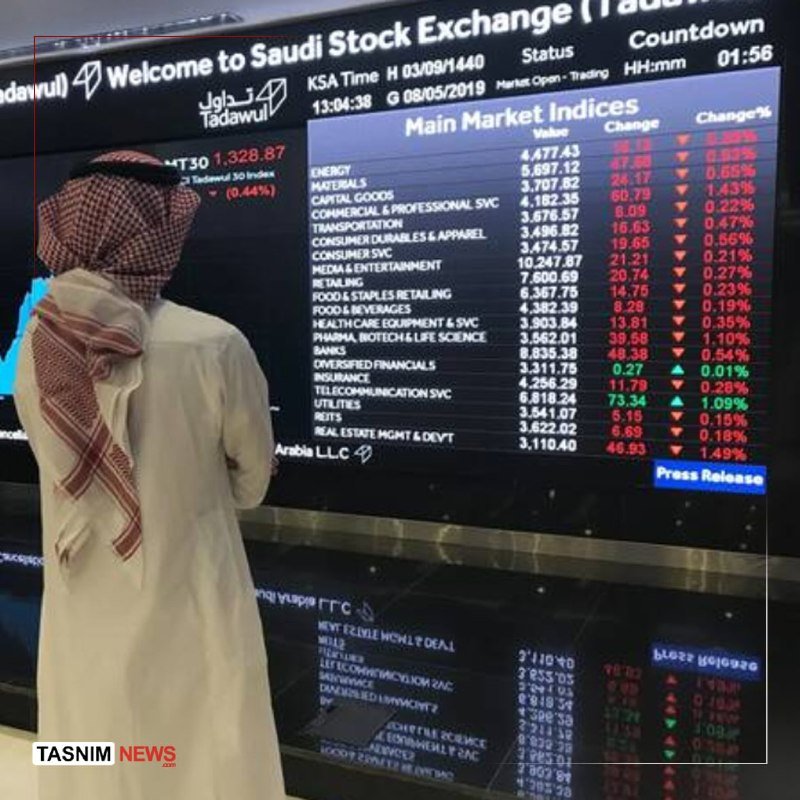
Gulf monarchies have watched the Hormuz standoff with a mixture of calculation and anxiety. Saudi Arabia and the United Arab Emirates have their own interests in the strait's unimpeded flow, but they have also built relationships with Tehran over the past several years that they are reluctant to see burned. The diplomatic thaw between Saudi Arabia and Iran, formalised in 2023, has produced a degree of de-escalation across the region that Riyadh values. A U.S.-Iranian military collision in the Gulf risks dragging those quiet relationships back into cold-war alignment.
Israel, whose security establishment has expressed consistent alarm at the prospect of a U.S.-Iranian nuclear deal that does not include permanent structural constraints on enrichment, will be watching the Hormuz dynamic closely. The sources reviewed do not indicate any Israeli public response to the May 4 remarks. But the logic of Israeli red lines — repeatedly articulated around the idea that Iran must not be permitted a weapons-capable breakout timeline — sets a floor beneath which no administration can negotiate, regardless of diplomatic atmosphere.
Escalation Risk and the Road Ahead
The immediate danger is not a deliberate Iranian decision to challenge U.S. warships. Iranian decision-makers understand the asymmetry. The more plausible risk is an incident: a miscalculation at sea, a confrontation with a proxy force operating under Iranian direction, an error in the complex operational dance that accompanies close naval proximity. These incidents have occurred before. The USS Cole attack in 2000 and the subsequent uptick in maritime confrontations during earlier phases of U.S.-Iranian tension offer cautionary precedent.
What the May 4 ultimatum does is raise the price of any such incident dramatically. The administration has now put itself on record with language that leaves little room for proportionality. An Iranian misjudgement — or an incident that Iran defines defensively as a response to U.S. provocation — would face an American leader who has publicly committed to total erasure in response.
The negotiating track and the military-track ultimatum cannot coexist indefinitely in their current form. The administration will need to either demonstrate concrete Iranian concessions to substantiate the "more flexible" characterisation, or the diplomatic framing will come to look like a device for managing domestic expectations while the military pressure builds. The sources do not indicate an imminent resumption of formal talks, and the gap between the two tracks appears to be widening.
This publication has covered the Strait of Hormuz corridor extensively, tracking the incremental build-up of U.S. naval presence in the Gulf and the corresponding hardening of Iranian maritime posture. The May 4 remarks represent a qualitative jump in the rhetorical dimension of that contest. Whether they produce a corresponding qualitative shift in actual risk depends on factors that neither the sources nor this article can determine at present.
Wire provenance
This editorial synthesis draws on the following public wire/social posts:
- https://t.me/FarsNewsInt/28542
- https://t.me/ClashReport/19841
- https://t.me/osintlive/15673
- https://t.me/euronews/22419
- https://t.me/wfwitness/14891
- https://t.me/abualiexpress/22105