Trump's Iran War Is a Message, Not a Conflict
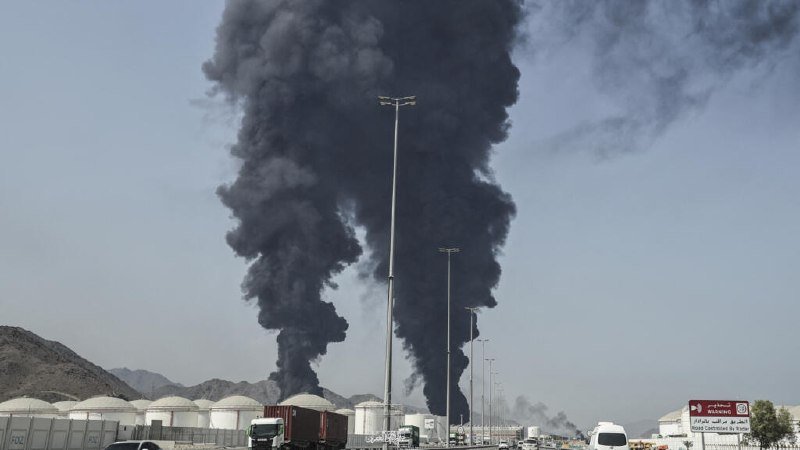
On the evening of 4 May 2026, President Donald Trump stood at the White House podium and described a conflict with Iran that his own administration has been prosecuting for weeks as "small." He added, without apparent concern for the contradiction, that the operation had been underway for six days and would resolve itself within two to three weeks. He described Iran's ballistic missiles as a problem requiring destruction, and claimed — in remarks circulated by Iranian state-linked media — that Iranian enriched uranium was now buried under rubble from American strikes.
The scene would be farcical if the subject were not a potential nuclear threshold state. Instead it is a case study in how the world's most powerful military communicates intent: not through strategy documents, but through calibrated declarations designed to shape perception at home, in the Gulf, and in every capital watching the standoff.
A Conflict Characterised as Manageable
The dominant framing from the American side treats the Iran operation as bounded. Duration is fixed — two to three weeks — and the objective is defined narrowly: Iran's missile programme. This is not the language of a war with a defined enemy state. It is the language of a pressure campaign. The implication is that Tehran can absorb the strikes, absorb the humiliation of buried uranium being paraded as a trophy, and then return to a negotiating posture without the structural damage that would trigger escalation.
This reading holds that the Administration is managing a demonstration effect. The strikes are sufficient to degrade capability; the rhetoric is sufficient to satisfy a domestic audience that a response to Iranian aggression is underway. When the three-week window closes, both sides can claim success. Iran survives; the missiles are diminished; American credibility survives another headline.
Why the Framing Serves Washington
The "small war" framing has a precise political function inside Washington: it satisfies the transactional logic that has governed American Middle Eastern policy since the withdrawal from Afghanistan. American voters — and, more specifically, the political coalition that brought this Administration to power — want deterrence demonstrated, not empire extended. A conflict that can be described in weeks, with defined targets, and without visible American casualties, fits that expectation precisely.
It also constrains Tehran's response options. If the operation is framed as temporary, temporary, and bounded, any Iranian escalation risks transforming it into something the regime cannot control. The Iranian leadership knows this. Their calculus, whatever it ultimately produces, is shaped by the Administration's framing as surely as by its ordnance.
What Remains Unsaid
The sources do not specify what happens on day twenty-two. The Administration has offered no exit criteria, no definition of success beyond the destruction of missile infrastructure, and no articulation of what happens if Tehran chooses not to cooperate in its own containment. The absence matters. Wars framed as temporary tend to become indefinite when the temporary framing collapses against an adversary who refuses to accept the imposed timeline.
The enriched uranium claim — that it now sits beneath rubble — is presented as fait accompli without independent verification from any non-Iranian source. Whether the material has been destroyed, dispersed, or simply relocated to a secondary site remains unknown. The Administration has offered no imagery, no satellite confirmation, no third-party inspector access. What is certain is that the claim serves a rhetorical function: it signals that the operation is achieving its most ambitious stated objective, even as the Administration simultaneously insists the objective is limited.
The Structural Signal
What this episode reveals is not a war. It is a communications structure. American power, in this Administration's deployment, operates through a mechanism of declared scope: the conflict is always smaller than it appears, the timeline always shorter than the adversary expects, the objective always more targeted than critics charge. This framing has appeared in tariffs, in trade negotiations, in the Gaza ceasefire pressure, and now in the Gulf.
The pattern is consistent: define the problem narrowly, declare a resolution timeline, present any continuation as a failure of the adversary's will rather than a limitation of American capacity. The function is to shift the burden of narrative onto the other party. If the timeline slips, Iran is the problem. If the strikes cause civilian casualties, Iranian aggression made them necessary. If the enriched uranium is not actually buried under rubble, Iranian concealment is to blame.
The risk — for audiences inside the Gulf, for European allies watching without meaningful input, for the markets that price oil futures on speculative timelines — is that this architecture has no load-bearing wall. When the declared timeline expires and the operation does not stop, the framing collapses and the credibility cost is absorbed, not deflected. Six days in, that cost has not arrived. The question is what happens on day twenty-two, when the vocabulary of bounded conflict meets a Tehran that has not yet decided whether to accept it.
Monexus framed this story around the rhetorical architecture of American power rather than the military specifics, because the declared frame — "small war," three-week timeline — is itself the most consequential fact in the episode.
Wire provenance
This editorial synthesis draws on the following public wire/social posts:
- https://t.me/FarsNewsInt/14863
- https://t.me/Tasnimnews_en/45219
- https://t.me/FarsNewsInt/14862