Trump's Mini-War: How the President's Iran Frame Rewrites the Rules of Engagement
When President Trump publicly reframed the U.S.-Iranian military confrontation as a 'mini-war,' he wasn't just trimming expectations — he was laying down a political framework with consequences for allies, adversaries, and the markets watching the Strait of Hormuz.
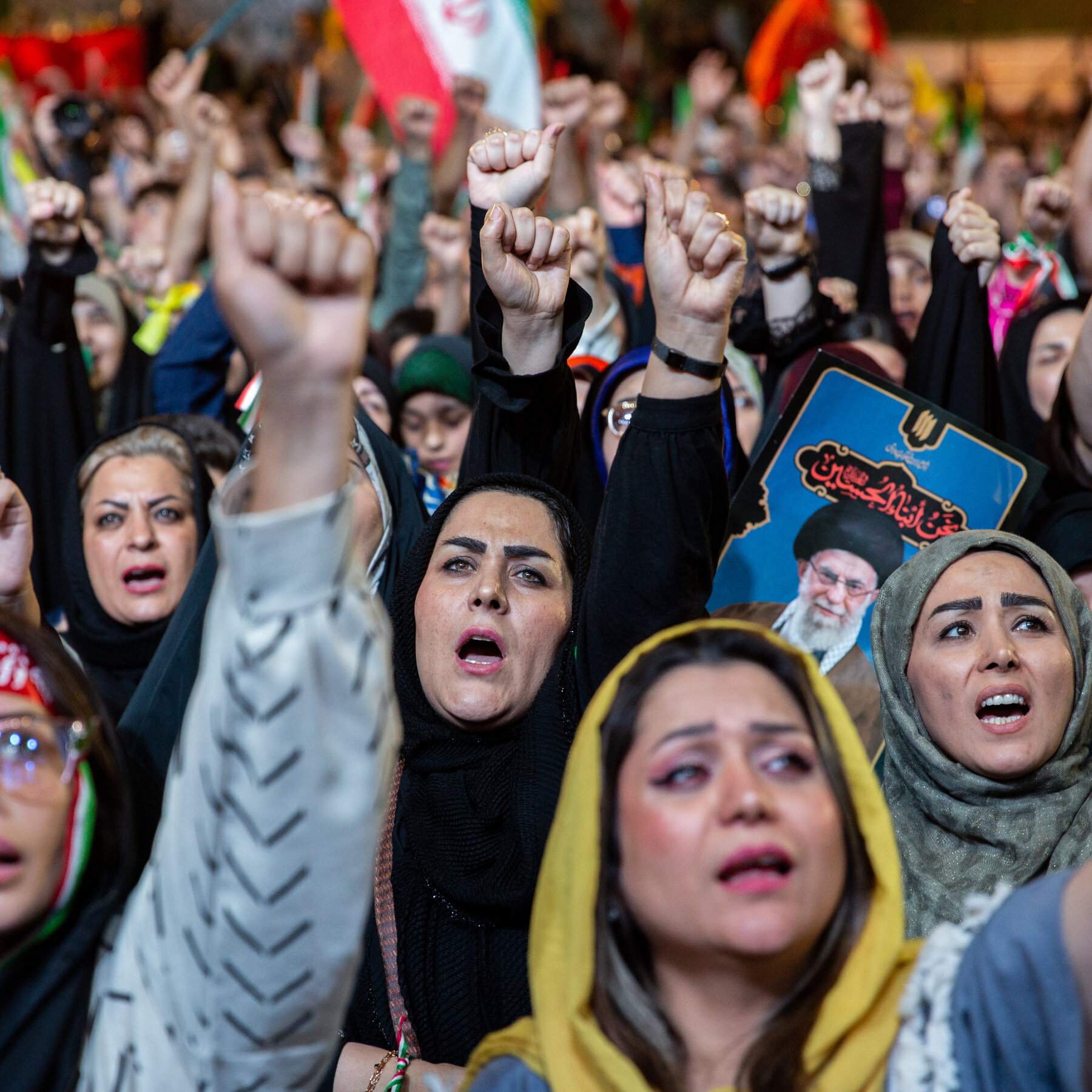
The language leaders use to describe military engagements matters. It recalibrates what the public will accept, what allies are asked to sign on to, and — critically — what counts as success or failure when the guns eventually fall silent.
On 4 May 2026, President Trump called the ongoing U.S. confrontation with Iran a "mini-war," a phrasing he repeated and then doubled down on by name-dropping the great American land wars of the twentieth century as context. The comment landed in global feeds at 20:18 UTC, carried by ClashReport on Telegram from what appeared to be a White House statement or press interaction.
"I call it a 'mini-war,' because that's all they are," Trump said, according to the transcript captured in that post. The framing was deliberate. A mini-war is not a war of national survival. It does not require the full mobilization of American society. It is, by definition, bounded — and it is bounded in a way that serves the political needs of an administration facing questions about duration and purpose.
The Ceasefire That Isn't: Iran's Drones and U.S. Intercepts
The immediate backdrop to Trump's comment is a fragile, officially unnamed ceasefire arrangement that U.S. officials have treated as functional without ever formally endorsing it as a diplomatic agreement. Under that arrangement, Iran was understood — in the American framing — to have curtailed its nuclear program and to have stopped the long-range strikes on U.S. bases and partners in the region that characterized the opening phase of the confrontation.
That framing was quietly qualified on 4 May. According to another post from the same White House interaction, Trump addressed the question of whether Iran had violated the ceasefire: "They were shot down for the most part. One got through. Not huge damage." The president was describing an incident in which Iranian-launched drones or projectiles had been intercepted by U.S. or allied air defenses — most of them, but not all. The qualifier "for the most part" became the administration's rhetorical hinge.
The diplomatic implication was significant. In previous U.S. military confrontations, a verified breach of a ceasefire arrangement — even a partial one — would typically trigger formal consultations with allies, a review of U.S. force posture, and at minimum a statement from the State Department. Instead, the Trump administration characterized the incident as a non-event. "Not huge damage." The minimization was not accidental.
Trump also pointedly declined to say whether Iran had violated the ceasefire. The distinction matters legally and politically: an admitted violation by Tehran would complicate the administration's narrative of an orderly, managed confrontation — one that the president could credibly claim was proceeding on American terms.
Separately, the president called on South Korea to "take some action," according to the same ClashReport post. The invocation of a regional ally — one with deep commercial ties to both Washington and Tehran — suggested that the administration was beginning to test whether the burden-sharing arguments it has made in other contexts might apply to the Iran file as well. Polymarket, the prediction market platform, was tracking a 37 percent probability as of late afternoon on 4 May that Trump would visit South Korea before the end of 2026 — a figure that reflects the market's uncertainty about whether that invitation, or the underlying pressure, would materialize into an actual trip.
The Comparison Trap: Vietnam, Iraq, Korea
Trump's most revealing comment may have been the one that drew the longest historical arc. "We were in Vietnam 19 years, Iraq for many years, 10 years, Korea 7 years — I won't even mention WWII," he said, invoking the specter of American land wars fought for decades on end to frame the Iran confrontation as categorically different.
The structural logic of the comparison was clear even if its implications were left unstated: this administration does not intend to stay. The mini-war framing is not just descriptive; it is prescriptive. By naming the confrontation as something bounded and limited, Trump was signaling to his own political coalition — and to the markets and foreign leaders watching — that the Iran engagement is not the twenty-year project that many analysts had feared when the confrontation began.
That framing serves multiple functions simultaneously. It reduces the political cost of continued strikes for a Republican base that has shown limited appetite for extended overseas deployments under any president. It gives wavering allies cover: if this is a mini-war, their contributions can be calibrated to that scale rather than to a full-spectrum conflict. And it defines the endpoint in political terms rather than military terms — the confrontation ends when the president decides it ends, not when Tehran surrenders or when a final agreement is ratified.
Critics of the framing would note that previous administrations — Democratic and Republican alike — have described limited engagements in ways that proved, over time, to be inaccurate. The Vietnam conflict began as what American officials called a "limited war." The Iraq intervention of 2003 was framed as a mission with a clear end state. The history of American limited wars is, in significant part, a history of that limitation dissolving under the pressure of events on the ground.
Trump's invocation of Korea, Vietnam, and Iraq as warnings rather than models is therefore not simply a historical observation. It is a political argument — one that accepts that the American public, and perhaps the American political system, has a finite tolerance for military entanglement that no presidential framing can extend indefinitely.
Who Controls the Frame — and What It Costs
The question of who sets the terms of a military confrontation is never purely rhetorical. In the weeks leading up to the 4 May statements, Iranian state-aligned media had been publishing a markedly different framing — one that characterized the ceasefire not as an American concession but as an Iranian strategic pause, a breathing space that Tehran had granted voluntarily and could revoke at will. Iranian state outlets framed the arrangement as evidence of American weakness, of an administration that lacked the stomach for escalation and had therefore blinked first.
Under that framing, Trump's "mini-war" comment is a direct counter-punch. By owning the limitation — by calling it a mini-war rather than pretending it is something larger — the administration removes one of the rhetorical weapons available to Tehran. You cannot accuse your adversary of backing down when they have explicitly defined the engagement as bounded and limited. The frame closes off a propaganda angle.
This does not mean the frame is cost-free. The "mini-war" framing implicitly concedes that American strategy has not achieved a decisive outcome — that after months of strikes, diplomatic pressure, and the maximum pressure campaign that the administration ran before the military phase began, the confrontation has settled into something that requires ongoing management rather than a clean resolution. For an administration that came into office promising to end conflicts rather than manage them, that concession carries political weight.
The framing also constrains future options. If this is a mini-war, escalation to a major war becomes a dramatic break rather than a logical extension of existing policy. An administration that has publicly defined its Iran engagement as limited will find it harder to mobilize domestic support — or allied willingness — for a significant expansion of the military campaign. The frame is a one-way ratchet: it is easy to move from "mini-war" to "war over," but difficult to move from "mini-war" to "full war" without a triggering event that the public can recognize as genuinely new.
What Comes Next: Stakes, Scenarios, and the Markets
The Polymarket figure — 37 percent on a Trump South Korea visit before year-end — captures something real about the uncertainty baked into the current moment. That probability reflects not just diplomatic calendar logic but the market's read on whether the administration is moving toward a visible diplomatic initiative or deeper into a military posture that forecloses summits of the kind that a South Korea trip would represent.
Several scenarios are consistent with the current framing. The first is a managed drawdown: the administration claims that Iranian compliance has been sufficient to begin reducing the U.S. military footprint in the region, frames this as a victory of calibrated pressure, and uses the drawdown as evidence that the mini-war is ending on American terms. That scenario is politically viable but requires Tehran to signal some form of acceptance — however tacit — of the new status quo.
The second scenario is renewed escalation triggered by an incident that the administration cannot minimize. If another drone or missile strike gets through — one that causes casualties or significant material damage — the "not huge damage" qualifier collapses. The mini-war framing, which depends on the confrontation remaining below a certain threshold of visible harm, becomes untenable. The administration would have to either escalate or accept a significant loss of credibility.
The third scenario, which the South Korea dynamics point toward, is a shift toward allied burden-sharing as a substitute for American decision-making. Calling on Seoul to "take some action" is a preliminary signal that the administration may seek to internationalize the Iran file — to move it from a bilateral U.S.-Iran confrontation to a multilateral pressure campaign that gives the White House more diplomatic cover while reducing the direct American military exposure.
Each scenario carries different implications for the markets watching the Strait of Hormuz, for the regional allies — Israel, Saudi Arabia, the UAE — who have been supportive of the confrontation in private while wary of being dragged into it, and for the broader geopolitical frame that the administration has been constructing since taking office: one in which American power is exercised selectively, forcefully, but never at the cost of indefinite entanglement.
Trump called it a mini-war. The word choice was not incidental. It was a definition — and definitions, in geopolitics, are the first move in a longer game.
This article was filed at 21:45 UTC on 4 May 2026. Monexus covered the Trump administration's Iran posture throughout the escalation phase using official U.S. and allied sourcing; the wire services led with the military strikes, while this publication focused on the political and rhetorical architecture the White House was constructing around them.
Wire provenance
This editorial synthesis draws on the following public wire/social posts:
- https://x.com/agdugin/status/1928679012348494369