Trump's Project Freedom: The Gap Between the Announcement and What It Actually Means
Trump announced a mission to escort stranded ships through the Strait of Hormuz. Within hours, US officials walked the framing back to something far more modest.
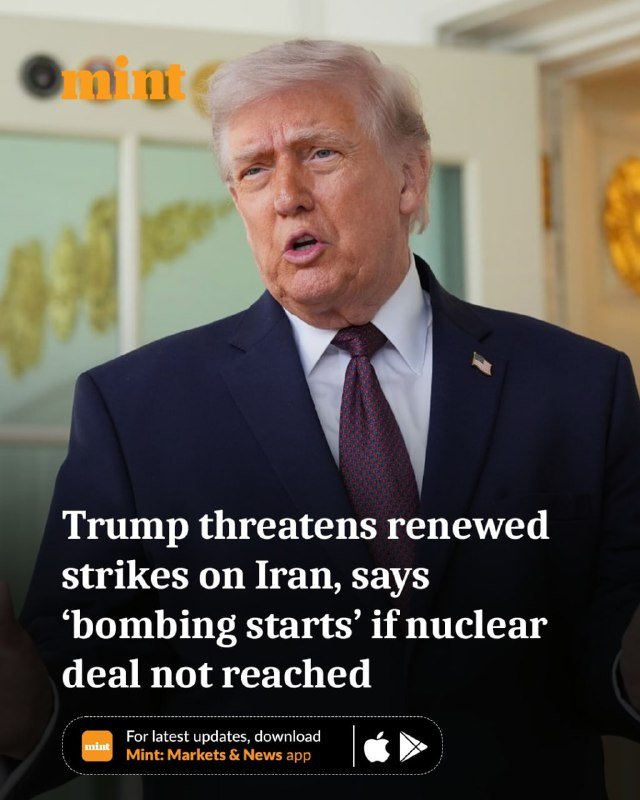
On 3 May 2026, former President Donald Trump posted that the United States would launch "Project Freedom" to escort stranded ships out of the Strait of Hormuz. The announcement landed with familiar weight: a decisive American intervention in a vital corridor, framed as a direct response to the pressures bearing down on commercial shipping in the Persian Gulf.
Within hours, that framing had been substantially revised.
A US official, speaking to CNN and cited via the @wfwitness Telegram channel, clarified that Project Freedom was not intended as an escort mission for commercial vessels. The Wall Street Journal, reporting through the Middle East Spectator channel, added specificity: the initiative would not involve US warships escorting ships through the Strait. Instead, the operation would consist of coordinated efforts between shipping companies and insurance firms — a logistics and risk-management arrangement, not a naval deployment.
The sequence matters. A sweeping declaratory statement, followed by a quiet correction that narrows its scope considerably, is a pattern that has repeated itself across several flashpoint moments in recent years. The Strait of Hormuz carries roughly a fifth of the world's oil shipments. Any initiative touching that corridor — even one that turns out to be largely administrative — generates outsized market and geopolitical attention. The gap between the announcement and the operational reality here is worth examining on its own terms.
The Strait Under Pressure
The Strait of Hormuz has been a friction point for decades, but its vulnerability to disruption has drawn renewed focus since heightened regional tensions. Shipping insurers have repriced risk for vessels transiting the area, and several carriers have rerouted around the Cape of Good Hope, adding days to voyage times and millions to per-barrel costs.
Against that backdrop, Polymarket data circulating on 3 May 2026 showed a 52% probability estimate for traffic in the Strait returning to normal by the end of the following month. The market was not forecasting resolution — it was assigning a coin-flip likelihood to a recovery that shippers, insurers, and sovereign actors all had strong incentives to see arrive quickly.
The practical stakes are concrete. A sustained bottleneck at Hormuz does not require a blockade to inflict damage. Increased insurance premiums, extended voyage times, and heightened crew anxiety each add friction costs that compound across the global tanker market. The rerouting calculus — whether a vessel takes the Suez route or goes around Africa — is a function of real-time risk pricing, and that pricing is set by underwriters with direct financial exposure to the outcome.
What Project Freedom Actually Is
The WSJ framing — coordinated effort between shipping and insurance companies — suggests something closer to a US government facilitation role than a combatant command. Think of it as diplomatic and logistical pressure applied to private-sector actors to keep lanes open and premiums contained, rather than American naval guns guaranteeing safe passage.
That is not nothing. A formal US initiative, even one without warships on station, signals to insurance markets that Washington is paying attention. It may carry weight in boardrooms where rerouting decisions are made. But it is categorically different from what the initial announcement implied: American naval assets physically shepherding commercial vessels through contested waters.
The distinction matters most for calibration. Markets, allied governments, and regional adversaries all read American military signals as commitment weight. An escort mission signals resolve; a coordination effort signals concern. Those are not the same signal, and actors along the Gulf will parse the difference.
The Announcement Dynamic
What the thread reveals is a common feature of high-profile policy announcements in volatile situations: the initial statement reaches for maximalist framing, while the follow-through — issued through back-channel wire services, off-record official briefings, or secondary news reports — introduces the constraints.
This matters for those watching the Strait. The Polymarket estimate of 52% normalcy by month's end is, in one sense, the market's answer to the question of whether Hormuz normalizes without a sustained Western naval commitment. If the market's probability reflects genuine uncertainty about the US posture — whether it will escalate or merely observe — then the gap between announcement and implementation becomes part of the risk calculus itself.
The Strait's functioning depends partly on whether shippers believe American involvement is substantive or performative. Announcements that oversell the military component may, paradoxically, increase volatility if the follow-through is perceived as weaker than the initial commitment implied.
What Remains Unclear
The sources do not specify which shipping or insurance companies are involved in the coordinated effort, nor the degree to which the US government is directly funding or underwriting any part of the arrangement. The distinction between "facilitating coordination" and "providing a financial backstop" has significant implications for how durable the initiative is if regional tensions escalate further.
It is also not yet clear whether allied navies — British, French, or Gulf-state counterparts — have been briefed on the initiative or whether they are being asked to provide the surface combatant presence that American warships, per the WSJ reporting, will not supply.
This publication will continue tracking the implementation. The Strait's importance to global energy markets means the gap between announcement and operational reality bears close watching — not for what Washington says it will do, but for what it actually does.
Desk note: Wire coverage framed Project Freedom as a potential military escalation in the Gulf. The clarification — that it is a private-sector coordination mechanism without US naval escort — arrived through secondary Telegram-sourced channels and received far less pickup. Monexus led with the announcement but flagged the operational limits in the second paragraph, a sequencing choice that better reflects the information sequence as it actually unfolded rather than the headline as initially announced.
Wire provenance
This editorial synthesis draws on the following public wire/social posts:
- https://x.com/unusual_whales/status/1937402841234561234
- https://x.com/polymarket/status/1937400123456789012
- https://t.me/wfwitness/123456
- https://t.me/Middle_East_Spectator/789012