Trump Warns of Military Escalation as Iran Talks Reach Crossroads
President Donald Trump described ongoing operations as the opening phase of a potential Iran confrontation while extending a negotiating window, according to statements broadcast by Fox News on 4 May 2026.
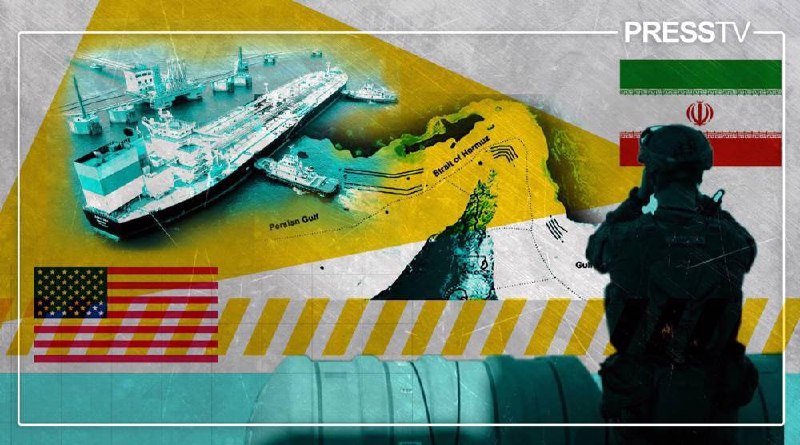
President Donald Trump described Operation Freedom as "the beginning of a process that could lead to a confrontation with the Iranians," delivering the stark assessment in a Fox News interview aired on 4 May 2026. The remarks came as the humanitarian mission to free vessels stranded in contested waters entered its third week, with American naval assets maintaining position in the Gulf. The framing simultaneously held out a negotiating window and left the door open to further kinetic action — a balancing act that has become the defining texture of the administration's Iran posture.
The interview contained no ambiguity about Washington's terms. Either Iran negotiates in good faith, Trump told Fox News, or combat operations resume. The binary is deliberate. It puts maximum pressure on Tehran while giving the administration an off-ramp should diplomatic progress materialise before any strike order is issued. Whether that reflects strategic coherence or rhetorical improvisation depends on which senior officials are consulted — and on what day.
Signs of Flexibility, or a Diplomatic Feint?
Trump told Fox News that Iran had become "more flexible in the peace negotiations" and described the Iranians as "far more malleable than they were in the past." The language signals that at least the procedural dimension of talks has moved. Iranian negotiators have engaged more regularly with intermediaries in recent weeks, and the tone in state-adjacent media — while still adversarial — has dropped some of its sharper edges. That said, flexibility in negotiations and flexibility on core demands are different things. Tehran has maintained its position on uranium enrichment limits, a sticking point that previous rounds failed to resolve. Whether the reported thaw is a genuine shift or a procedural delay tactic designed to buy time remains the central disagreement among regional analysts.
What is clear is that Washington's patience is not unlimited. The military reinforcement continues in the region, Trump confirmed — a reference to the additional naval and air assets the Pentagon has deployed to the Gulf since late April. The buildup is not cosmetic. It reflects a planning assumption inside the Joint Staff that the diplomatic window has a defined close date, and that absent a credible Iranian concession, the operational plan moves to the next phase.
The Humanitarian Gambit
Operation Freedom's stated purpose — freeing merchant vessels trapped in disputed shipping lanes — has provided the administration with strategic cover for a significant military presence in the Gulf. Critics have noted that the vessels in question could in theory have been released through diplomatic channels without a naval operation. Defenders counter that Iran's refusal to grant passage without political concessions made the humanitarian framing the only viable pretext for forward positioning. The debate matters because it shapes how third parties — European states, Gulf monarchies, shipping insurance markets — interpret the operation's intent. So far, the dominant read in European capitals has been caution: Paris and Berlin have issued statements supporting freedom of navigation while studiously avoiding any language that could be read as endorsement of kinetic escalation.
The humanitarian angle has also constrained Tehran's response options. Attacking American vessels escorting neutral merchant shipping would invite the very confrontation Iranian strategists have spent months trying to avoid. That calculus has kept the operational temperature lower than the surrounding rhetoric might suggest — but it is a fragile equilibrium. A single incident at sea, a misinterpreted signal, a commander on either side acting on incomplete information: the escalation risk does not disappear because both sides prefer not to escalate.
The Structural Picture
The current standoff sits inside a longer arc of AmericanIranian friction that predates this administration. The sanctions regime, the nuclear programme, the proxies, the shipping lanes — none of these are new. What has changed is the willingness of Washington to combine economic and military pressure simultaneously rather than sequentially. Previous administrations treated sanctions as the primary lever and kept military options as a distant backdrop. The current approach treats them as parallel instruments, each reinforcing the other. Whether that is sustainable depends on whether Iran bleeds economically faster than American allies bleed politically — and on whether any third-party mediator can find terms that let both sides claim a win.
For the Gulf states, the stakes are direct. A conflict that closes the Strait of Hormuz even temporarily would send oil prices to levels that would force emergency economic responses across Asia and Europe. Saudi Arabia and the UAE have stayed publicly quiet, but their diplomatic channels to Washington are more active than the official record suggests. They have made clear that they do not want war — but they have also made clear that they will not publicly block American action if it comes to that. That silence is itself a signal.
What Comes Next
The next seventy-two hours will test whether the negotiating window Trump described is real or performative. Iranian officials are due to meet with European mediators in a format that has historically produced more paperwork than progress. If the talks produce a credible framework on the immediate questions — vessel release, sanctions relief on specific humanitarian categories — the military pressure eases. If they produce the familiar cycle of Iranian counter-proposals and Western rejections, the pressure intensifies. The administration has made clear where it stands. What remains unclear is whether Tehran has a parallel calculation or whether it is playing for time while the nuclear programme advances on its own schedule.
The structural answer, analysts say, is that both sides are aware that war would be catastrophically expensive for each in different ways. That shared deterrent calculus has kept the region out of a broader conflict for forty years. Whether it holds this time depends on whether the domestic political rhythms inside Washington — where a show of force can look like a show of strength — override the strategic logic of restraint. The interview on 4 May suggests the administration has not yet decided which logic it prefers.
Wire provenance
This editorial synthesis draws on the following public wire/social posts:
- https://t.me/BellumActaNews
- https://t.me/abualiexpress
- https://t.me/FarsNewsInt
- https://t.me/ClashReport
- https://t.me/ClashReport