Fujairah Port Hit by Explosion and Fire as UAE Declares Emergency Posture
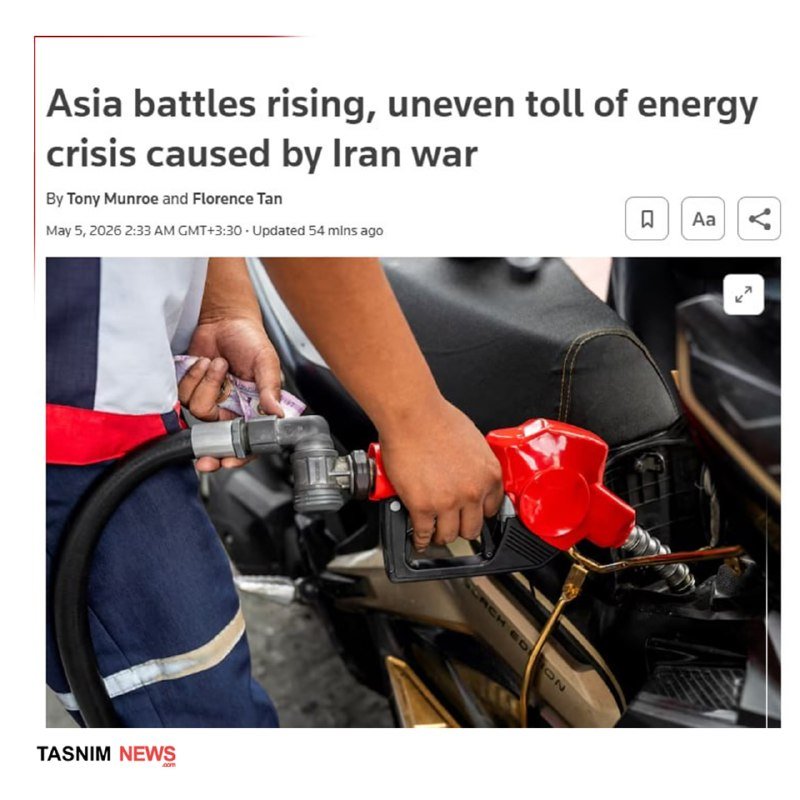
An explosion and fire struck the Fujairah port in the United Arab Emirates on May 4, 2026, triggering a swift national emergency response. Within hours of the incident, the Emirates moved the entire educational process online for May 5–8 and effectively declared itself a no-fly zone, according to initial reports from regional Telegram channels monitoring the situation. Satellite data processed by NASA-derived imagery showed thermal signatures consistent with a substantial fire at the port's energy facilities, corroborating the scale of the incident reported by multiple sources on the evening of May 4.
The attack on Fujairah — a port that sits just outside the Persian Gulf, at the mouth of the Strait of Hormuz through which roughly a fifth of the world's oil passes — carries immediate strategic freight. That the Emirati authorities responded with a national-level emergency posture, moving school instruction online and imposing airspace restrictions within a single hour, suggests the event was assessed internally as potentially multi-vector, not a singular accident or isolated incident.
The Incident: What Is Known
The explosion at Fujairah port was first reported by regional wire services at approximately 18:41 UTC on May 4, with footage of a fire at the port facilities circulating across Telegram channels within twenty minutes. By 19:12 UTC, multiple channels were reporting that the Emirates had shifted to an online educational model and that a no-fly zone was in effect over the entire country — an unusually sweeping domestic response to a single infrastructure event.
The port, operated as a key transshipment and bunkering hub for vessels unable to transit the Strait of Hormuz directly, handles significant volumes of oil products and is a critical node in regional energy logistics. Satellite data reviewed by regional OSINT channels showed thermal anomalies at energy installations within the port complex, suggesting the fire involved industrial fuel storage rather than vessels alone. No official Emirati government statement had been published by the time initial coverage circulated on May 4, 2026, leaving the cause and full scope of damage subject to competing interpretations.
A Claimed Cyber Dimension
The Hanzaleh cyber group, operating through Iranian state-adjacent Telegram channels, claimed responsibility within hours of the incident, stating that cyber operations were "fully coordinated" with physical strikes and had compromised port management systems before the attack began. The group described the operation as a synchronised hybrid action rather than a standalone kinetic strike.
That claim requires careful handling. Iranian state-adjacent channels frequently publish attributions following regional incidents that later prove partial, inflated, or entirely unsubstantiated. The assertion of a coordinated cyber-physical assault is plausible in operational terms — port management systems are networked, and pre-positioning within critical-infrastructure IT is a documented tactic in state-adjacent cyber operations — but independent verification of the Hanzaleh narrative is not yet available. Monexus has not confirmed the cyber intrusion component through secondary sources as of publication.
The simultaneous use of cyber and kinetic tools to target a single critical-infrastructure node would, if confirmed, represent a significant operational evolution in regional hybrid warfare. The targeting of Fujairah specifically — outside the Persian Gulf, beyond the immediate zone of Gulf-state rivalries as conventionally mapped — suggests deliberate effort to minimise inadvertent escalation by choosing a location physically removed from the contested waters around the Strait itself, yet operationally connected to it.
The Strategic Context: Hormuz, Negotiations, and Signal
The timing of an incident targeting a Hormuz-adjacent energy hub arrives against a backdrop of stalled nuclear negotiations between the United States and Iran, ongoing regional diplomatic efforts, and heightened intelligence community concern about Iranian technical progress toward weapons-capable enrichment thresholds. Whether or not this event is connected to that nuclear track — and the available sources provide no direct evidence that it is — the optics of a successful multi-vector attack on energy infrastructure in the immediate vicinity of the world's most critical oil transit corridor land with considerable weight in Washington, Tehran, and the Gulf capitals simultaneously.
Fujairah's significance is partly geographic: it lies outside the Persian Gulf proper, placing it outside the conventional military-balance calculus of the Strait itself while remaining functionally connected to it as a staging and transshipment point. That placement makes it simultaneously more valuable as a target — it carries less immediate military-readiness implication — and more ambiguous as a signal. An attack on a vessel in the Strait communicates something directly; an attack on Fujairah communicates something more diffusely, to a wider set of audiences.
The immediate tactical question is whether the Emirati response — national emergency posture within the hour — reflects pre-existing contingency planning for precisely this kind of scenario or an improvised escalation based on still-incomplete intelligence. Neither interpretation is flattering in a straightforward way: one suggests the threat environment has long been assessed as plausible at this scale; the other suggests the attack succeeded faster than defences anticipated.
Regional Stakes and the Road Ahead
The broader structural question is whether successful hybrid operations targeting port infrastructure normalize a new tier of acceptable kinetic and cyber action against commercial critical infrastructure in the region. Energy systems, financial transaction infrastructure, and maritime logistics have all featured in the escalating asymmetric competition between Iranian-aligned actors and Gulf-state and Western interests over the past decade. Each successful operation — even one that is partially contained — expands the operational repertoire available to actors who calculate that the political cost of response is lower than the political cost of restraint.
The Emirati response, once official statements are published, will be the first concrete signal of how Fujairah is classified internally: as a provocation to be absorbed and managed quietly, or as an escalation requiring visible response. The answer will shape the calculus of every actor in the region considering similar operations in the months ahead.
What the available sources do not yet establish is the chain of command or state involvement behind the attack, the full extent of physical damage, or whether the reported no-fly zone reflects an operational reality or a precautionary administrative measure. Monexus will update as official Emirati sources publish and independent verification becomes available.
This publication approached the story from the posture of an incoming emergency event with unconfirmed attribution — a deliberate choice to foreground operational specifics over geopolitical narrative until evidence warrants stronger framing.
Wire provenance
This editorial synthesis draws on the following public wire/social posts:
- https://t.me/osintlive/1248
- https://t.me/sprinterpress/847
- https://t.me/tasnimnews_en/3412
- https://t.me/JahanTasnim/2291
- https://t.me/farsna/992